All rides must have a theme. A theme-less ride is a random ride; why don’t we just ride to Perth like we would have when we were teenagers but Western Australia hadn’t been discovered?!? Quickly becomes we’re riding 2km to Maccas because we realised the cat and the goldfish were unlikely to survive the 4 week food hiatus, with strong betting on the cat surviving longer.
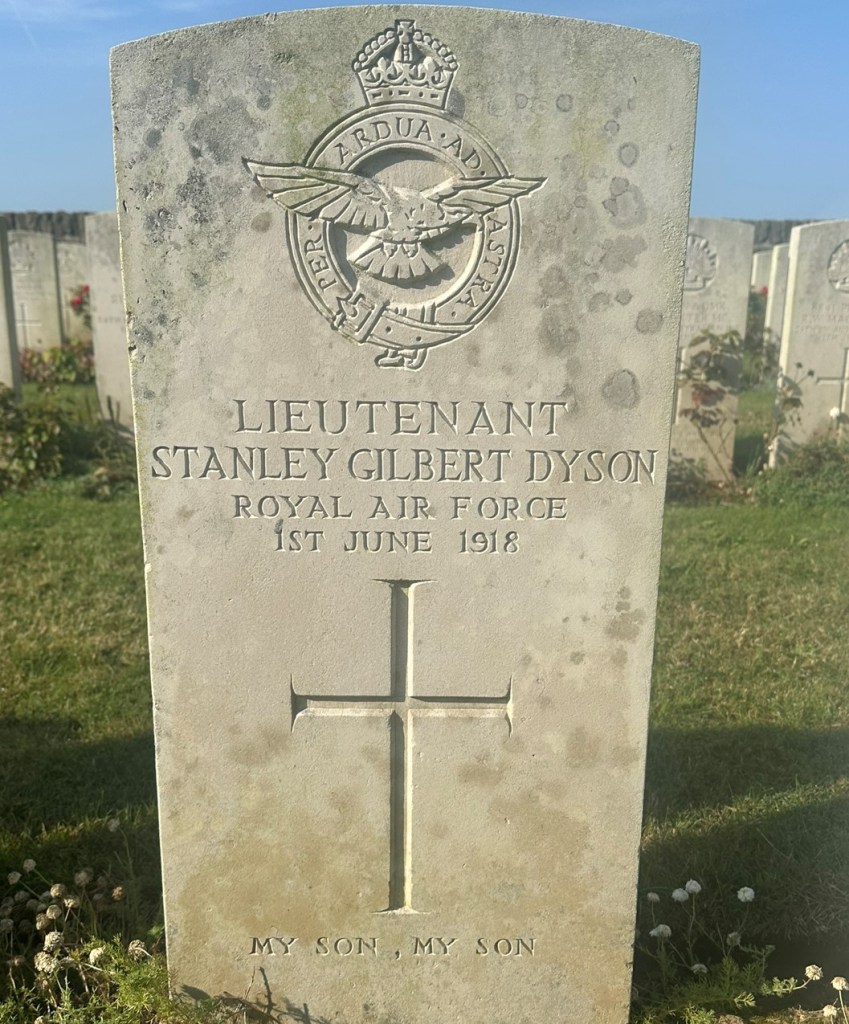
So what was the theme for our first European ride, pre our Compass Expeditions Spain Portugal and Morocco tour starting 2 weeks later? Sacrifice. Not by us obviously, the provincial rosé being ±0.5°C off perfect should and did bring on full nuclear Karen, but we definitely should acknowledge the earlier generation’s trips to Europe, dressed in uniform.
Starting from near the bottom, we lobbed into Lisbon. ‘West is Best’ as they say in the long haul flight business, and we pretty much nailed it with zero-ish jet-lag. OK I nearly fell asleep at the lunchtime Portugal wine tasting experience, but that was due to some heavy whites rather than being 9 hours behind my physiological locked-in aperitif time.
Up surprisingly fresh the next morning, we wandered down the street for breakfast. Spanish and Portuguese timing is always a concern – everything is shut when we want it open, and open when we don’t need it. At 7:30am it was utterly deserted, anyone doing peak hour in Brisbane would understand that an apocalypse must have occurred, and used the opportunity to get to work earlier. A man was spotted readying chairs; “Obrigato?” used as it is literally our only Portuguese word. Luckily the breakfast menu was in English so we were away.
Back to the hotel, dressed in full moto regalia, we Uber Xed out to the bike pick-up at MotoXplorers. Moments later Ricardo arrived and the bikes were wheeled out – a BMW F850GS for me and a BMW F750GS for Cindy, both Triple Blacks. Steve Maney’s Navigator VI GPS was plugged onto the mount. OMG I’ve forgotten to download any of the pre-tour routes and accommodation. Expletive overload, then OK, we’ll put in the address to the first night in Salamanca and sort the rest when we get there.


We are highly experienced at riding on the wrong side of the road, so no dramas especially as peak hour in these countries happens well after 9am. 8:30am and it’s like a zombie apocalypse, you know the ones where the zombies are like teens and can’t cope with sunlight, traffic is non-existent.
Day 1 was a big day, 468km. A big first day is a bit risky in case something goes wrong, like forgetting to load your planned route onto the GPS, but this was a commute so the finish in Salamanca was all we needed. The BMW’s were checked out, both were Triple Blacks but in terms of the installed options this is meaningless. Heading to the BMW National Rally in April Cindy had one that didn’t have heated grips, probably the first BMW since the R32 not to have them, and this time she didn’t get cruise control which is just peachy on the freeways. I had everything of course, BMW’s seem made with the gentleman in mind.
One thing I didn’t have was the ability to start the bike in gear. We’d reached our destination of Salamanca and there were lots of lights. I stalled at one set, then couldn’t find neutral, and the pressure mounts when a bus starts tooting and eventually backs up and goes around you. I didn’t care that the effing light was effing red when I got the effing bike effing started, I just effen went. Extraordinary care was then taken not to stall, but moving off gradually from stopped wasn’t easy with the engine red-lining at 9000rpm. Some research was required via google, Ricardo back at MotoXplorers, and the technical legends back at the BMWMCQ. The clutch switch! Oh no said Ricardo, I just had the clutch lever replaced! I had no tools, so couldn’t attack the clutch switch as the general consensus seemed to suggest. Man up and just don’t stall was the answer. Another thing to whinge about became apparent on day 2 after a fabulous evening and night in Salamanca – we were in the height of Portuguese, Spanish, and French holidays. As Australians we give little thought to beaches – sure we enjoy a nice one and will happily park the van next to one, but every beach in Europe is like Bondi. With 1 decent beach per 35,000,000 people, it was a swarm in the beach resort towns.
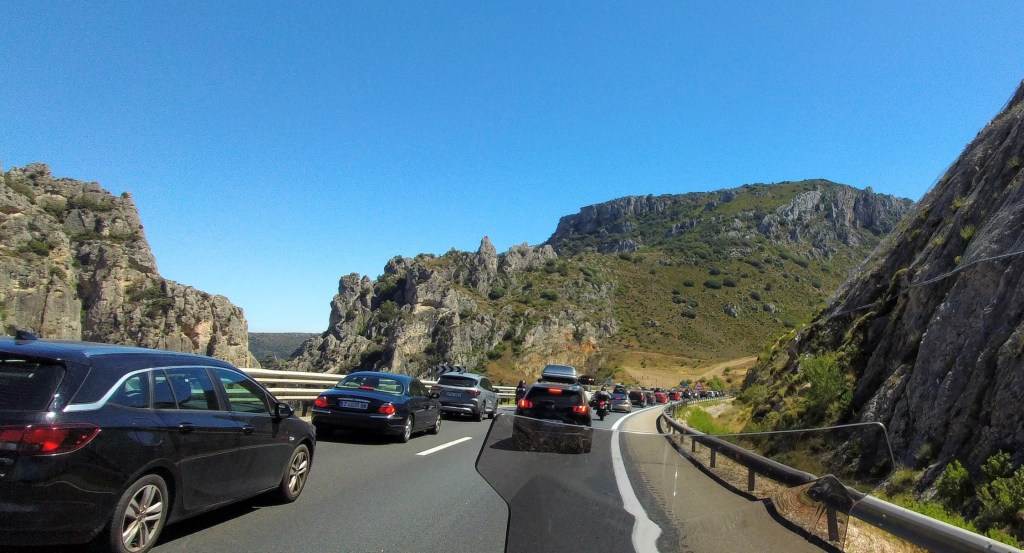
Day 2 plan was San Sebastian via a small Zamora detour to keep off the freeways. Well not actually San Sebastian due to the €1,000 per night hotel rooms – see above regarding beaches – but Astigarraga, a bit away from the action

Coming into Astigarraga was interesting. We seemed to be in a light industrial area with the zombies up here definitely frightened of sunlight, and then the GPS said “you’re here!” outside a BMW dealership. Really GPS? Is your clueless default a closed BMW dealership? Then Cindy said “I think that might be it over there”. So around the block we went. We arrived, but I still couldn’t see it. A Soviet era building with cars that had been parked there in 1972 and not needed since didn’t inspire confidence. Cindy decided to go into the ‘facility’ while I waited outside with the bikes.
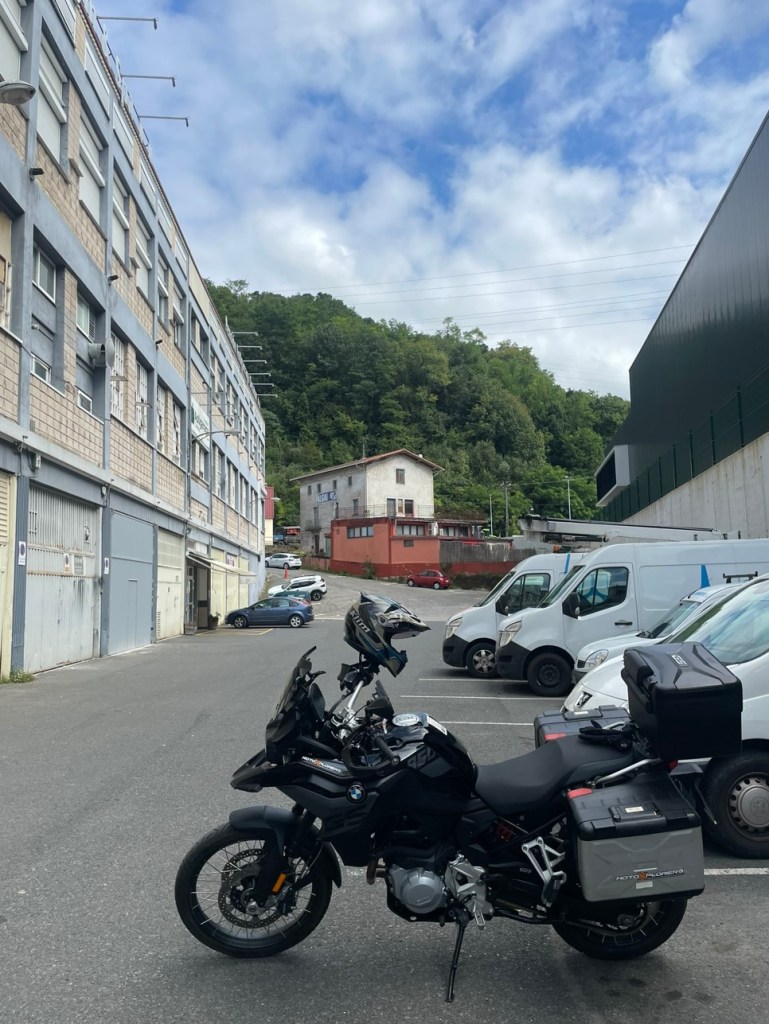
How long should a hotel check-in take? Probably less than 10 minutes. So alarm bells were going off at 20 minutes, not calmed by a used nappy near the 750GS which had extraordinary powers to focus the bleakness into that one spot. Cindy was obviously being “processed” rather than checked in, with animal testing illegal but maybe foreign tourist testing is still okay. The bikes could look after themselves I decided, but I did leave the 850 in an advanced state of readiness just in case. Over to the lift. Very industrial and spartan and easily sluiced out, practically custom made for testing. The door opened, surprisingly into a normal reception area where a bored Cindy was waiting her turn to get to the desk. Turned out the receptionist was just over-helpful, and gave so much information to guests that the check-in time blew out. Our turn came and we were still very traumatised, so were on the verge of pulling out. But the receptionist brought us around – yes it looks like a home for the criminally insane, yes it is awful, but let me show you the room options and then you can decide. Oh, there is secure parking so the zombies won’t be touching your bikes. Calmed, we decided on a good room but only for one night rather than the planned two, we’d move on in the morning

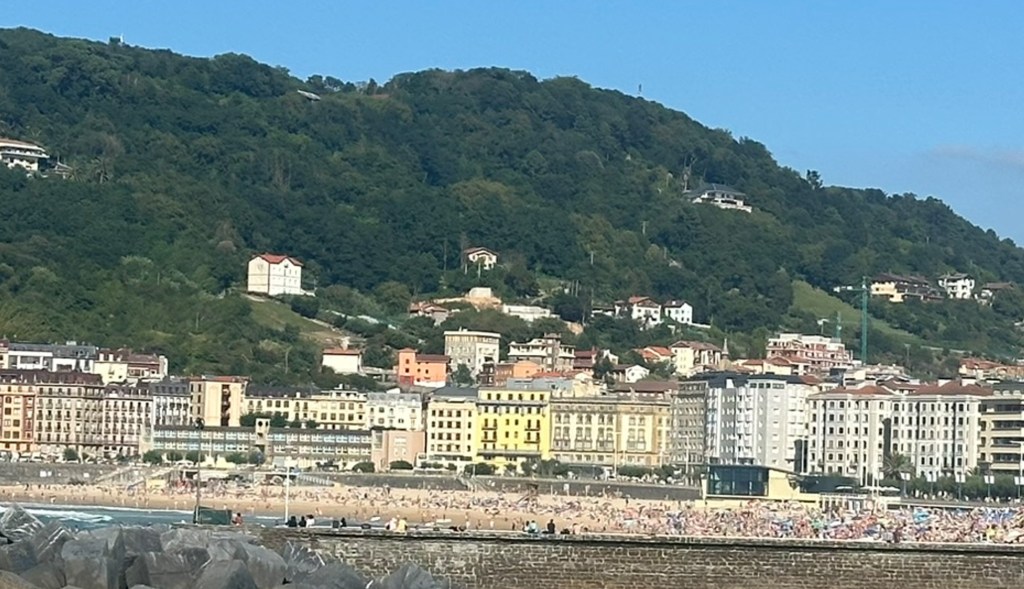
Part of the induction was how to get into San Sebastian. Go to this spot, and catch a No.12 or No.13 bus, just give the driver the money. So we did that, walking past more run-down light industrial paraphernalia. But the bus did arrive quickly, and in a short time we were jammed in with the crowds in the extremely touristy spot. The beach was Bondi – seething with bodies and totally off-limits as far as we were concerned. A long walk and then an excellent tapas meal where we pointed at what we wanted, and it was back out to the facility.
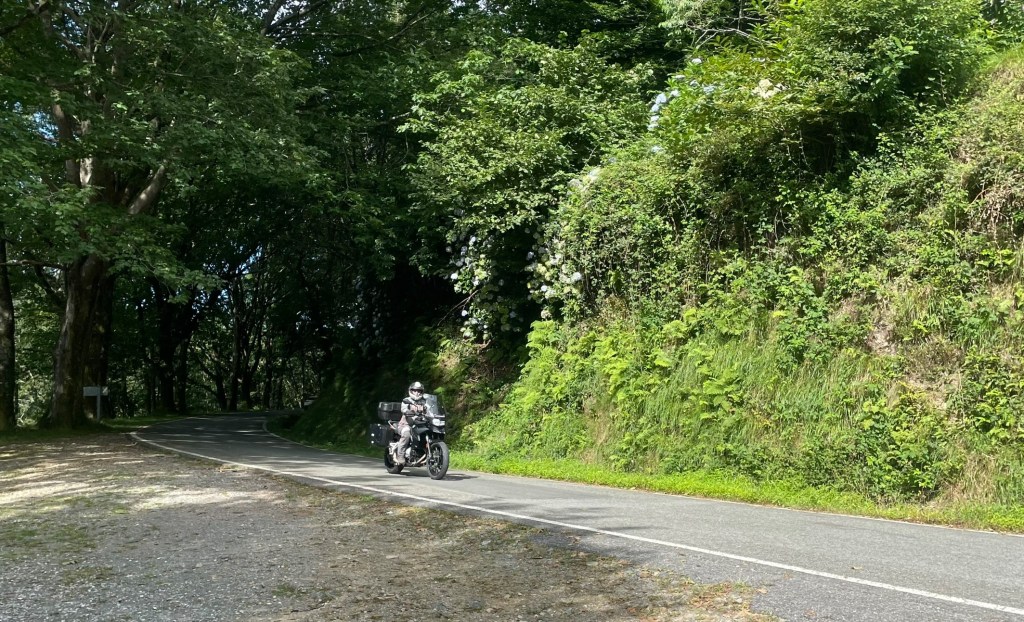
We were quite comfortable that we’d done everything we wanted to do in San Sebastian, so the decision to leave a day early was a good one. But where to next? Biarritz on the French side was likely just the same, but Bayonne might be okay, and only about 75km away. Out came Basecamp, surely there are some reasonable non-highway roads through the Pyrenees. Turned out there are, so the most winding were waypointed, and off we went on Day 3. Having commuted on freeways for the best part of two days, the road into the hills from Oiartzun was so joyous as to be beyond joyous – no traffic, gorgeous scenery, quant little villages – everything was right in the motorcycling world. A stop for coffee in Lesaka, and down over the border for lunch, then the miracle that all great days seem to throw up, an early check-in.
Bayonne was a great spot. Yes a little packed with tourists, but also some quiet areas including an Irish pub that wasn’t entirely on board with normal French opening hours. These are admittedly slightly better than Spanish opening hours which are dinner from 8pm, the French take it back a notch to 7pm. Pensioners accustomed to the RSL specials are still dying in droves, but not in such big droves. Bayonne was also the home of the Musee du Jambon. The museum of ham. Yes we went in there. But not for dinner, this was down on the waterfront where we each had a meal in the top 10, maybe even 5, of personal bests. Cindy had the confit duck pancakes, I had the moules. OMG the French can cook stuff.
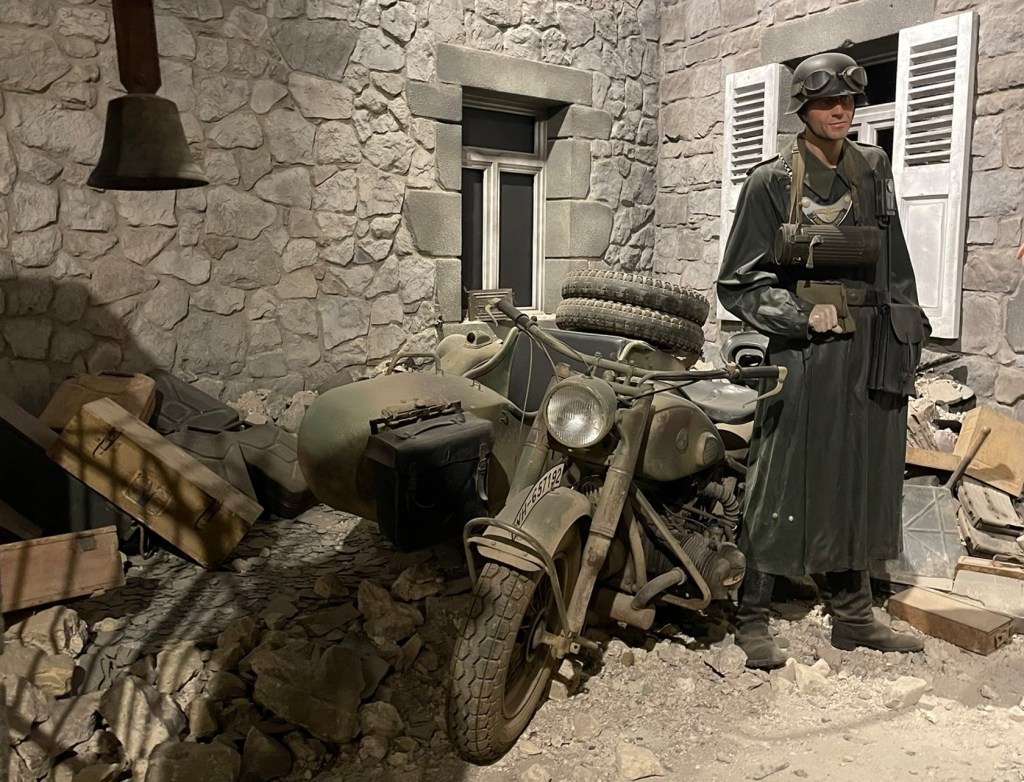
Day 4 was Poitiers, truly a commute day. This was a slog, avoiding Bordeaux is tough but it sucks you in like a French trou noir (black hole for those without access to google translate), and we ended up in there regardless. It is hard to stay together in this sort of mess and tensions were high, especially on the freeways. But we made it, to a budget motel on the edge of town, next to a Maccas. Amazingly one of the best restaurants in town was 200m away according to the receptionist, who had been telling everyone this for 3 months and was very upset to be told by us it was shut on Sundays. Never mind, Uber to the rescue and off we went into town proper where it was happening with a capital H, i.e. Happening. By Happening I mean dinner and drinks were available.

Day 5 was off to Normandy to see our friend Nicolas, one of the objectives of the trip into France. Nicolas has ridden and travelled all over the world including down Africa where we met him, is hysterically funny, and these days walks through Europe although he still has a BMW 1200GS for trips into town. A very pleasant day and a half was spent with Nicolas at his country estate.

Day 6 was to Bayeux. A mere 1 hour and 40 minutes, all of which seemed to be in the towelling rain. Rain needs preparation, but we’d assumed it wasn’t gunna. So there was a bit of wicking happening, especially the exposed bottom of the T-shirt sucking up the water that was sluicing into Tween Thigh Dam. Into the hotel, hang everything wet up in a minimalist room where Scandinavian styling means nothing to hang anything on, and head to the tapestry. Like a lot of these sorts of things – thinking the pyramids, Empire State Building, Great Australian Bight cliffs, the Grand Canyon – the feeling can be that I’ve seen it a million times on the telly, it is packed with tourists, surely overblown. And then you actually see it, and it is incredible. The tapestry is like this, we queued up for about 45 minutes, luckily with an English riding couple in front of us to keep the time relatively very short. We then got a mobile phone-like device, and this “knew” where we were on the 70m long tapestry, so we just walked along while the phone told us about what was happening. A feature of the tapestry is that it is so easily understandable even to we modern people – 70m of very detailed pictures is worth a vast number of words.
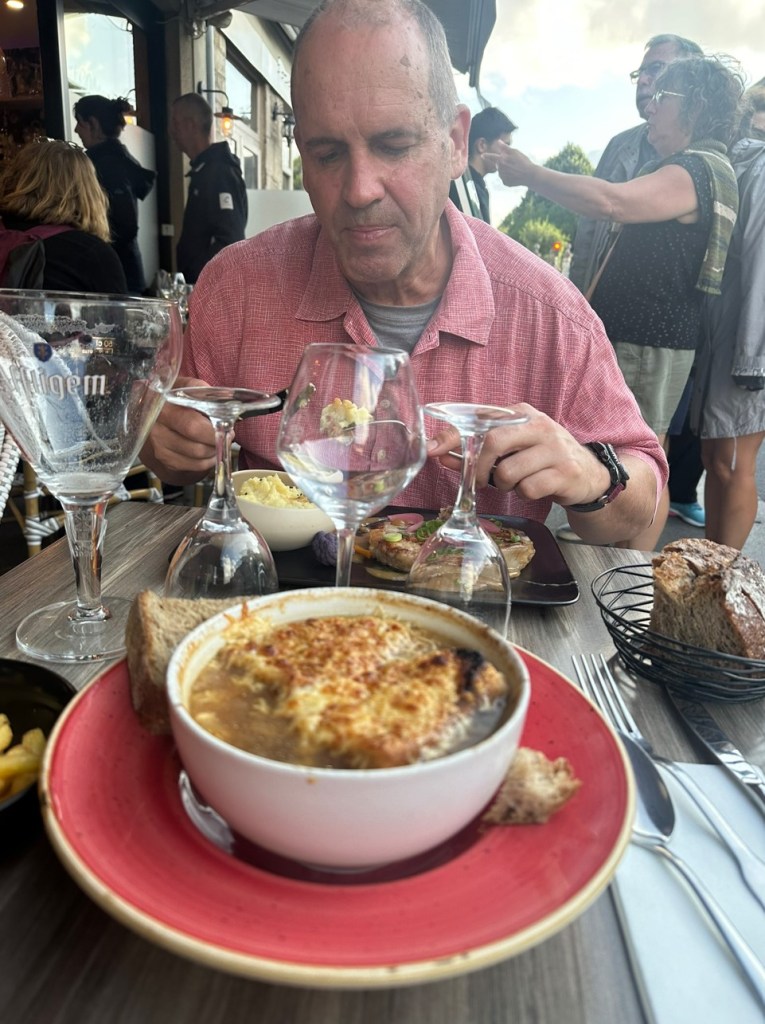
Another feature of Bayeux is its proximity to Omaha Beach. This year had been huge as it was the 80th anniversary of the 6th of June 1944 landings, so big that even the German Chancellor Olaf Scholz turned up, and they lost. We had to go out for a look at the American Cemetery which is on the beach, and has thousands of crosses and stars of David with the name, rank, unit, state, and date of death. As always there are the unknown soldiers which always bring some emotion thinking about the loved ones back home who never knew what happened to their son/husband/brother. The information is also impressive, with maps and progress by unit for both D Day and the expansion of the bridgehead, and the overall European theatre.
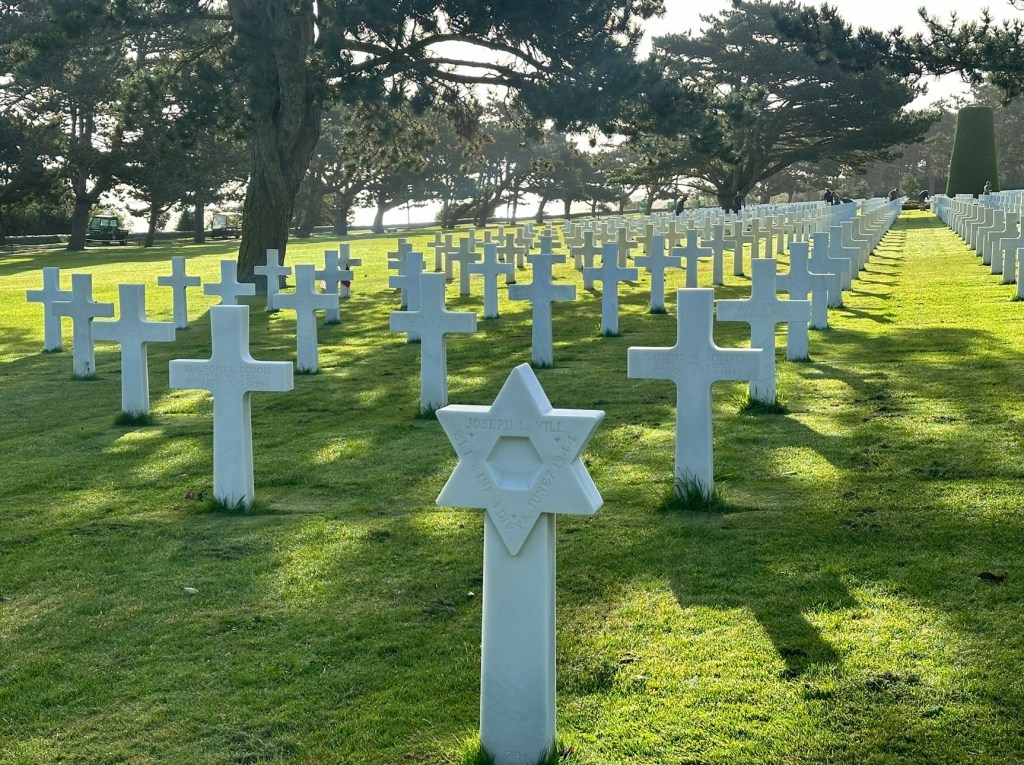
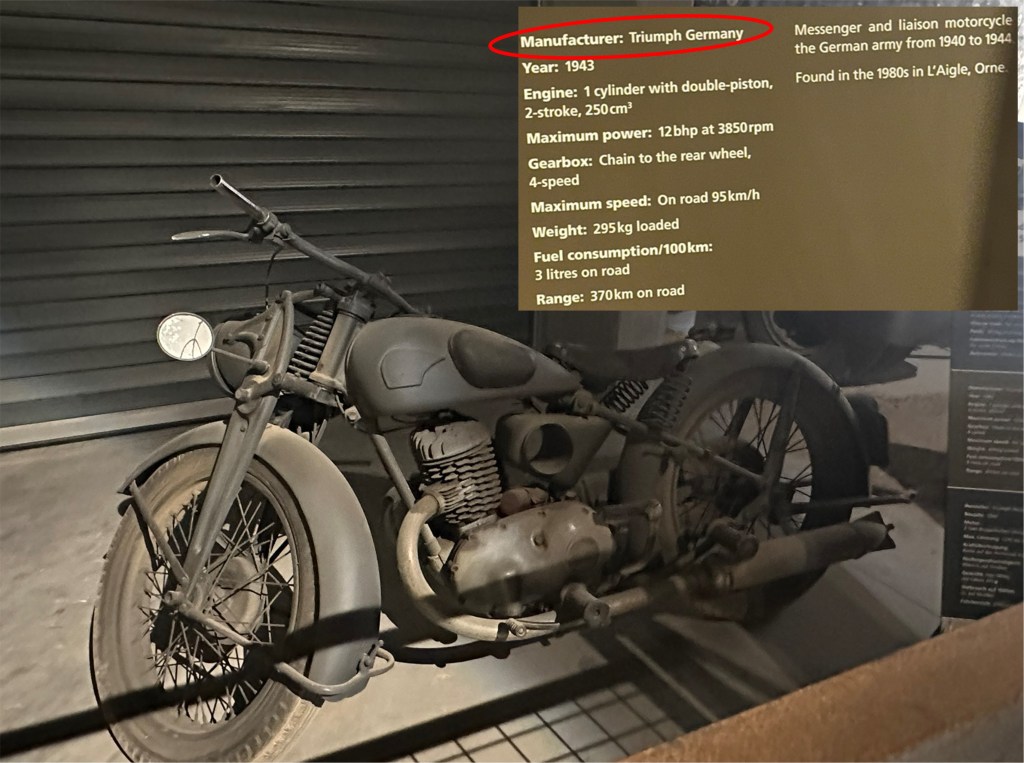
We then had a visit to the D Day museum just near the cemetery. This was very impressive and had a lot of US and German and British equipment from throughout the war. No surprises seeing the old BMW R75 workhorse, but a Triumph Germany bike caused one visitor to black out and faint. Only the 3 litres/100km and nearly 400km range brought them back, how Germany couldn’t win with that sort of technological advantage is a mystery.
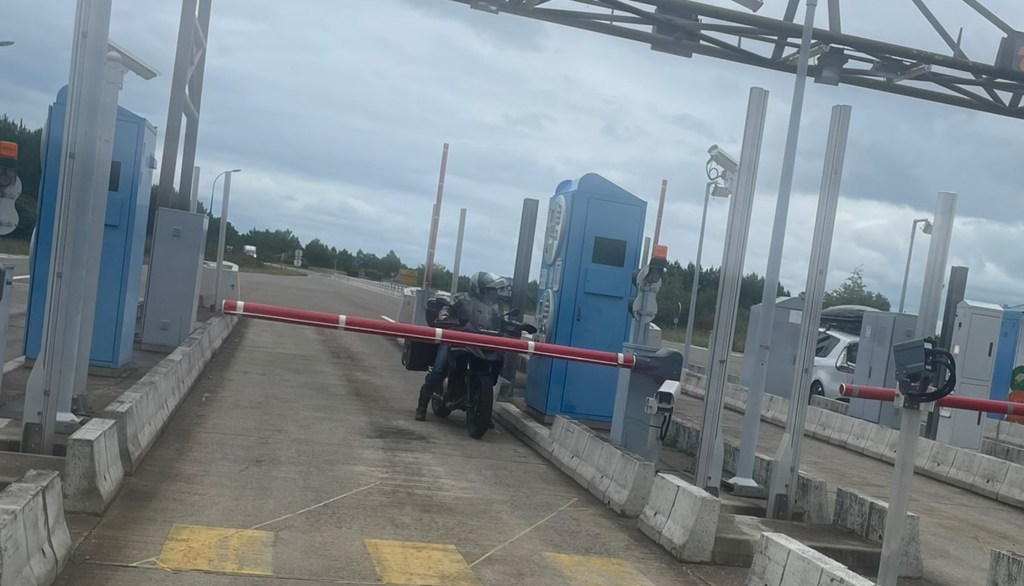
The target for the day was 300km east in Villers-Bretonneux, so we had to cut the D Day visits short and make a move as it was already lunchtime. We’d learned by this time – avoid toll roads. The ability to stay together on the freeways and avoid Cindy’s nemesis – the toll booth – made this important. Toll both disaster was almost inevitable. We’d seen Cindy drop her purse with about €50 in change spreading over the area of a football field and the attendant having to leave the booth to pick everything up, we’d seen Cindy’s toll ticket not accepted and the 15 car queue behind her giving limited sympathy messaging, and we’d seen her cards just not working. We’d also been behind car drivers who dropped their ticket, but then couldn’t retrieve it because they were too close to the toll machine to open the door. The best Catch-22 in action ever.
So off via the secondary toll roads. More winding, more fun, but in France locals say they want to you to do freeway because they have reduced the speed limits to 80kmh and put lots of cameras on secondary roads, and there are a lot of cameras. Some with spray paint courtesy of the less-than-impressed locals. But the little villages, farmland, and forests make for some awesome riding.

Into our B&B in Villers-Bretonneux. Our host was incredibly welcoming as an Australian can expect in the town whose motto is “Never forget Australia”. Surprisingly, he spoke barely a word of Australian, but we muddled by after he gave us beer. Luckily Cindy has a fool-proof method for getting French pronunciation right and we used it here – just say the French words and add ‘by Calvin Klein’. For example, you’ve no idea what someone said, so you say “je ne comprends pas”. Without the Cindy method, you say “jay no compreen day-pass, mate”. They have no idea what you just said so a classic Catch-22 develops. But with the Cindy method you will automatically get the lips into the French position and say “zyer n’combrarpa. By Calvin Klein.” Ah, wee! I will make wild gestures!

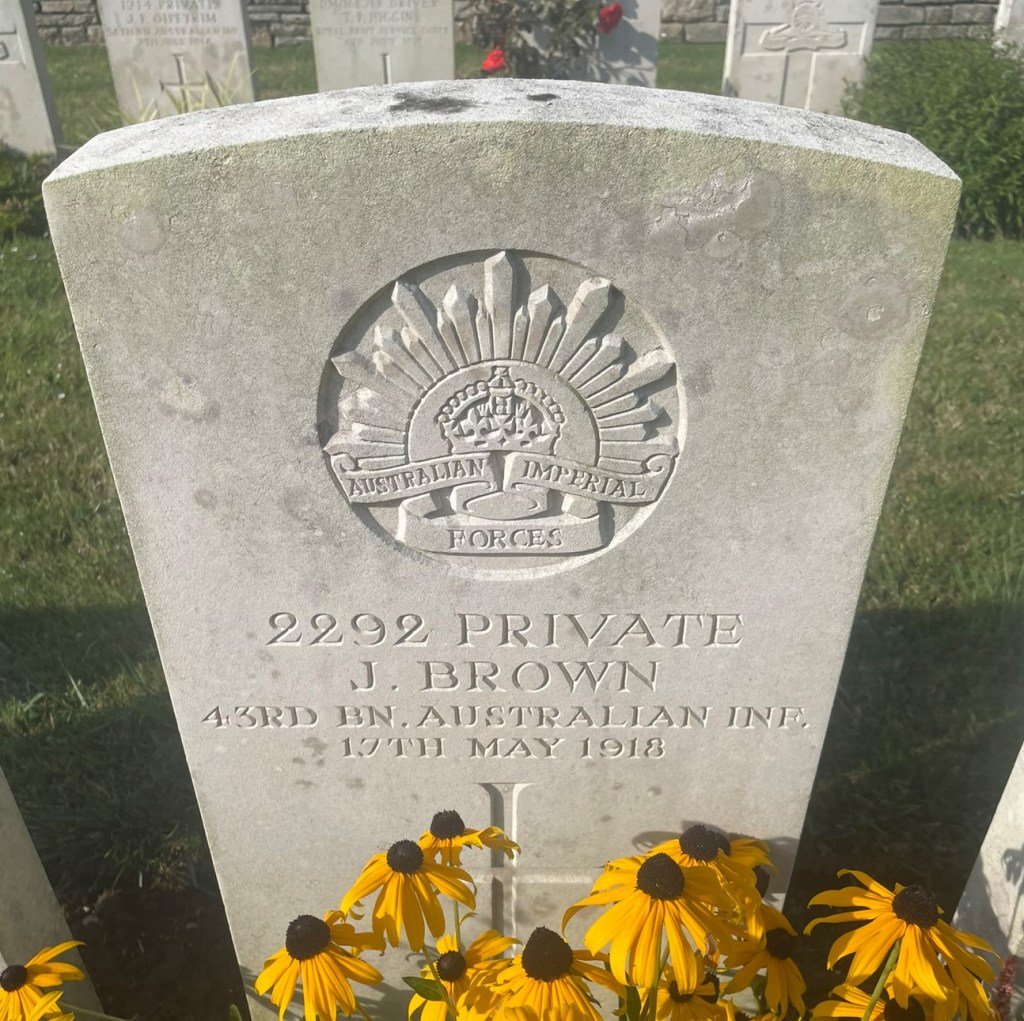
Day 8 was big. Firstly, off to Vignacourt where the 20th casualty clearing station (CCS) was based from 29th March to 30th August 1918. There was a bit of excitement getting past a mowing tractor on an extremely narrow country road to the cemetery, with the extraordinary skill used to get past unfortunately not captured by the pillion. My great-great uncle (my father’s mother’s uncle) John Brown of the 43rd Infantry Battalion was taken to the CCS with multiple gunshot wounds, which sounds a bit like a machine gun. He died on the 17th May 1918, and is buried in the small Vignacourt cemetery. He was 38 years old.
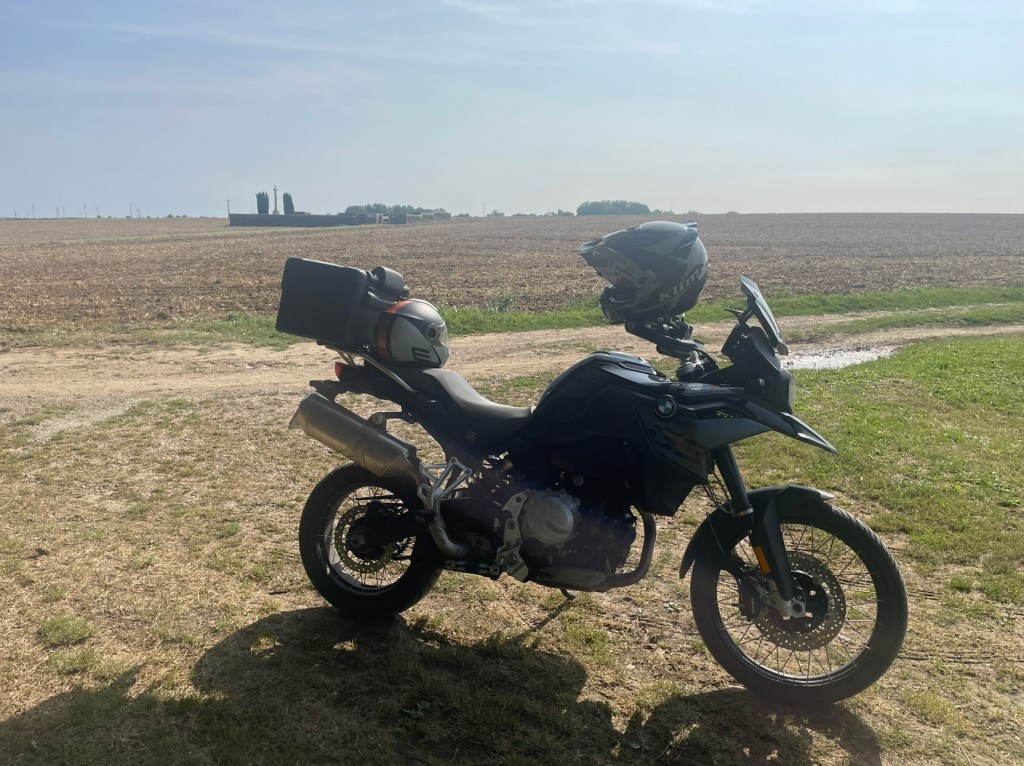
The next important location from our perspective was Serre-lès-Puisieux. By Calvin Klein definitely needed for that one. This was at the very northern end of the attacking front on the opening day of the Battle of the Somme, 1 July 1916. Grandfather John Bennett from Warrnambool was at Leeds University when the war broke out and joined the Leeds Pals, the 15th (Service) Battalion West Yorkshire Regiment, very early in 1915. Like many units of Kitchener’s Army on the most costly day in British military history, the Leeds Pals basically ceased to exist without even getting close to their objective. Luckily for our family, John wasn’t one of the unlucky. There are several cemeteries here which mark the positions that were about as far as the Pals battalions got.
Then the challenge of finding lunch, when we’d been here in 2005 there were some great little cafes in Pozieres, but everything was shut. So back into Albert, nearly a Le Gros Mac, but a nice cheese toastie instead. Back to V-B via the Australian 3rd Division memorial at Sailly-le-Sec by Calvin Klein, we went to the Sir John Monash Centre at the Australian National Memorial. This is just fantastic, and we probably didn’t allow enough time. Then to the Musée Franco-Australien to complete the very emotional day.
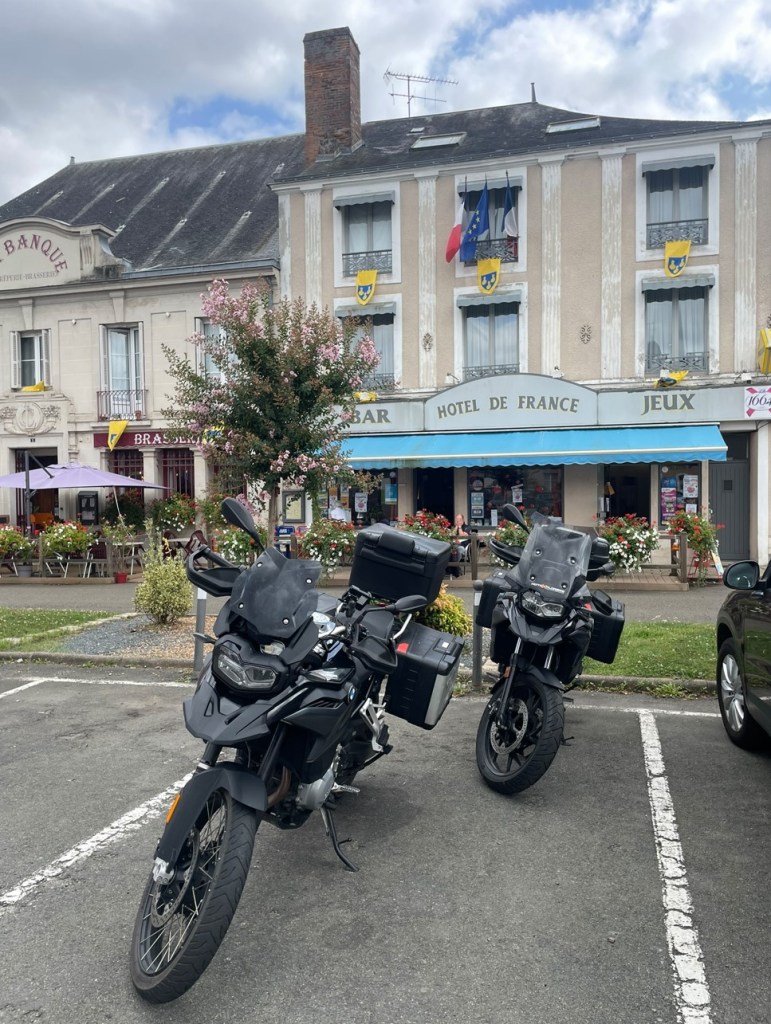
Day 9 saw the beginning of the return. Again a fair bit of planning was required to avoid freeways and toll booths, particularly in France where all the big cities are hubs with roads extending out like spokes. The GPS wanted Paris. I said no. Then it wanted Rouen. Nuh. Past Le Mans was the plan, at Saint-Calais by Calvin Klein. Turns out Saint-Calais was the home of Alphonse Poitevin, who discovered that bichromated gelatin was light sensitive and hardened depending on the amount of light it was exposed to, and invented fixed photographs. That aside it was a great little town, the Hotel de France had huge rooms, served drinks at non-French hours, and there were good restaurants a short stumble away.
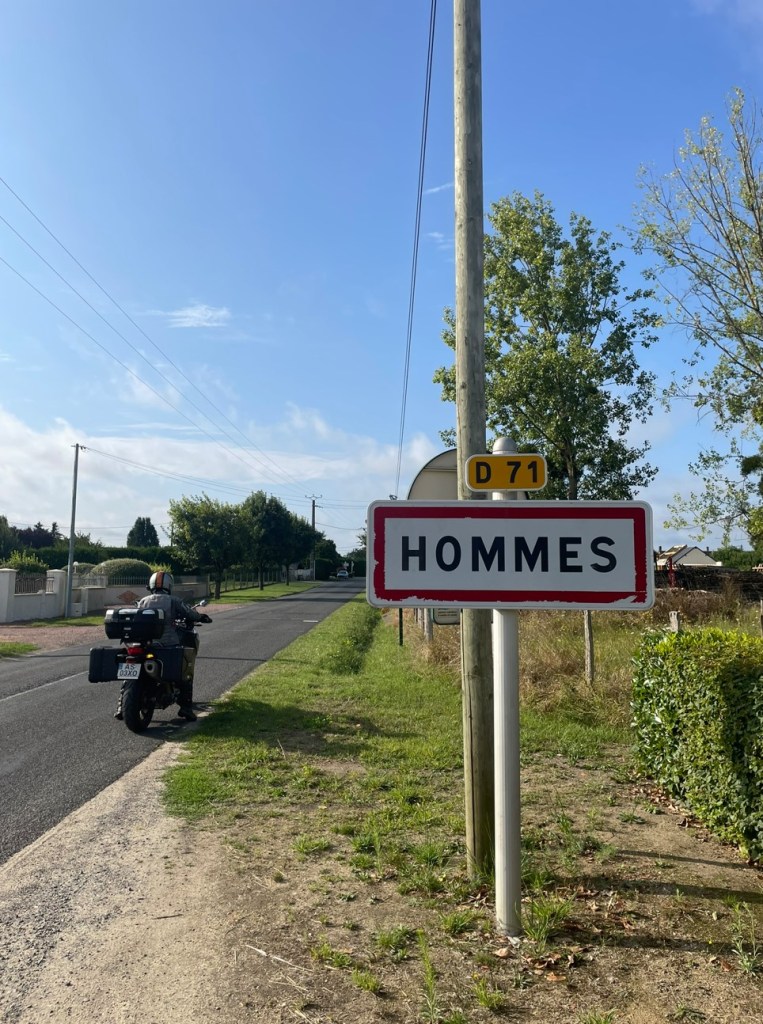
The return continued on Day 10. The temptation of freeways was resisted, and more random town names by Calvin Klein were put into the GPS to avoid being sucked into the bigger places like Tours. Just because we were on tour didn’t mean we wanted to see the place where tours first began in 1138, with Francois C. Klein waking up one morning, getting the wife and kids and French Bulldog into the wheelbarrow, and heading off for two weeks travelling around Burgundy caravan parks which were pretty basic back then. Target for the day was Angouleme, a reasonable sized place about halfway between Poitiers and Bordeaux. Some cunning/lucky navigation got us into the French countryside, with a re-crossing of the Loire River in a quiet spot.
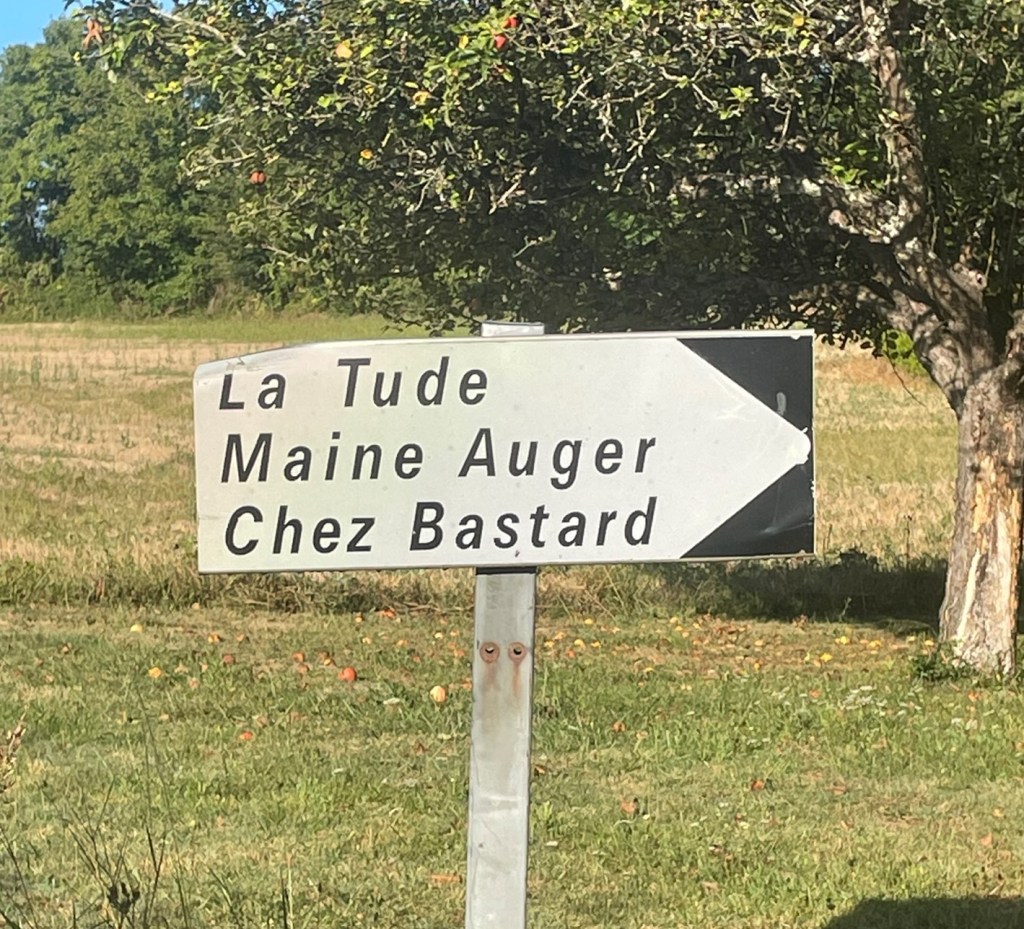
Some actual adventure riding occurred trying to find the loo, the signpost was delightfully vague and we ended up on a dirt road and in a paddock. Where we found a loo, but not the loo.

We’d organised accommodation in Angouleme, with the GPS quite clear on how to get there. As per many European towns, Angouleme wasn’t built with the motorcyclist or any motored transport for that matter in mind, and parking at the hotel was fairly exciting. Unfortunately it was made even more exciting when we were told that we were not at the hotel we’d booked at. Back on after some “spin on the side stand” manoeuvring and we went up into the old town on the hill. The GPS became very unclear on where we were now going, but after the tightest roundabout with a slightly tighter diameter than BMW F750GS Triple Black full lock diameter, we got into vaguely the area we were supposed to be in. Off the bikes, Cindy found an address, but this was obviously wrong. Re-read the instructions, which were extremely unhelpful. Google maps to the rescue, but every place it took us to was clearly not accommodation. The instructions said park across from the school, there is a 3 minute parking spot so you can unload. We parked across from the school, and looked over the cliff hoping that some accommodation would miraculously appear. Marching around the town for an hour in increasingly sweaty riding gear with the blue Google maps dot always jumping to somewhere else, and not able to get clear instructions, we gave up. Made a booking at a real hotel very nearby, and a minute later walked in with no dramas. Didn’t get our money back from the Hotel Chimera though, but that is the cost of doing fake business.

Again a pleasant evening with drinks and French food, rarely disappointing, and we were in bed early for a big day 11 getting back to Spain. This was our most challenging navigation day, Bordeaux was not allowing anyone to bypass it via pleasant country roads, threatening to take children hostage unless we headed that way. Started out okay, we could at first pretend we were going to Bordeaux, but as we refused to deviate from south rather than south-west, it got more angry than Angers, Angerville, and Angervilliers combined. I would put a town on the quiet route in the GPS, but as soon as we reached it, Bordeaux would try it on again. We ended up circling around in a town by Calvin Klein while the battle went on, and probably did 100 extra kilometres, but we won.
A very pleasant coffee in a small village café where we got talking to an English couple who lived in both the village and England, with the wine a major attraction for them. In the village, not England. Then back into familiar territory, heading toward the border past Bayonne, but we decided by this late hour that Pyrenees was going to end in darkness, so we set up for Cindy to clog traffic at toll booths again for the final run over the line into Lesaka. Into Spain, the timing for eating moved back a bit so we were now way too early for dinner.

Down the road for some pre-dinners, which extend for way longer than is safe due to the late dinner hour, we ended up in a bar restaurant that made the experience even less safe – our table was on the other side of the road and it was bar service for drinks. The memorials to those struck down and killed while coming back on the fourth shout should have provided a warning, if they’d actually bothered to put up the memorials.

Surviving all the road crossings to the bar and managing to get the bikes out of the slippery area down the side of the hotel, we did one of the biggest of the pre-tour – 550km to Ponferrada on day 12. Seems a fairly random place for a big day to get to for the mining history disinterested persons, but it definitely isn’t for those not disinterested. First things first though on sweaty arrival at the hotel in the main plaza – get a note to the police with our rego numbers so we don’t get a fine for riding around in a pedestrian only zone. Then laundry, with an excellent self-serve down the road and the wait significantly reduced by a good book and a couple of tins of rose from the supermarket nearby.

On Day 13 the point of staying in Ponferrada is revealed to the hopefully interested, nay suspenseful reader. Just up the road is the historic gold mining site of Las Médulas, where Roman industrial scale mining recovered 1,640 tonnes, yes tonnes, of gold in 250 years from the first century AD. The process was described as the “wrecking of the mountains” by Pliny the Elder and involved running 7 long aqueducts to Las Médulas from far wetter areas in Cabreira to the south. The “mountains” of Las Médulas were basically low-grade overburden consisting of fairly unconsolidated gravels and rocks in mud and layers of fines that had been deposited from ancient mountain erosion, and sat up to 120m thick over a higher grade alluvial gold layer. To get at the higher grade material, the slave miners would dig extensive shafts and drives in the overburden to honeycomb it, then fill it all up with water. The water would soak the mud and work its way through the overburden and eventually the whole mountain would collapse, with the water then used to wash the lot minus the big rocks over riffles to recover the gold. The scale of the site is just incredible.

Back into Ponferrada, we did a tour of the Los Templarios Castle, set up by the Knights Templar to protect Catholic pilgrims on the Camino de Santiago route. There are still a lot of pilgrims, but these days a bit less focussed on the religious stoicism and more on the superb wines. The Knights Templar have had to change with the times and have opened shops selling walking poles or small coin-operated laundromats. Then we cruised the town trying to find somewhere that served food before the clock ticked over into am.

Day 14 plan was getting to Porto, back in Portugal. To make it interesting, Cindy suggested we do one of the best roads in Portugal or the World, I wasn’t entirely clear on its bestness when including the N222 road which follows the Douro River. Over the border at Feces de Abaixo, no embarrassed English speakers on that shire council obviously, and down on the freeway to cross the mighty Douro at Peso da Regua.

A key feature of the Douro River is the grapes for making port wine. Every bit of land, sub-vertical included, is planted with vines. Not keeping a firm footing or being roped up on the Douro has resulted in hundreds of deaths of vineyard workers. That might not be strictly true, but when tending vines on a 50° slope surely some have had an exciting slide into a post or wall.
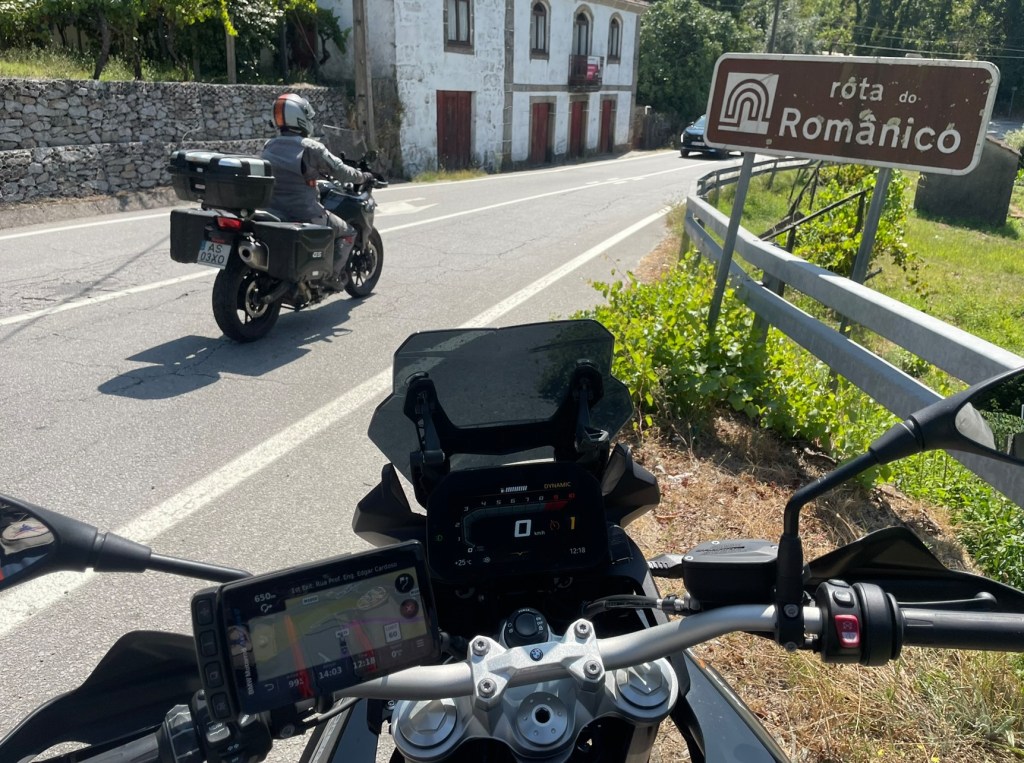
Hundreds, nay thousands of bends and a very pleasant lunch in a “fair dinkum” Portuguese restaurant later, we called it a fantastic experience and were out of it and getting into Porto. The traffic along the river was flowing smoothly, if by flowing one thinks of smooth continental plate movement at a couple of centimetres per year. Scooters were going around the queue up the other lane and sneaking back in to avoid head-on collisions with cars coming the other way, but with panniers on this didn’t seem a good idea. After a ridiculously long time we got past the blockage where police had completed taking measurements of whatever accident had occurred, and rode up onto the tram tracks to get into the hotel. Keeping an eye out for trams, we checked in.

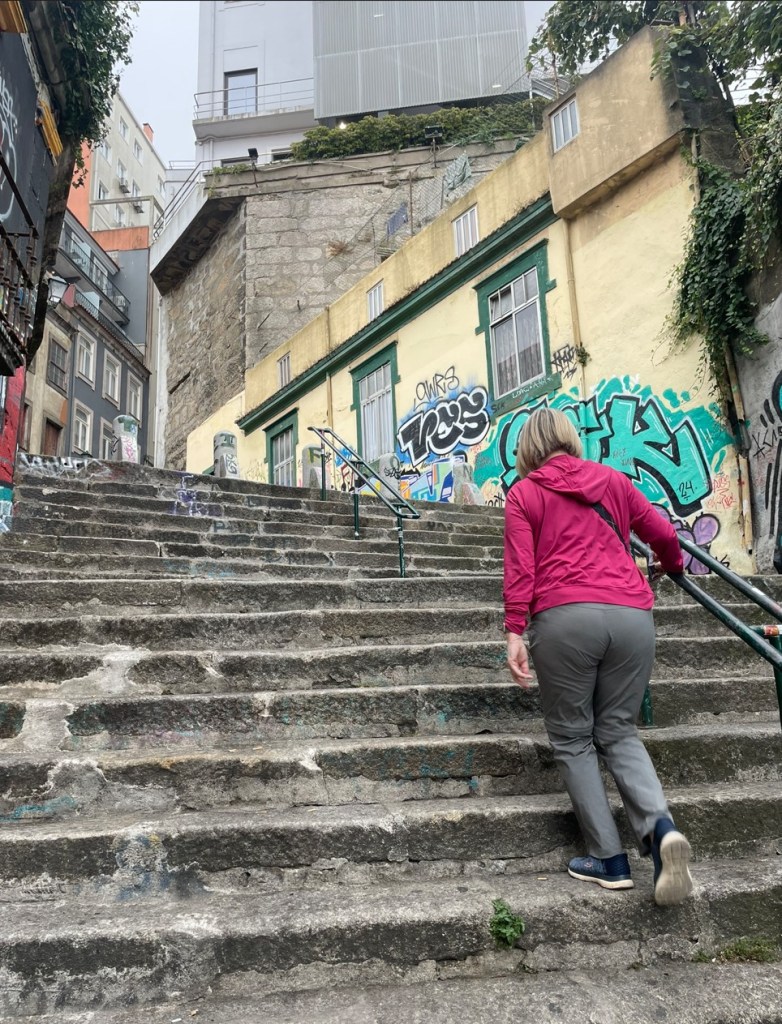
Day 15 was a free day, the first not getting on a bike. What to do in a new city? A Hop On Hop Off bus of course. As always, finding the HOHO bus stop is like finding the Last Supper Chalice and a Penny Black stamp in the Ark of the Covenant, a tough ask. And because Porto is on the Douro River, the sides are very steep, requiring some serious calorie burning to get to Stop No.1. Gasping, on we went and off we went. We love the HOHO bus concept because you see the city, and learn its history, and go to all the great places. The Porto HOHO allowed us to see buildings. That was it. The history recording was misaligned with where we were so it was “The building on the left is the Resplendao Simplistica, a classic 16th century example of neo-Romantic architecture designed by Diogo de Boitaca. It was built for Duarte, Duke of Guimarães to house his famous collection of mud”. We would all look to the left to see a man doing a wee on a dumpster outside a 1970s block of flats.
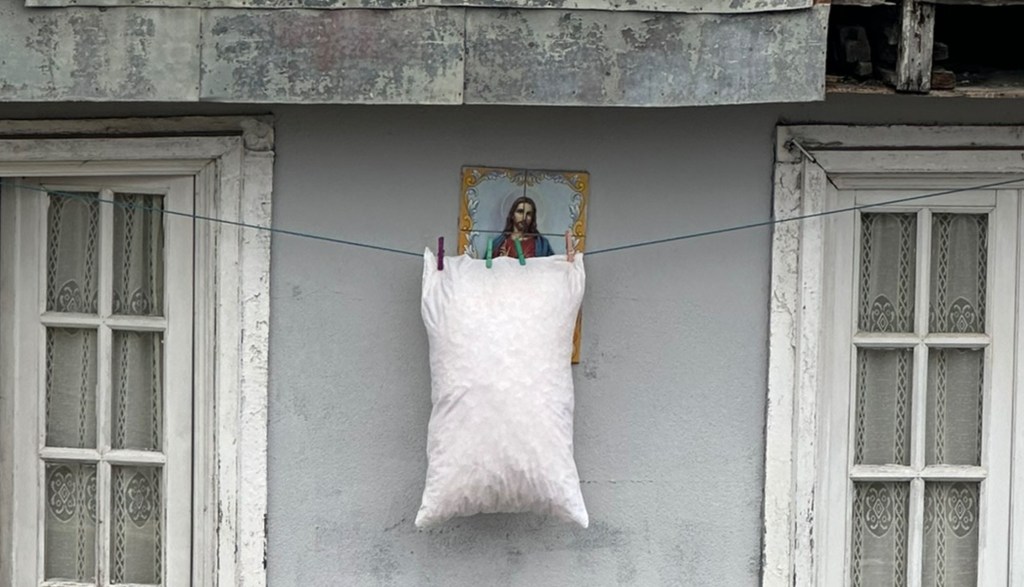
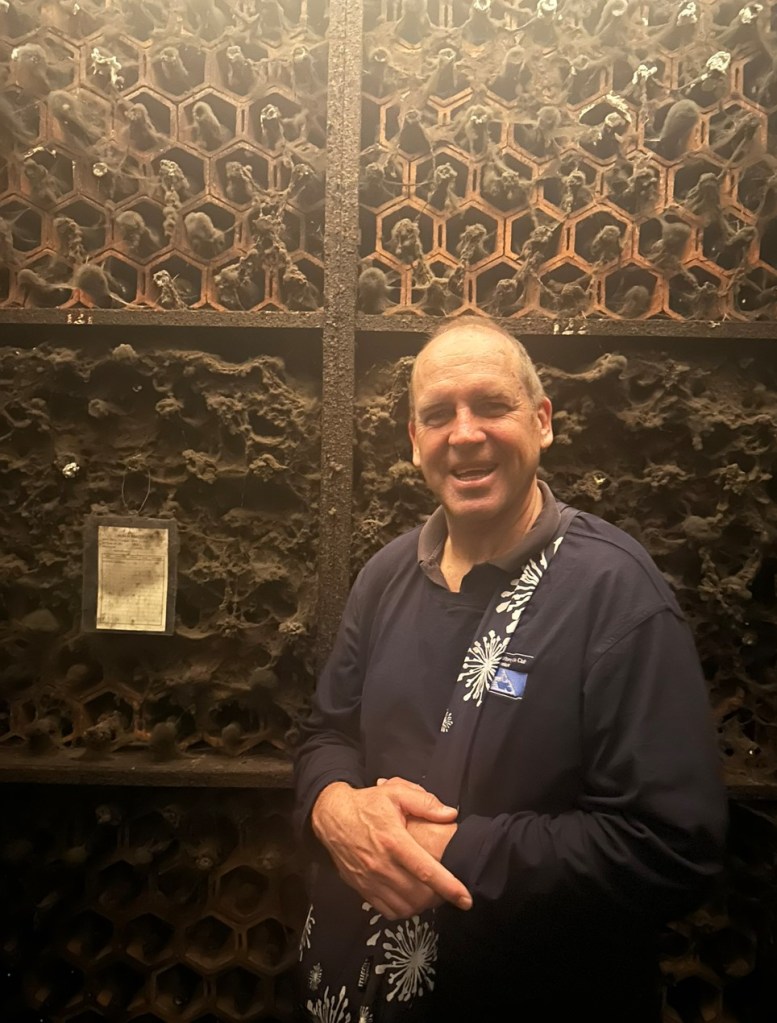
The other risk with our HOHO was that it just didn’t stop at any of the stops. It was early admittedly, but we definitely became concerned as we approached the “caves” district, as caves are actually cellars. Luckily, the HOHO stopped outside the 1756 Real Companhia Velha, a nice looking cave. Inside, it looked as though we’d missed the tour start but the staff were very helpful and gave us our own guide who was extremely knowledgeable. We saw the oldest bottle in the substantial cave, a 1790, completely undrinkable but still on display. The tour finished with a tasting, and the usual “yeah we’ll grab a couple of those”.
Back on the HOHO, we realised we had chewed up a substantial part of the day and needed to get back into the city to catch up with friends who were joining us on the upcoming Compass Spain, Portugal and Morocco tour starting on 1 September. Finding friends was like finding a HOHO bus stop, but after a bit of “you’re at the cathedral? Which bloody cathedral? I can see 87 cathedrals and I’m not turning my head yet” we caught up with Nic, Ray and William, lunched, and headed back exhausted to the hotel.
Day 15 was the final pre-tour experience. Up, another blue with the breakfast lady about whether we’d paid, producing our fortunately retained receipt trump card to quiet that down, onto the bikes, and scarily out over the tram lines. South, we didn’t have that far to go on the freeway before we turned off to the world famous town of Nazare, a Mecca for people who like to die while spectacularly surfing mountainous waves. Amazingly getting a park right near the beach, we had to have a wander onto the beach and touch the North Atlantic.

Nice beach lunch with a friendly waiter who loved that we rode motorcycles and so got the chef to start cooking early, and we set MotoXplorer Lisbon in the GPS. Amazingly the GPS didn’t let us down, and we swung in to see Ricardo waiting to take the bikes back for a quick service before the start of the big tour. After spending 20 minutes and unpacking every bag looking for the keys and swearing about keyless bikes, the 5,000km pre-tour tour was over.
Time to start the real tour from Lisbon.
 travellingbennetts
You should put all your writings together and do a book!
Susi
Get Outlook for Androidhttps://aka.ms/AAb9ysg
LikeLiked by 1 person
Susi, thanks very much, but you must realise that I am far too lazy to do that! Cheers Duncan.
LikeLike
As always – really enjoy reading your posts. My wife and I were in Spain in April – regrettably not on bike though – Thomas Cullinan
LikeLike
Tom, thanks very much. Really enjoyed Spain, and saw some gnarly roads suitable for your off-road skills! Cheers Duncan
LikeLike