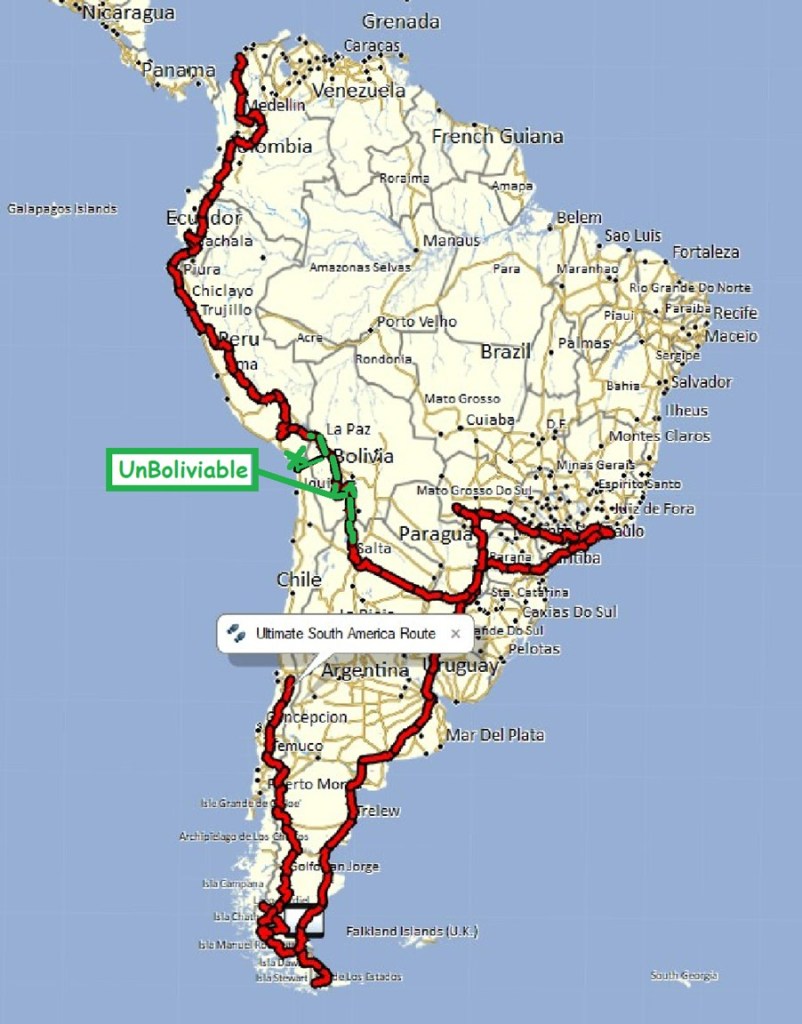
Crossing the halfway point of the trip and entering a new country; those were the fun things we did on Day 51 of the Ultimate South America. Heading north from Purmamarca (Permanent Marker) in Argentina, we re-crossed the Tropic of Capricorn although didn’t realise it until later on so didn’t get any photos.
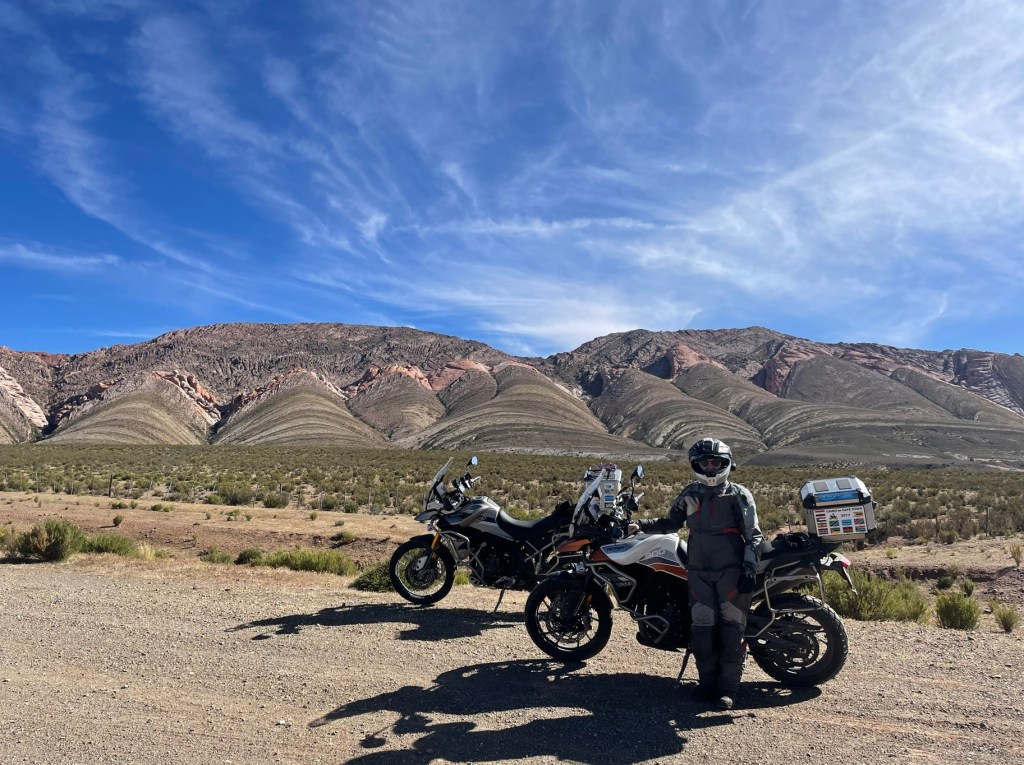
The scenery still very delightful, we were also aware that we were heading up in altitude, of which Bolivia has a plethora.
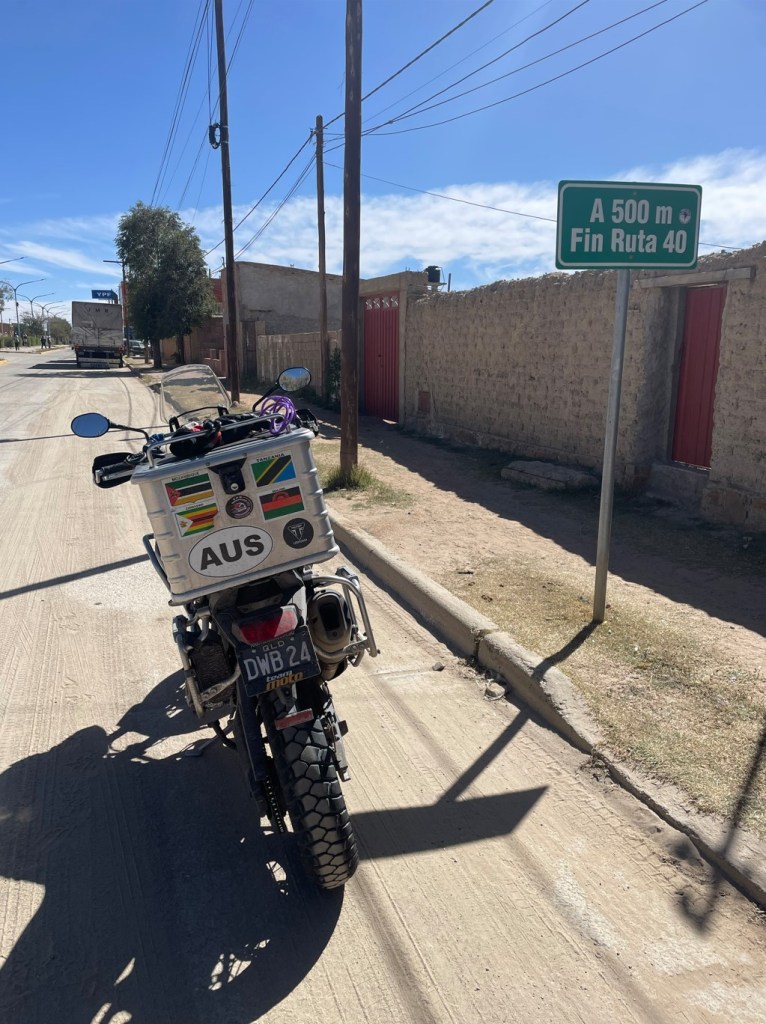
Arriving at the border crossing of La Quiaca, we rode the very northern end of the famous Ruta 40, last seen at the very southern end in Patagonia at Rio Gallegos. We tried to use up our last Argentinian pesos on fuel without much success, so spent it all on water and snacks instead before hitting the border facilities, parking in a field of boulders just to make the 3,500 m altitude even more taxing. Out of Argentina was easy, we’d already done it countless times so after inquiring after the health of all the immigration official’s spouses and children who we were on first names terms with, it was onto the Bolivian side.
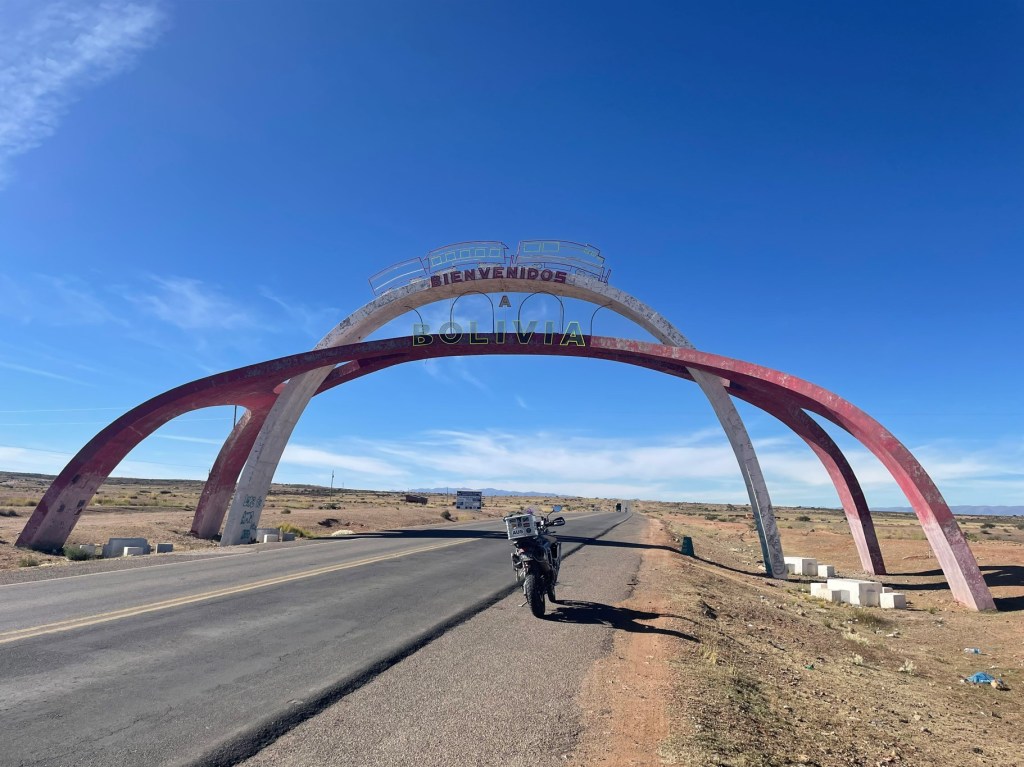
Likewise this was fairly easy and didn’t take too long, which was fortunate due to the heat and the altitude which had us way too close to the sun. Stacked up with Bolivian Bolivianos (BOB) and coco lollies, the ones with mild cocaine content rather mild chocolate content, it was off to Tupiza for our first night in Bolivia.
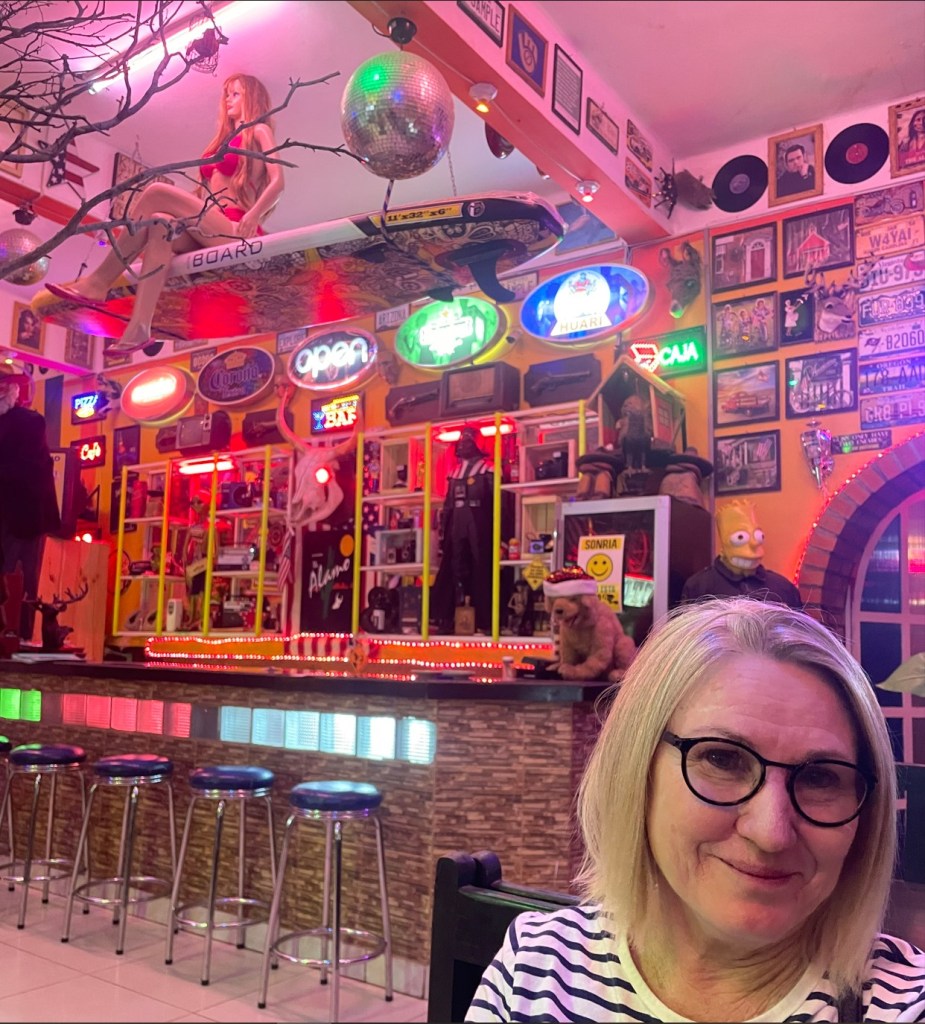
The hotel was smack bang in the middle of town and although there was only room for a small wheelbarrow in the parking area, we managed to squeeze 9 motorcycles and a couple of cars in with the support van, we’d worry about disassembling it all in the morning. We then managed to squeeze a few beers in before braving a wander up the street. Fears that Bolivian towns would be very basic were soon put to rest in the excellent Alamo Restobar, which allowed use of cards to pay, something we’d have to get used to again having spent such a long time in Argentina.
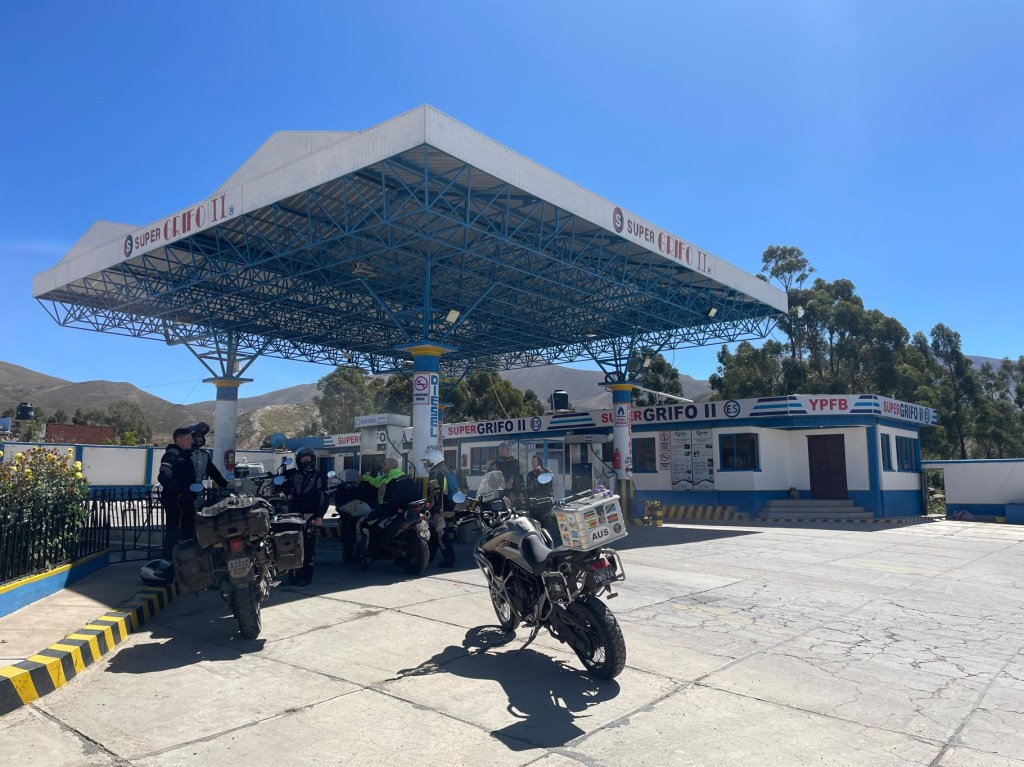
Day 52 was unpacking the carpark, luckily someone with advanced Jenga skills was on hand to avoid the entire thing collapsing into a tangle. Off we went, with the plan to re-fuel somewhere on route. This raised a significant problem; although Bolivia welcomes tourists travelling in vehicles with internal combustion engines, it doesn’t generally allow service stations to sell to tourists the liquid that allows combustion to happen. Bizarrely you can pull up at a servo, and just have to ask whether they will sell you fuel. Generally the answer is no, which is not ideal for maintaining calm when one’s remaining tank volume is unlikely to get to the next town, and locals are happily cruisin’ up to the bowser in a solid stream. Bribery sometimes works, but they are actually obeying the rules not selling us fuel so only if they are Samaritans will you get it.
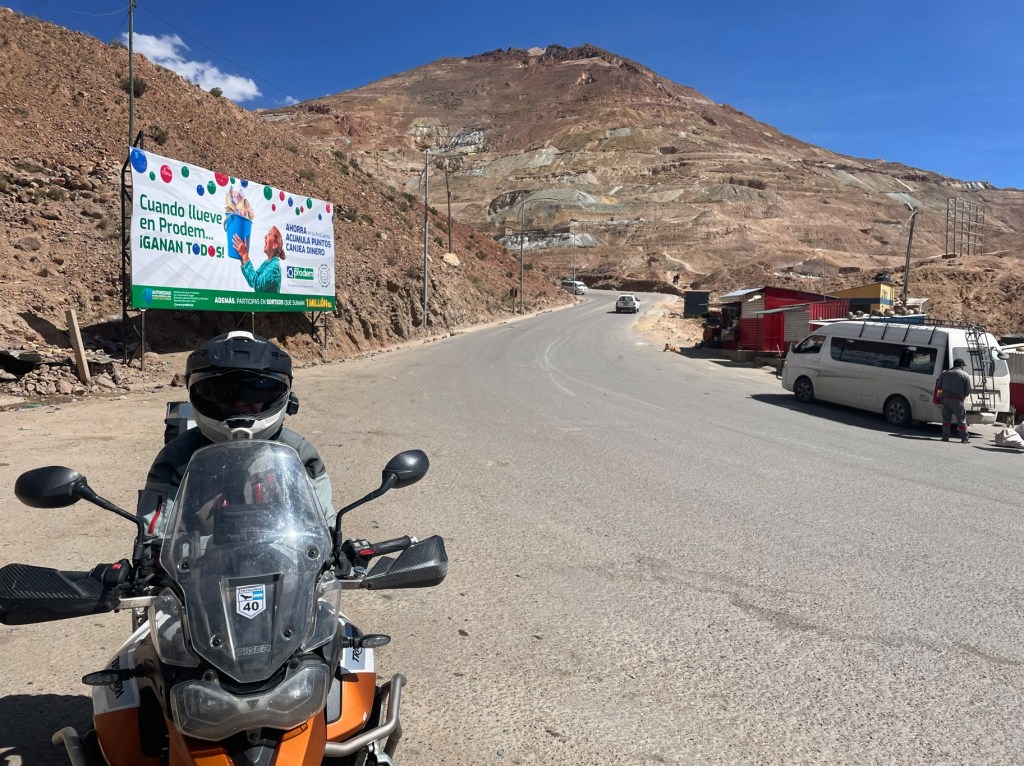
Across the Altiplano, the GPS was constantly poked at to see the altitude, and it reached a peak of about 4,300 m just as we went past the peak of Potosi, the mountain that eats men. Down fractionally to 4,000 m at the hotel, the first real experience of altitude was upon us. Doctor Paul with his high-altitude climbing experience had given us a presentation that morning, but I didn’t understand much of what was said because he didn’t use PowerPoint and there were no pictures.
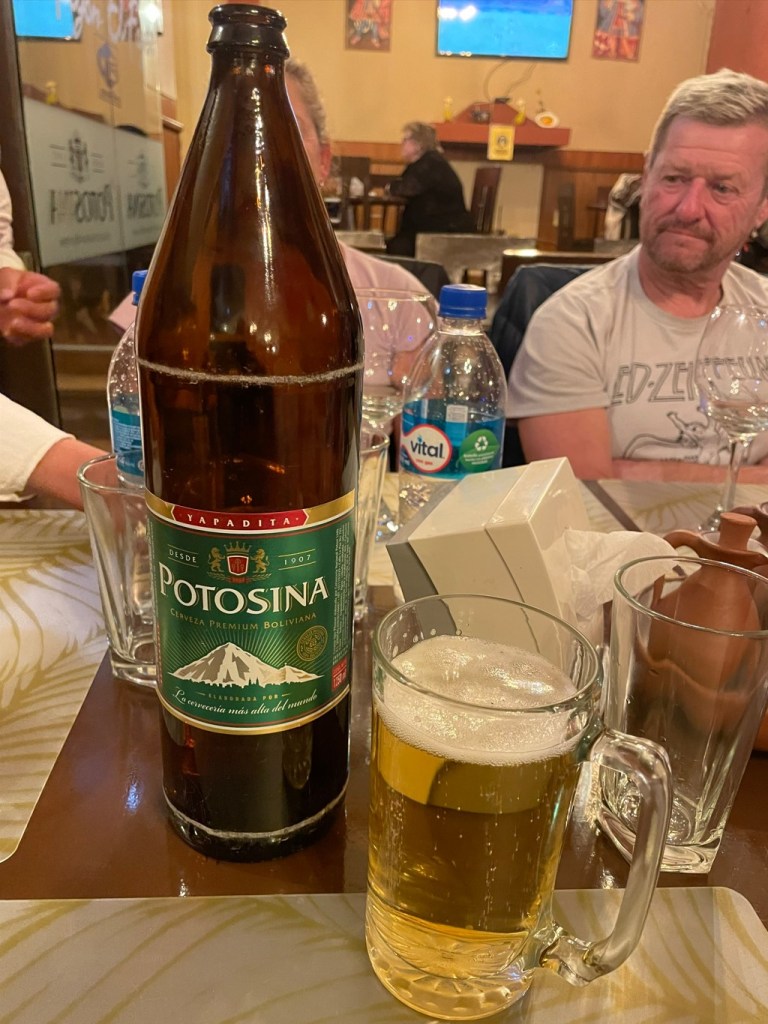
The range of responses amongst the team was fairly normal – headaches, dizziness, stomach problems, gasping for breathe, down to just about nothing. Cindy had stocked up with Diamox which works by making the body think it is has a high blood concentration of CO2 so tricks it into increasing the breathing rate. And it is a diuretic so she forgot all about the altitude while urgently trying to find a baños, win-win. I felt a bit more lethargic than my normal “just can’t be bothered going for a walk” but otherwise fine. A feature of hotels in Potosi is they all have oxygen cylinders for those who are really struggling. A slog down into town to find more coco lollies, then another slog down into town for an excellent dinner, and we set ourselves to experience our first night at nearly 4000 m.
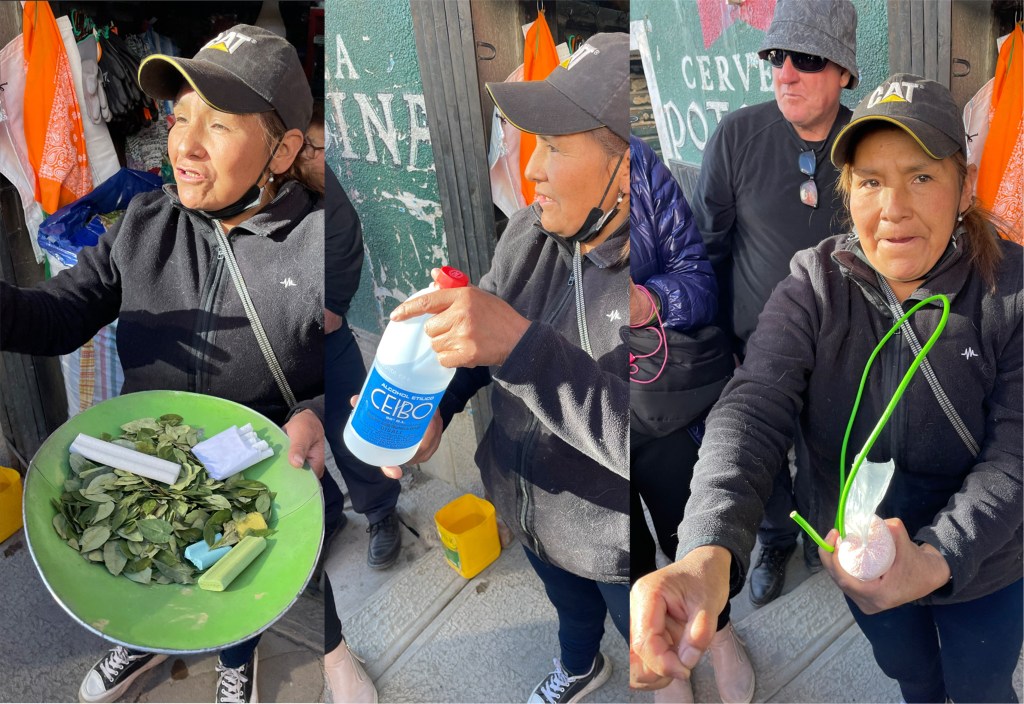
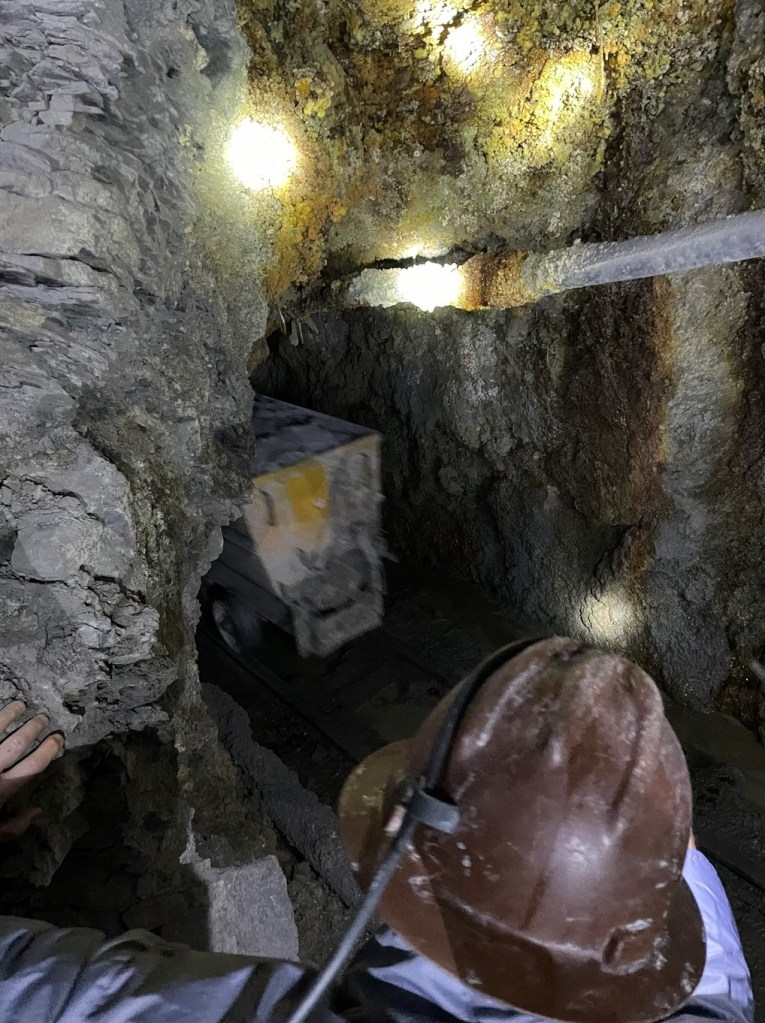
Day 53 was the Potosi mine tour. One of the world’s great deposits, it has produced around 65,000 tonnes of silver as well as lead, zinc, and tin, and killed and still kills and shortens the lives of uncountable numbers. It is all underground now, and so the co-operative mining still has to abide by certain universal underground truths; ground support, running services (air and water), clearing areas before blasting, and allowing dust to settle before moving back in. That said, the old-world conditions make it an interesting place to visit. Firstly we had to buy coco leaves and 96% proof alcohol and soft drink, and what is universally called dynamite, safety fuse, and small bags of ANFO (ammonium nitrate mixed with diesel) for the miners. Then into the underground gear.
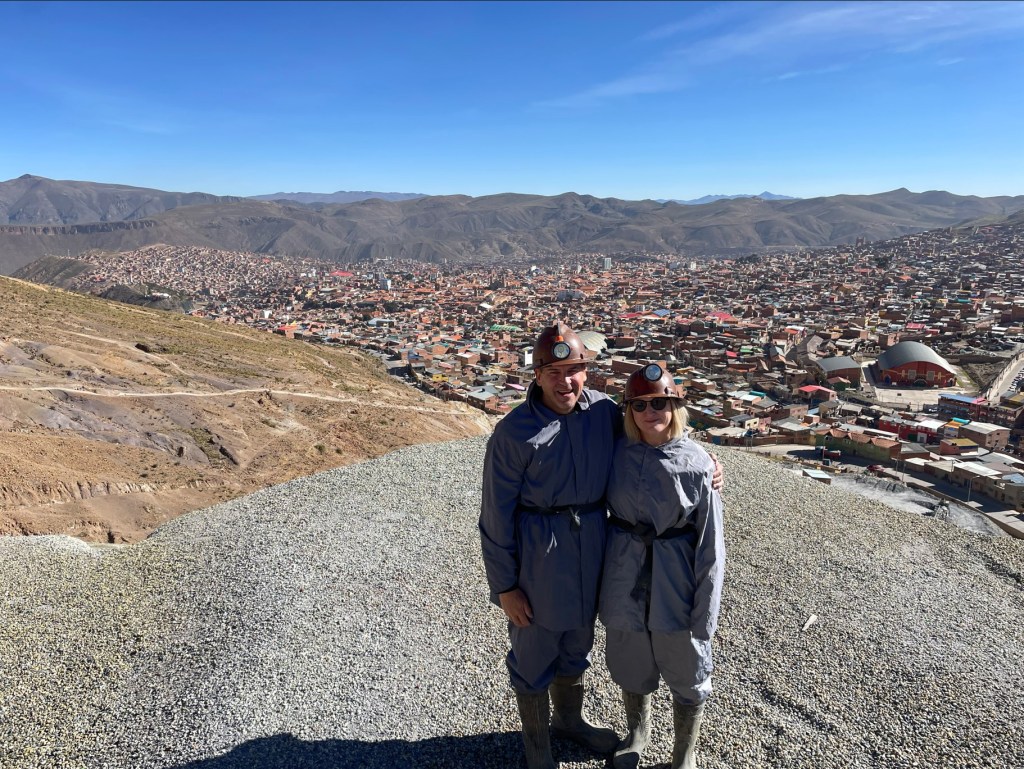
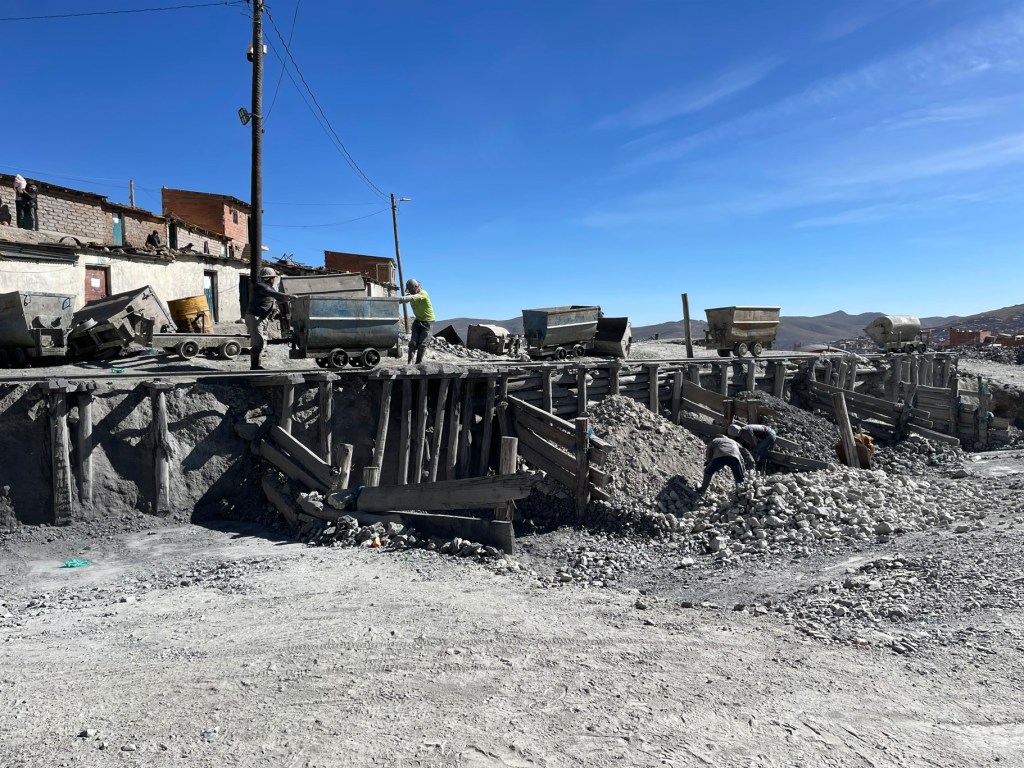
Up to the mine, the harsh reality is immediately apparent with the ore loaded into carts and pushed out along the drives, and the individual miner’s efforts dumped into their own piles. The mineralised rock is then separated from the waste fines and sold to concentrate buyers. Compared with modern mines with hundreds or thousands of tonnes of concentrate produced daily, it is easy to see how Bolivian individualistic and co-operative custom limits the miners to a very tough life.
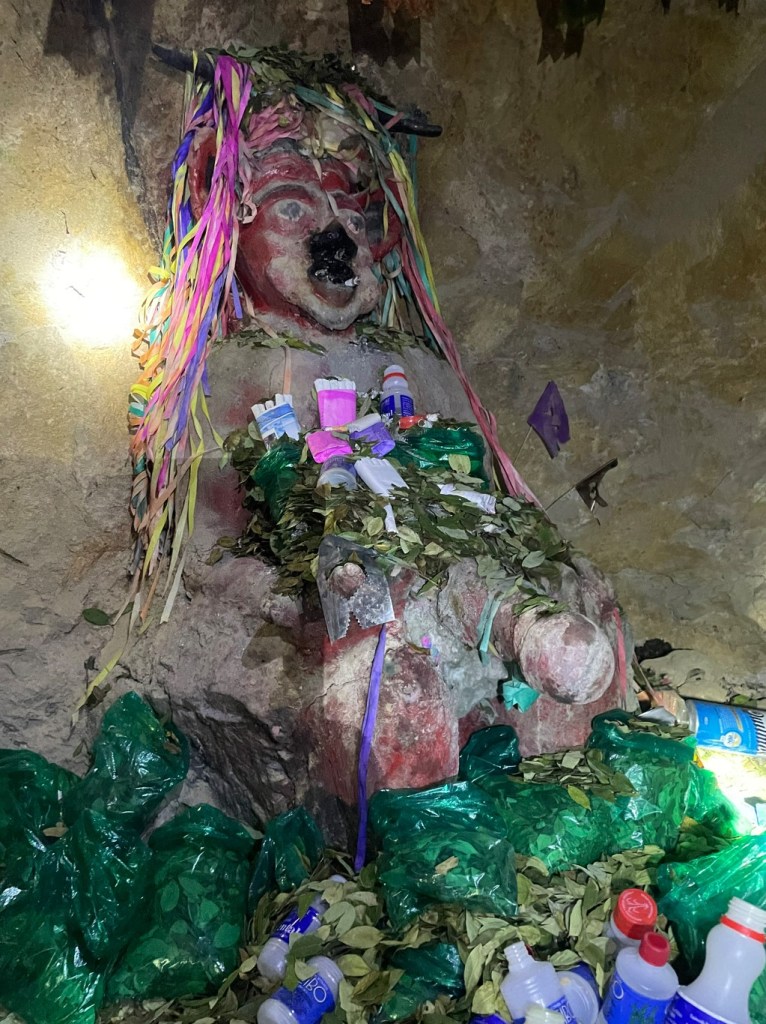
Down pit, it wasn’t as bad as thought, and expectations of being taken into a drive “sanitised” for tourists was quashed as soon as we had to get up against the walls to let ore carts pass. The miners get their own working areas, with drives locked off and presumably some system in place to keep common areas and services in good condition. First duty was to see and make offerings to El Tio, The Uncle, Lord of the Potosi Underworld, who like most deities needs a bit of attention to keep things running smoothly. El Tio has a diet and lifestyle which would be described by Keith Richards as “sound” – he survives on coco leaves, ciggies, and 96% proof alcohol, and possibly some Viagra if the visual evidence is reviewed dispassionately.
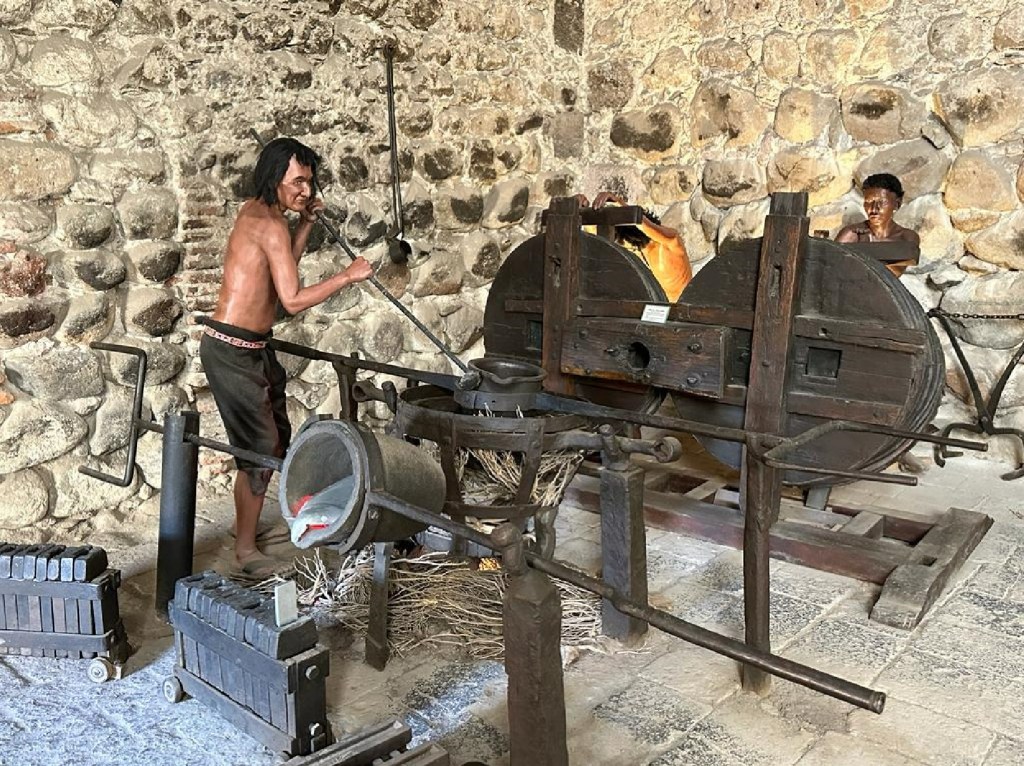
Back into the light and with a few dozen coco leaves and a bit of the activating chalky stuff later, we were into the museum which had been a mint producing large amounts of coinage directly from the source. Dinner with David and Roisin in the same excellent restaurant after checking out a heap of other less excellent restaurants, and Potosi was done.
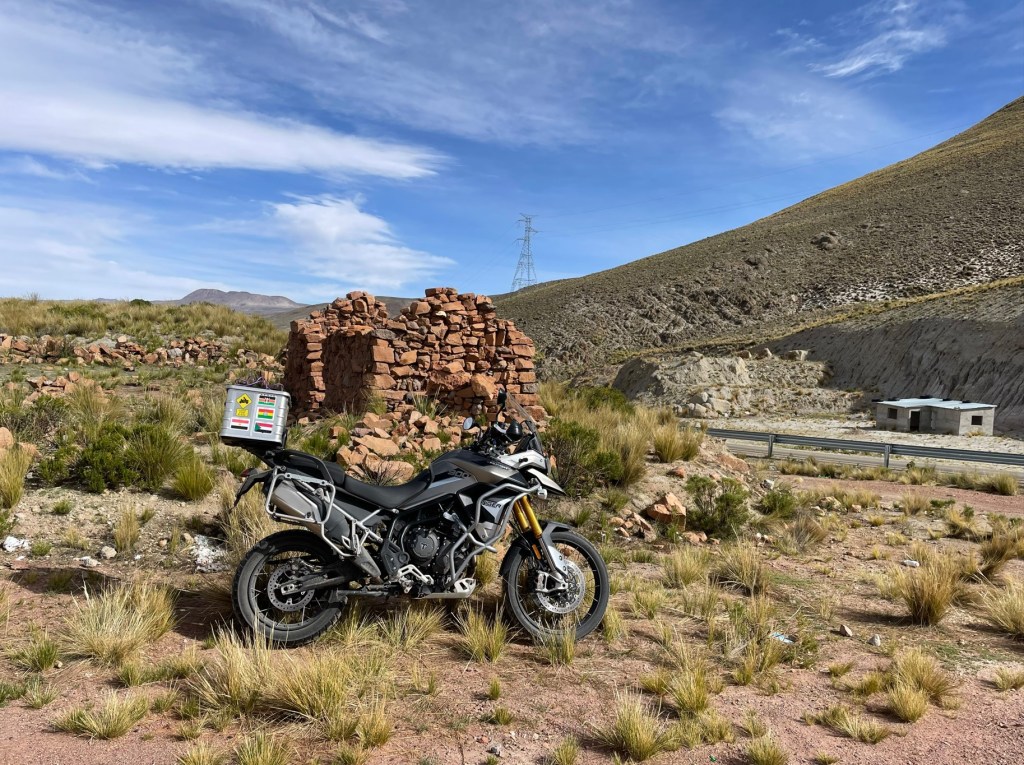
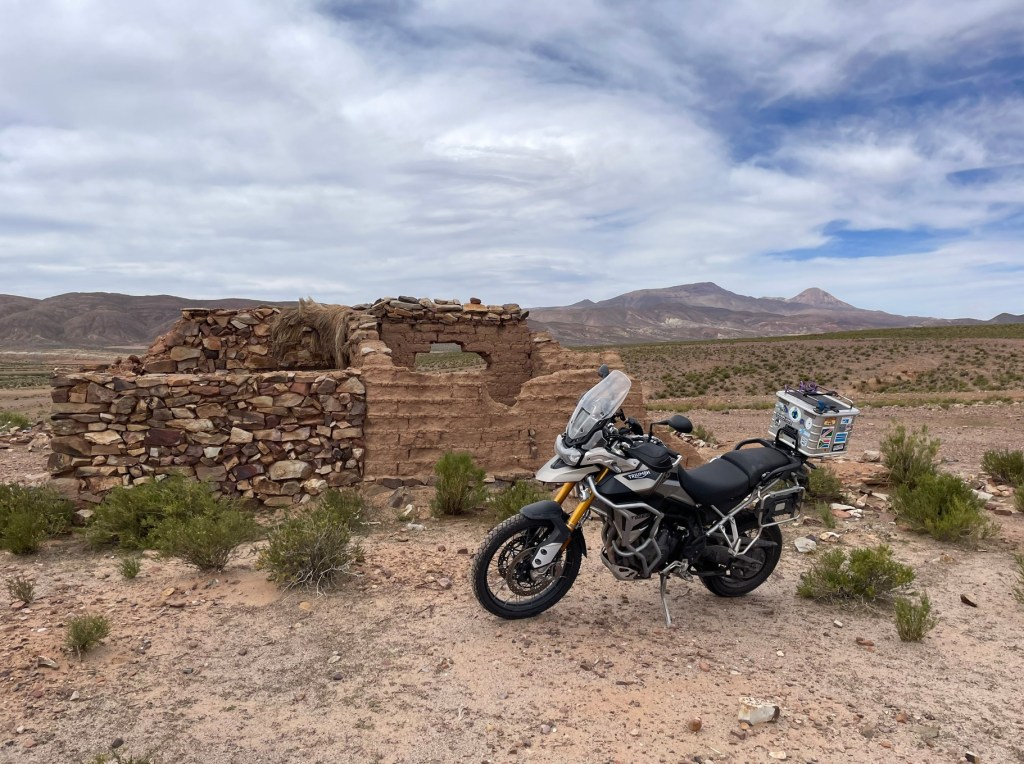
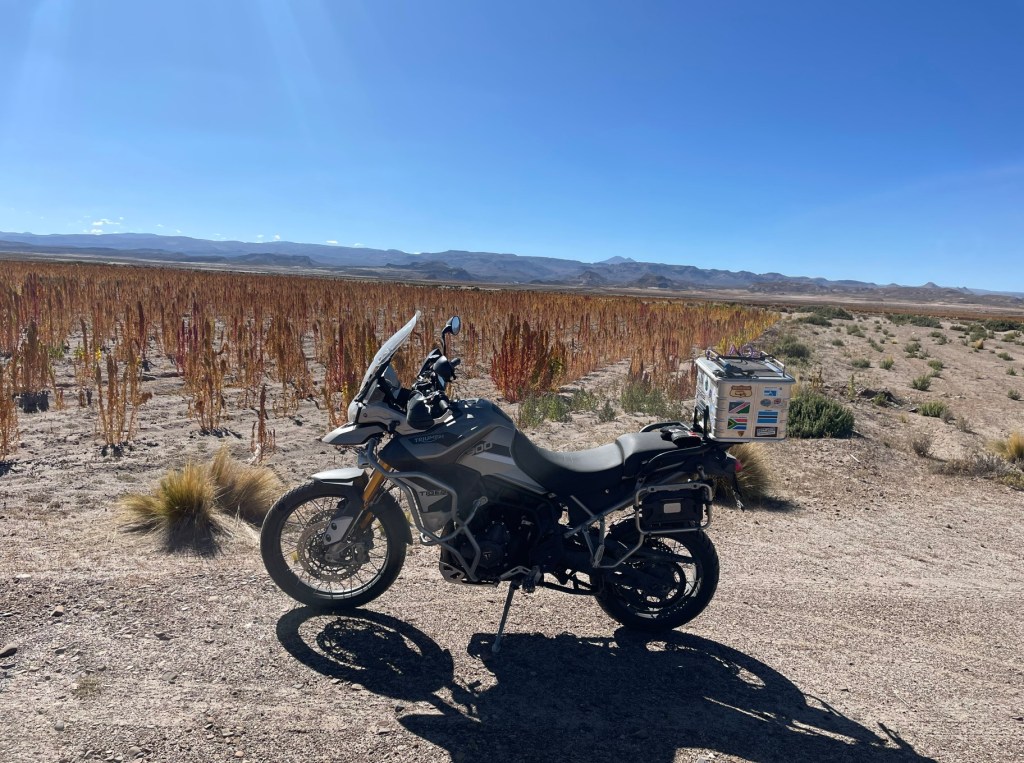
Day 54 was a very slight decrease in altitude heading south-west across the Altiplano to Uyuni. Feeling great due to a mouthful of coco leaves, the epic scenery was on display through the twisty roads, with steep valleys leading down onto the flats. Strangely photo obsessions start to creep in, not because of the coco, today’s was trying to get a combo abandoned stone building and epic scenery photo. Like most obsessions it wasn’t going well, no buildings were right on the edge of a cliff or they were possibly still occupied, or were up a goat track, or buried in rubbish. Eventually something awesome appears, but you can’t slow quickly enough and the next opportunity for a U-turn comes 40 km later. It is a curse.
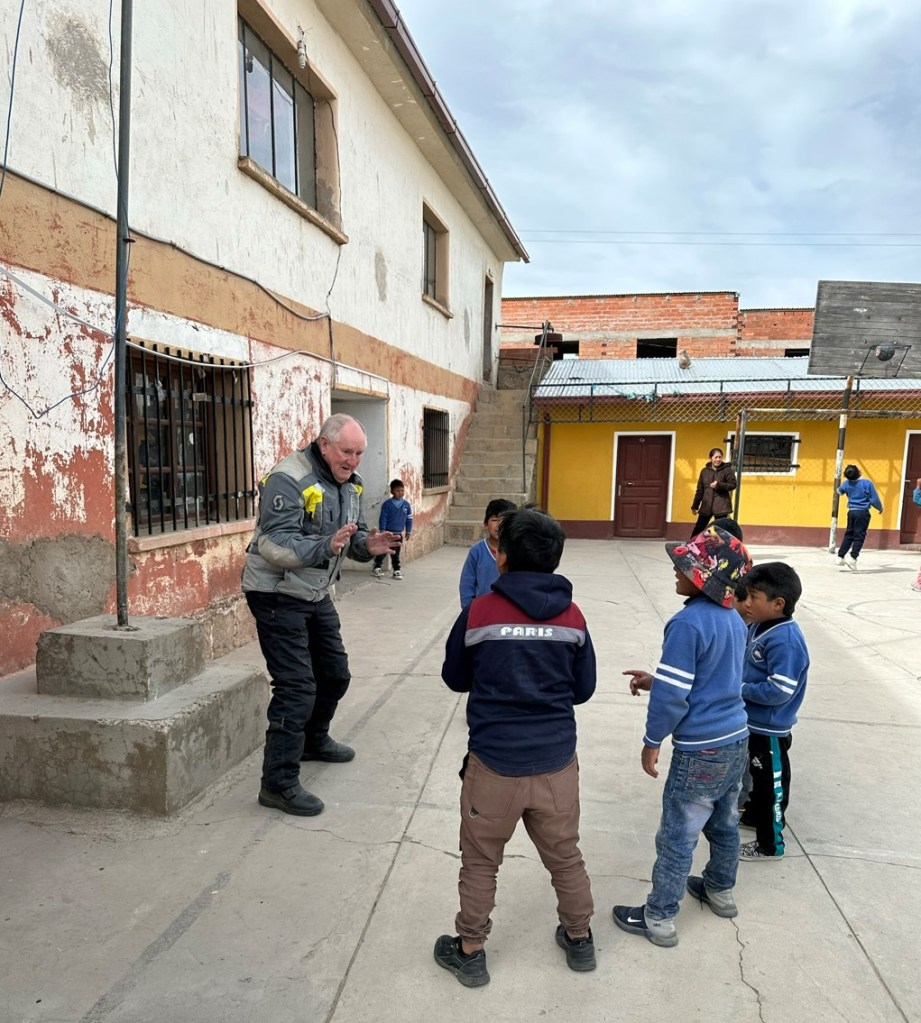
Across a wet flat land covered with llama, which nearly became a photo obsession except the llama would have been miniscule, why doesn’t the iPhone show things the same size as the eyes, and into the tiny town of Chaquilla. This is a regular Compass stop to support the local school; we’d bought some general supplies in Potosi to give to the teachers. These sorts of stops can be a bit awkward – wealthy motorcyclists swanning in and showing Bolivian children a life foreign and impossible for them, but kids will be kids and we all had a ball. Especially the kids getting a ride around the square on JC’s bike, several went around several times and continued to queue up.
Down the hill into Uyuni, well sort of, it is at an altitude of 3600 m so no rest for the sick and those forced to transport luggage up flights of stairs. An excellent establishment, the Tonito hotel did great pizzas and had craft beer on tap, so no need to find anywhere in town. A brief wander up into town to get a few more BOB and it was all over for another day.
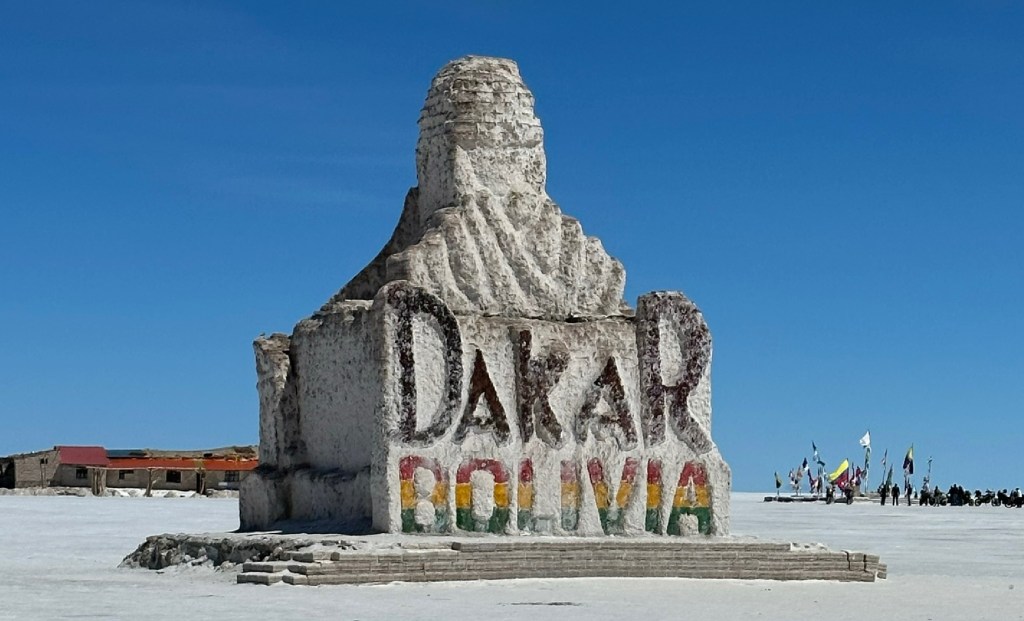
Day 55 was inevitably the Salar de Uyuni salt flats tour, and because the salt flats are jolly large we had to get into it early, firstly to the train and rollingstock museum out on the edge of the flats then visiting a small artisanal establishment made of salt blocks which unsurprisingly makes bespoke salt – bespoke normally an excuse to have as much stuff that isn’t salt in the product as possible. Then out onto the flats proper, with puddles of hypersaline water noted by all who had been considering riding out; certain death for motorcycle electronics. To the Dakar sculpture, there were lots of bikes lined up but none were owned by someone who’d got their motorcycle bogged in a salt lake in Western Australia in 1996, they knew better.
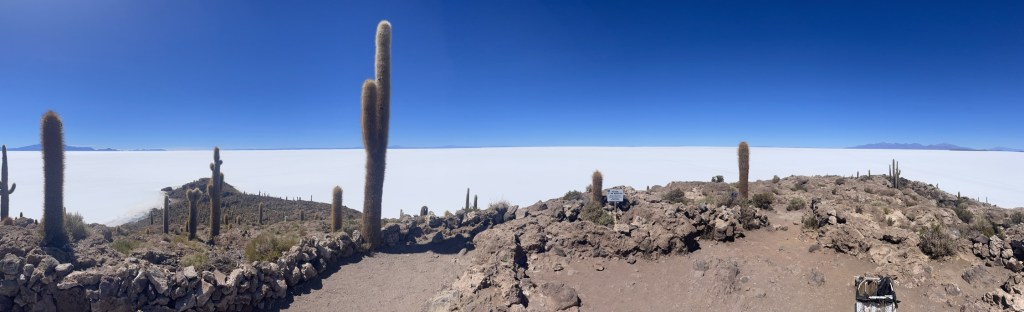
Driving out onto the salt flat is amazing; there is just nothing but salt flat, and by topographical standards it is extremely flat. Suspension not required flat. Snow blindness is an issue, so we’d all stocked up on sunnies for the 71 km drive out to Isla Incahuasi in the middle, not much to see except lots of flat white. Arriving at the Isla, the crew set about assembling lunch, while we climbed to the highest point to get photos of huge cacti and more flat white.
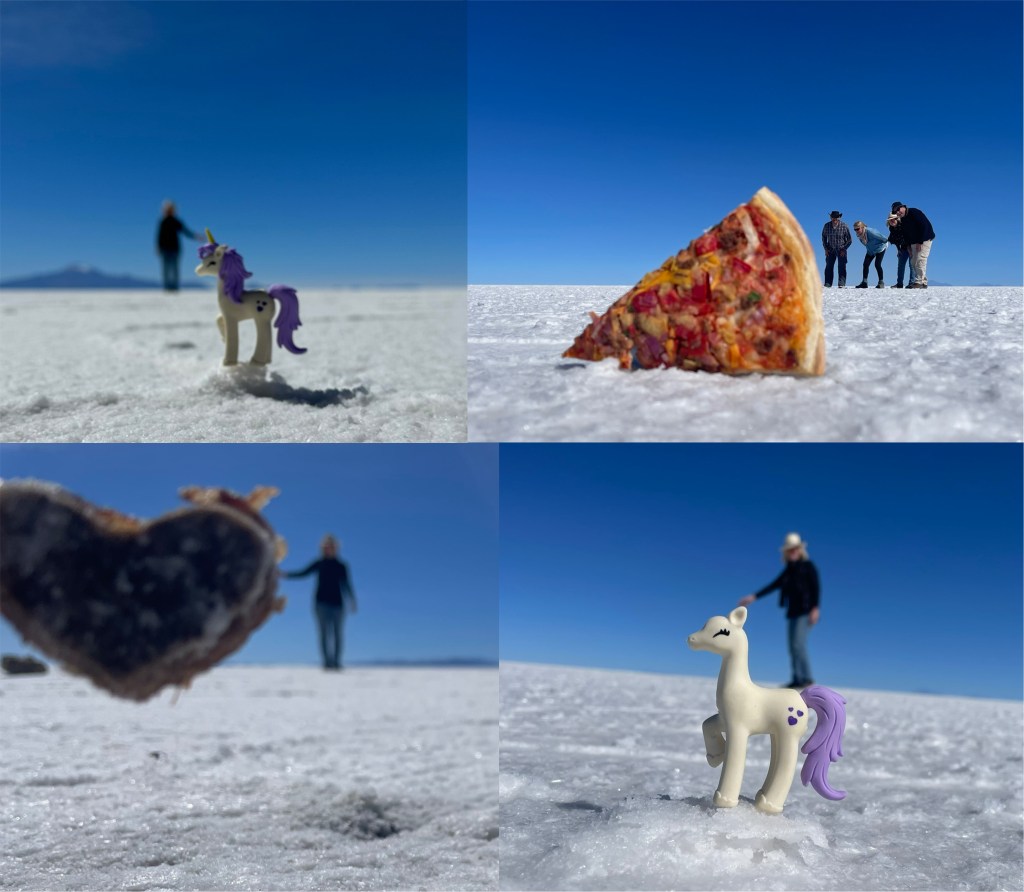
After lunch the standard Salar de Uyuni activity began; doing weird perspective photos. We’d pre-prepared for this with a variety of props, but one thing became immediately apparent – having a very small thing in the foreground makes the focus issues a lot more complicated.
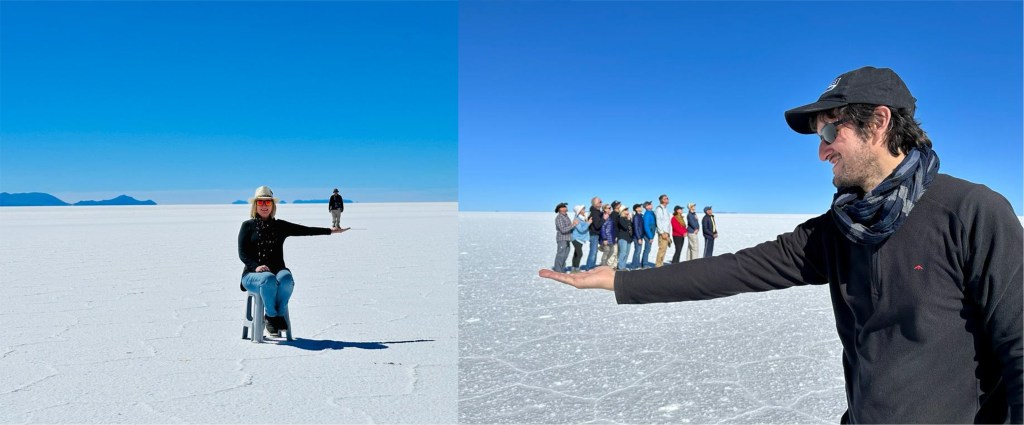
Back across the flat white and into Uyuni, there was once again no need to go too far from the hotel with its craft beer on tap and quality pizzas.
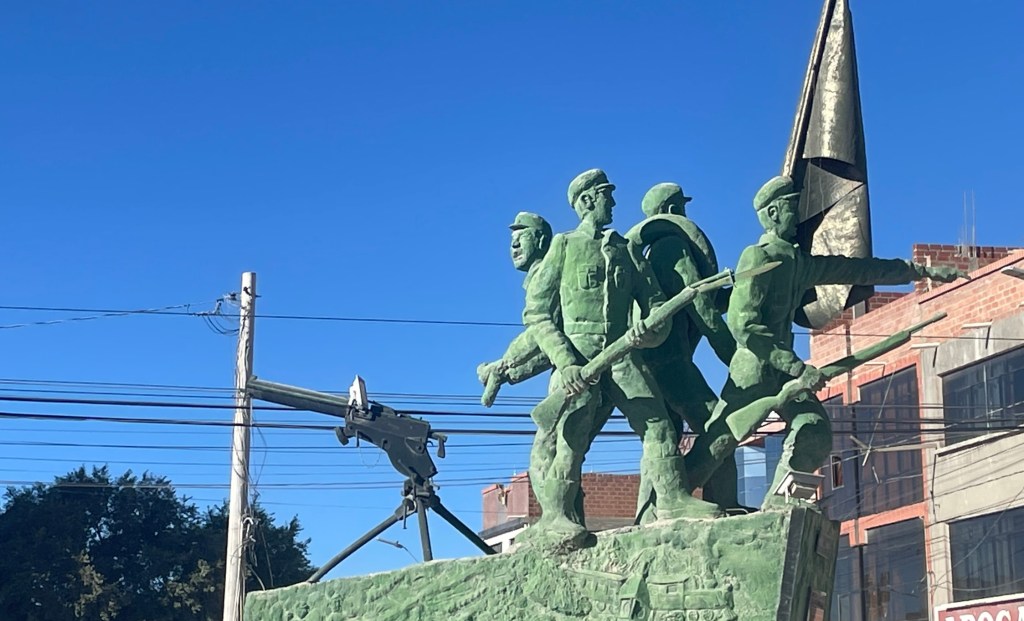
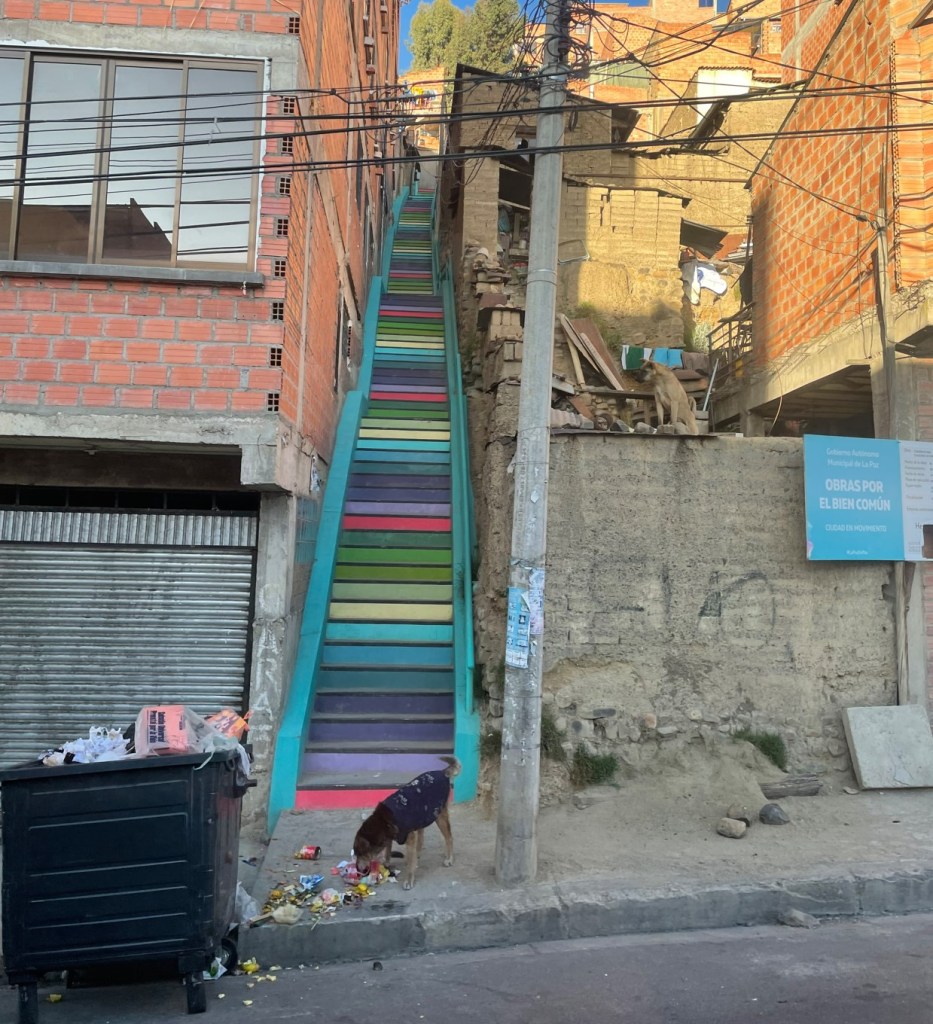
56 was a change from high altitude back to higher altitude, with a target of La Paz. Big victory was had at Oruru where we managed to fill up without dramas, and the riding was very scenic. Ride Leader JC said he’d only once led a ride group into La Paz, and as he was the only one to make it to the hotel they’d decided it was a better idea to park the bikes at Compass local fixer Anna-Maria’s house in El Alto, the highest altitude major population centre on earth, and catch the cable car into the La Paz valley. The traffic getting into El Alto was another step up from Buenos Aires and Rio and the other assorted congested nightmares of the continent so far; the only positive thing that could be said is that it is so congested it is fairly slow. Miraculously arriving in some semblance of togetherness and physical if not mental wellness, we greeted Anna-Maria with shortness of breath at the 4000 m level, chucked our luggage in a bus, and caught the cable car down to the hotel which was happily only at the same level as the Salar de Uyuni.
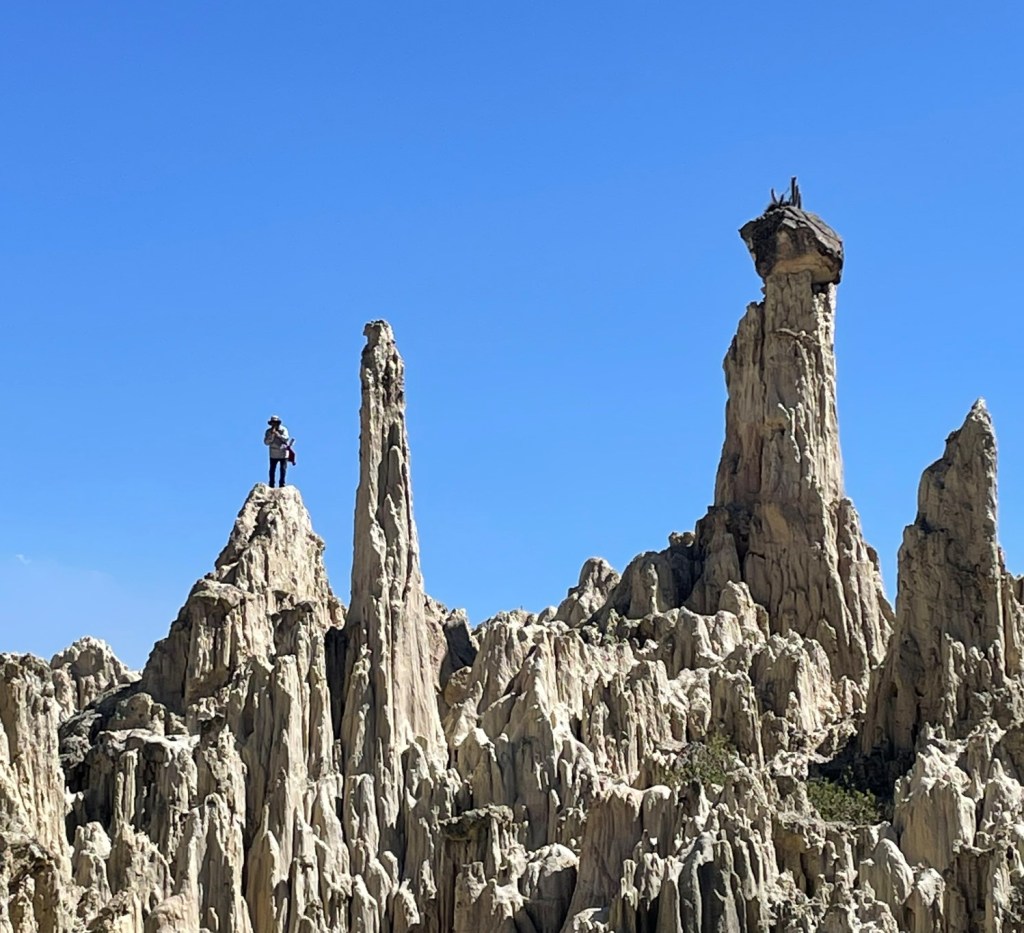
Day 57 was a city tour day, starting with a south-eastish trip to see the Valley of the Moon. A lot of La Paz is built on clay sediments, but this a particularly soft part with water erosion making some very interesting formations, which only survive due to the low rainfall in this neck of the lack of the woods. Inevitably some local started up the pan pipes from the top of one of the rock-capped pointy bits near the end, which had us trying to find another way out or sneak past him while a trapped unfortunate gave him a few BOB.
Then back up to the city for the proper city tour – of note the prison almost in the middle of the city which is more like a hotel than a prison – family members live in there, and goods and services and quality of accommodation are aligned to the level of income. Then onto the touristy street, and so now is a perfect segue moment to describe a peculiarity of South American retail; the hypercompetitive yet utterly non-competitive environment. Think for a moment about our shopping life. We typically go to places which suit our shopping needs, and we are usually quite loyal as familiarity makes shopping easy and quick. But our shops avoid being right next to shops which sell exactly the same things – for example a huge Mitre 10 hardware is never sandwiched between two Bunnings hardware mega-centres. In South America, it would be. All shops selling exactly the same things are in the same street. Can’t find a purple widget in my shop? I’ll go up the road to see Pedro who with luck will have a purple widget, and he does, so I’ll bring it back and you’ll pay me, assuming you haven’t just passed out due to early onset capitalism.
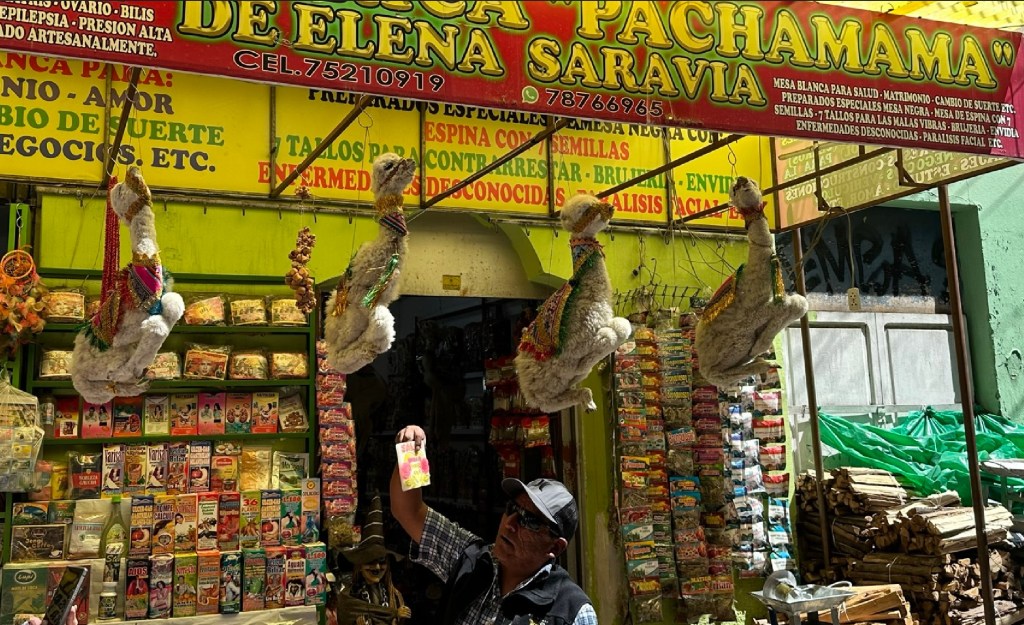
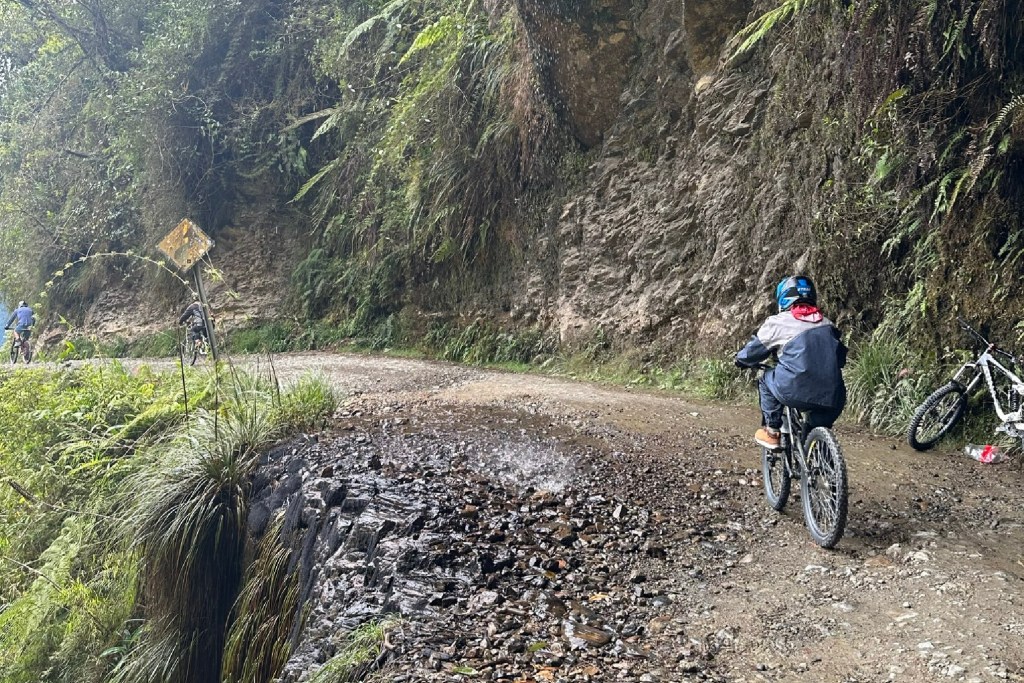
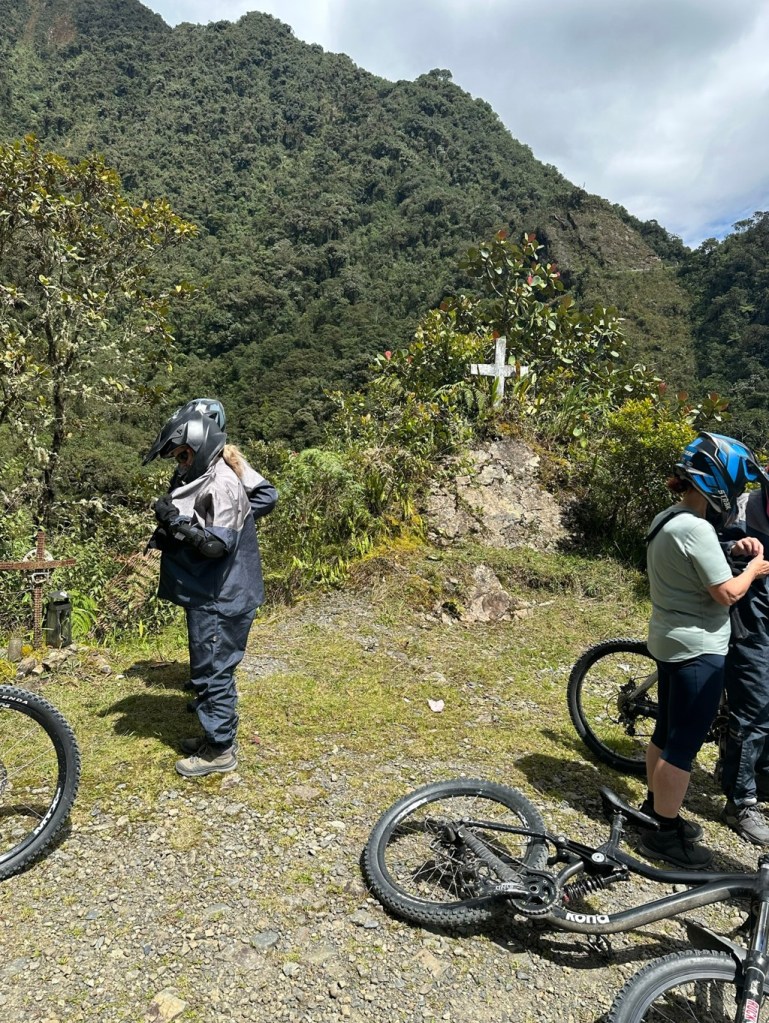
The city tour cut short by a teacher’s protest in the main square, we were back to the hotel for a well-deserved lie-down to further acclimatise before a few quiet acclimatising drinks and dinner. Day 58 Death Road motorcycle tour has been described ad nauseum in our previous post; a tale of humankind’s capacity to not just survive against incredible odds, but to rise up and conquer. You can’t read it now, I’ve over-hyped it. I can’t describe the bicycle tour because I wasn’t on it, but Cindy was and she loved it except for waiting 3 hours at the end while they washed the bikes, finally returning in a touchy mood with the rest of the crew to La Paz at 8:30pm.
Day 59 was into the bus and a trip up to Anna-Maria’s place to get back on the bikes for the trip to Copacabana. There are lots of shops selling brake pads in La Paz, all next to each other naturally, and they should be thanked for their service given the unbelievably steep roads the poor old bus and other vehicles struggle up. Into El Alto, Anna-Marie or her architect had decided to rip up the driveway while we were gone, and the trades chaps had left a few randomly placed strays about which caught some off-guard, but we all got out via the footpath. Off to the west-ish after a real struggle getting fuel, it wasn’t as far as the itinerary suggested, because today was the first day we were off the official Compass plan. Brief explanation – the situation in Peru had deteriorated both physically and politically – planned roads had been washed out, and the planned border crossing into Peru at Puno was actually closed due to a stoush between Peru and Bolivia. So plan B was as far as Copacabana on the shore of Lake Titicaca, not the same Copacabana as Rio’s Copacabana, a night there, and back to La Paz before getting into Peru via Chile. Things were going okay, at least until we reached San Pablo de Tiquina which sits on one side of a narrow strait between two big areas of the lake.
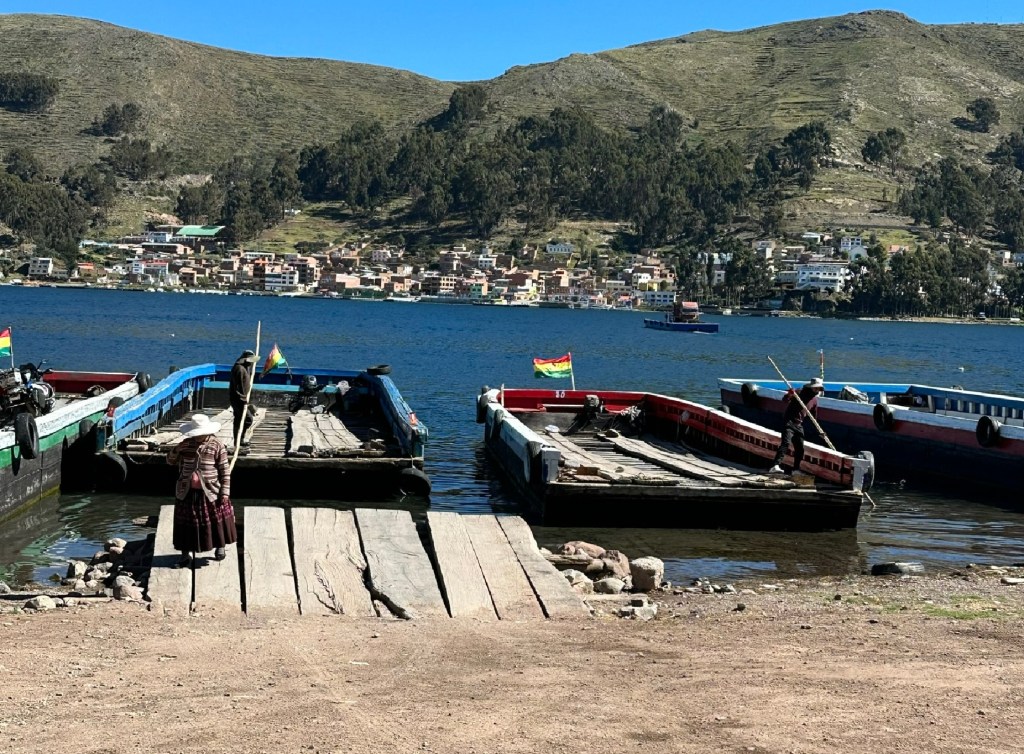
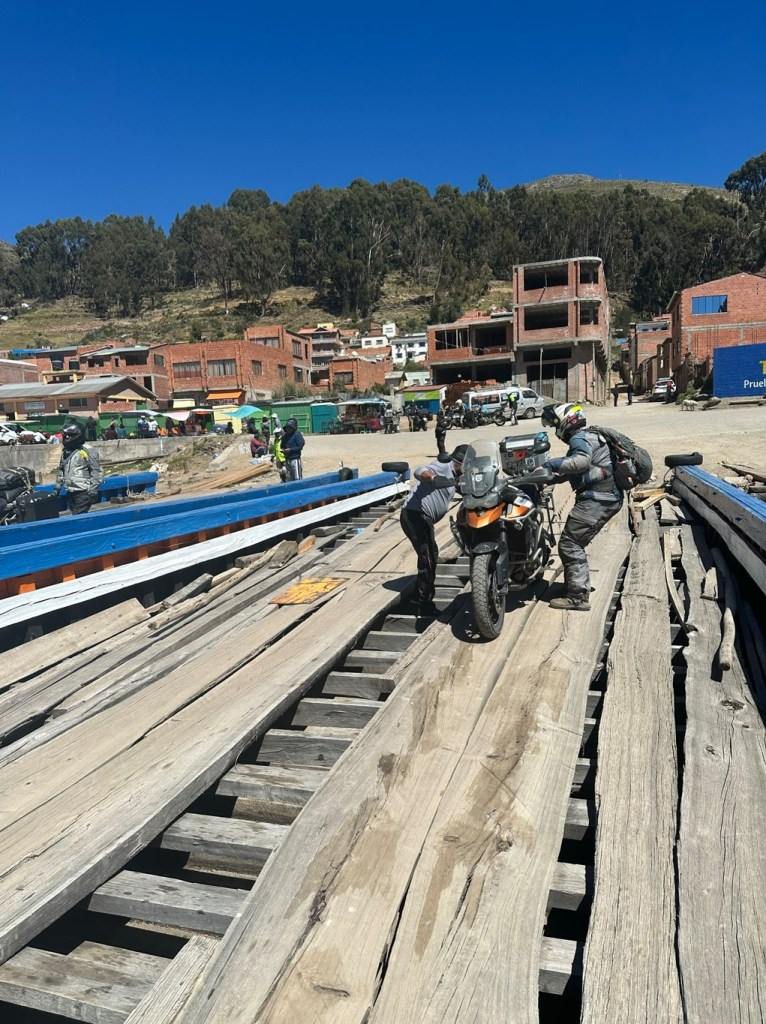
Another brief comment about Bolivian business which adds to all the same shops selling exactly the same things being right next to each other. It is not acceptable for companies to set up large shops with the exception of dealerships for cars, almost everything is done by sole traders in co-operatives or just on their own. So rather than have one well-designed big ferry cruising back and forward across the strait, there are lots of questionable wooden barges driven by outboards that share the ferrying, taking everything from buses and trucks to cars, motorcycles and walk-on passengers across. The ferry deck is beams going across, with long and very shonky planks of eucalyptus with terrifying gaps either side and splits down the middle. Once our craft had made itself available for loading, it was a scary embarkation mainly because the loading ramp board ends didn’t align with the barge board ends, sometimes giving a 6″ step up which needed warp speed to get the bike over then instantaneous stopping before disappearing down a huge front tyre-width gap between the boards. No riding for the faint of heart.
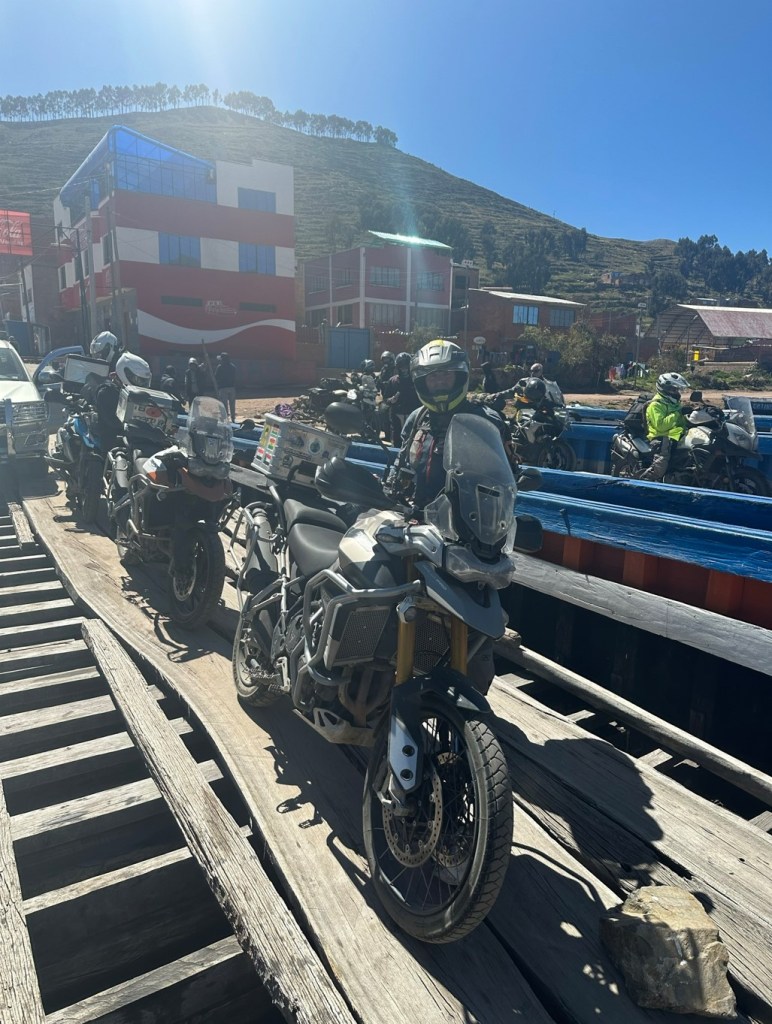
Across the short gap in a race with another 4 barges, and already feeling the 3812 m, the next part was getting the bikes off again at San Pedro de Tiquina. Pablo one side, Pedro the other. Plan was to rush the bikes backward as that end dipped when a car was getting off, and this worked both in getting the bikes closer to the ramp and completely blowing me up. Bikes off, the final straw was Cindy tragically having a minor drop and only the two of us being available to pick it up.
Off along the very picturesque shores of Titicaca, the altitude only got closer to 4000 m as we went over the surrounding hills. Into Copacabana, then out again, then back in, neither our Maps.me app nor the GPS was being particularly useful for navigation, but eventually we found the magic portal into the hotel which looked like no-one had ever been through it. Now it was time for me to collapse onto the bed and sleep for the entire day feeling decidedly ordinary, but a full recovery was made after a very light dinner of salad and chips.
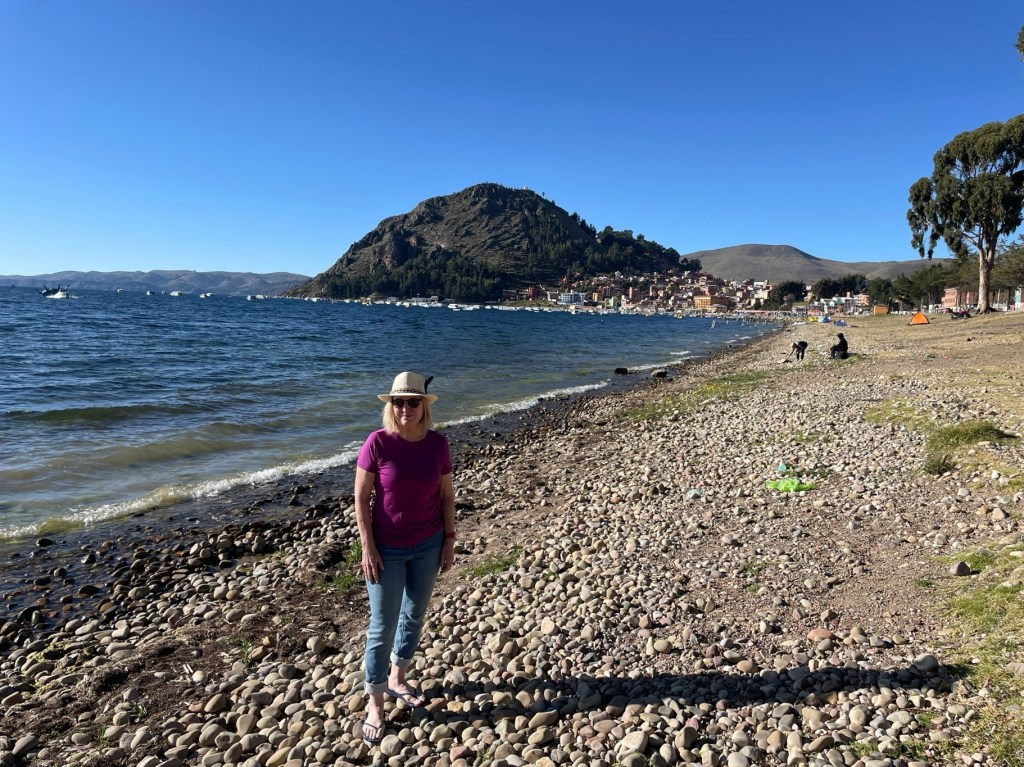
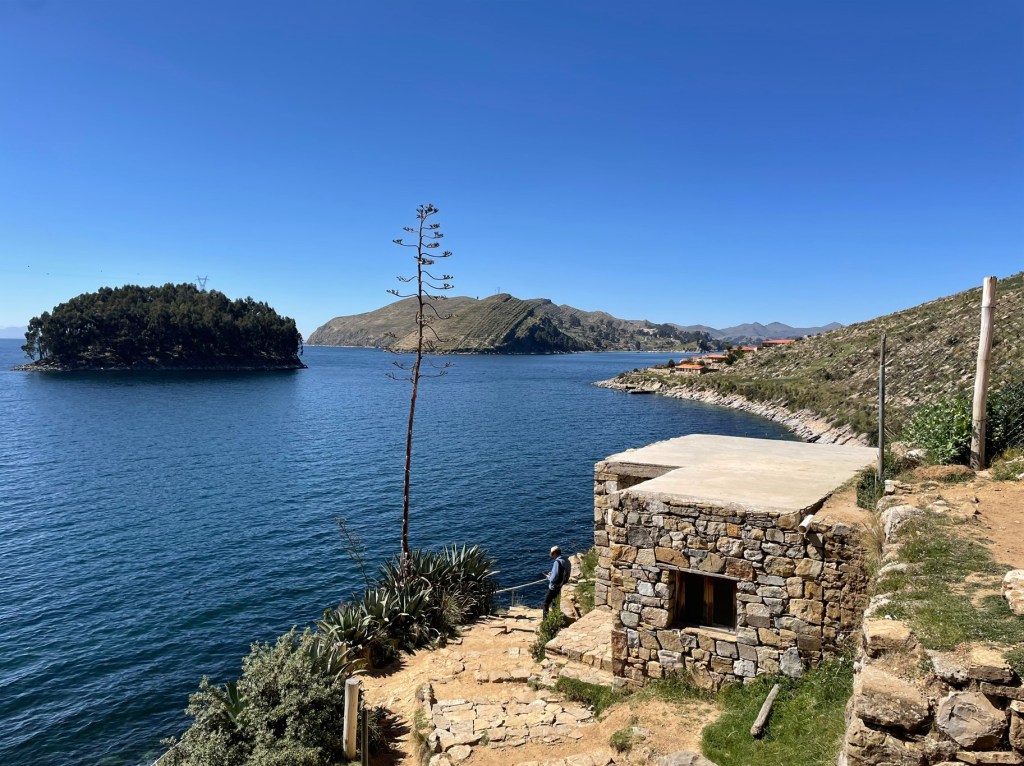
Day 60 was retirement age for many of the crowd due to the altitude which seems impossible looking across a lake that appears like the ocean which is at 0 m. The day’s excursion was out to the Isla de la Luna and the Isla del Sol, luckily not too far away given the top cruising speed of the boat seemed to be up there with a dead cow’s in a millpond. Eventually arriving at Luna, we were the only ones there and had taken the locals by complete surprise, using the baños for free and getting up into the Incan ruins before they could get the souvenir stall set up. The Isla de la Luna was the exclusive and remote island for virgin girls who were children of the high ranking and elite families throughout the empire, with the objective to train them and set them up for duty. Which was to be sacrificed on Isla del Sol, a great career option. A wander about the ruins and a comprehensive explanation of what went on by JC, some light souvenir purchase by some, and we were back on Drifting Slowly II for a cruise back to the Isla del Sol.
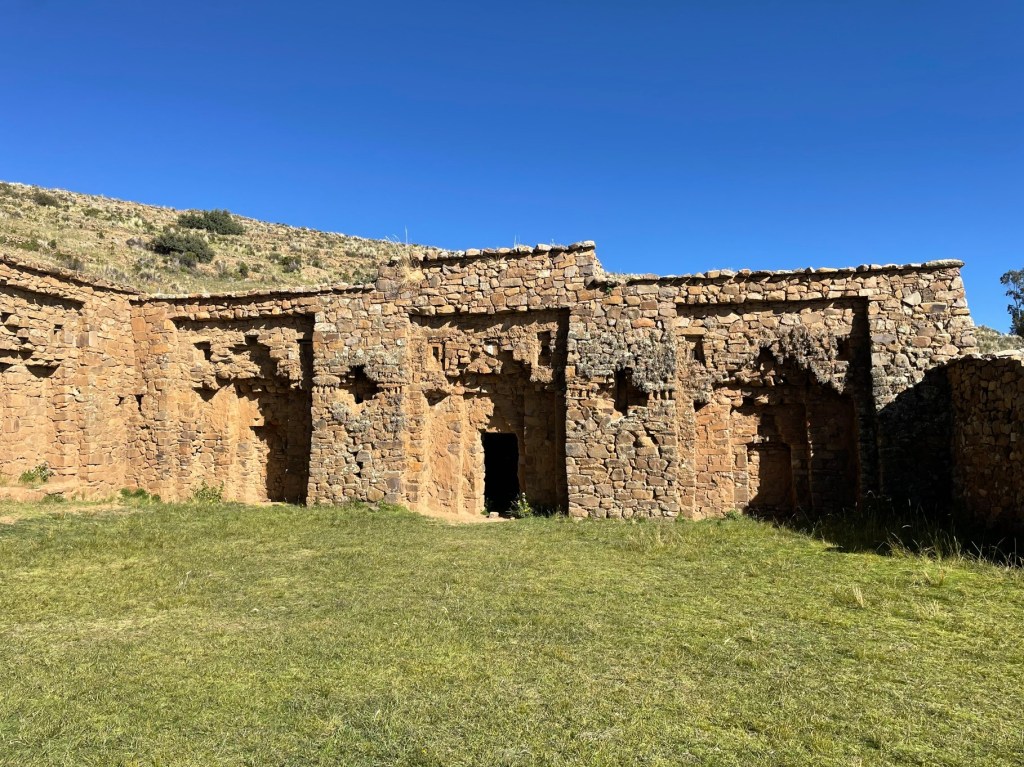
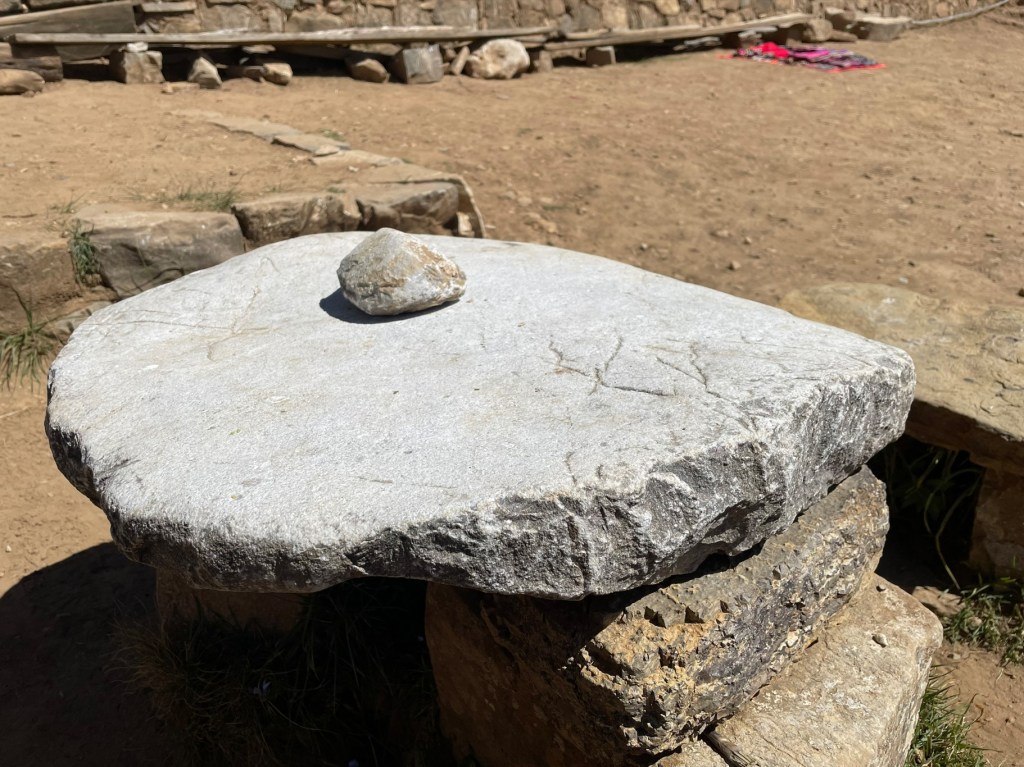
The Isla del Sol was much the same as the Isla de la Luna, but as it was the birthplace of the first two Incas it was the place for the Inca and for boys only. Even the emperor used to visit Sol and as was apparently fit and proper for the boys it was only a short boat trip across from the lake shore with its Incan craft beer taverns and night clubs (reference: makestuffup.com). We had a professional guide for Sol, who explained in detail the significance of the layout and design, including a room lined with gold sheet which aligned with the sun rise on some auspicious day. Naturally the Spaniards found a much better use for all the gold, but it was an impressive place just the same. Most impressive for the easily amused was a flat rock, which when hit with another rock sounded just like hitting metal, and kept us busy for ages.
Recovering Peter from under one of the piers where we assumed he’d been making an early transition into a Gollum-like creature, but with oxygen as his Precious, it was back on Drifting Slowly II for the return to Copacabana. Somewhat surprised that the boat could actually travel quite fast when schedule was at stake, we pulled up at 10 seconds before the advertised time of 12 noon, then repaired to the hotel for a picnic lunch and return to La Paz. Cunningly putting our bikes on at the back of the barge so we could be off first, but tragically on the right hand side so with the gaping no-planked bilge on the preferred left side for motorcycle manoeuvre, it was all about pretending to help get the bikes off by taking a passive supervisory role on the San Pablo de Tiquina side.
Into El Alto was exciting as I was Tail-End Charlie, and Paul’s bike was mysteriously cutting out in the middle of every major intersection. Fortunately we made it back to Anna-Maria’s place unscathed by the torrents of tooting and, if my behaviour toward scroat-bag d’heads blocking traffic is universal, verbal abuse. Steeply back down into the hotel in La Paz in the bus, all we could manage was a light dinner and preparation for the leaving on the morrow.
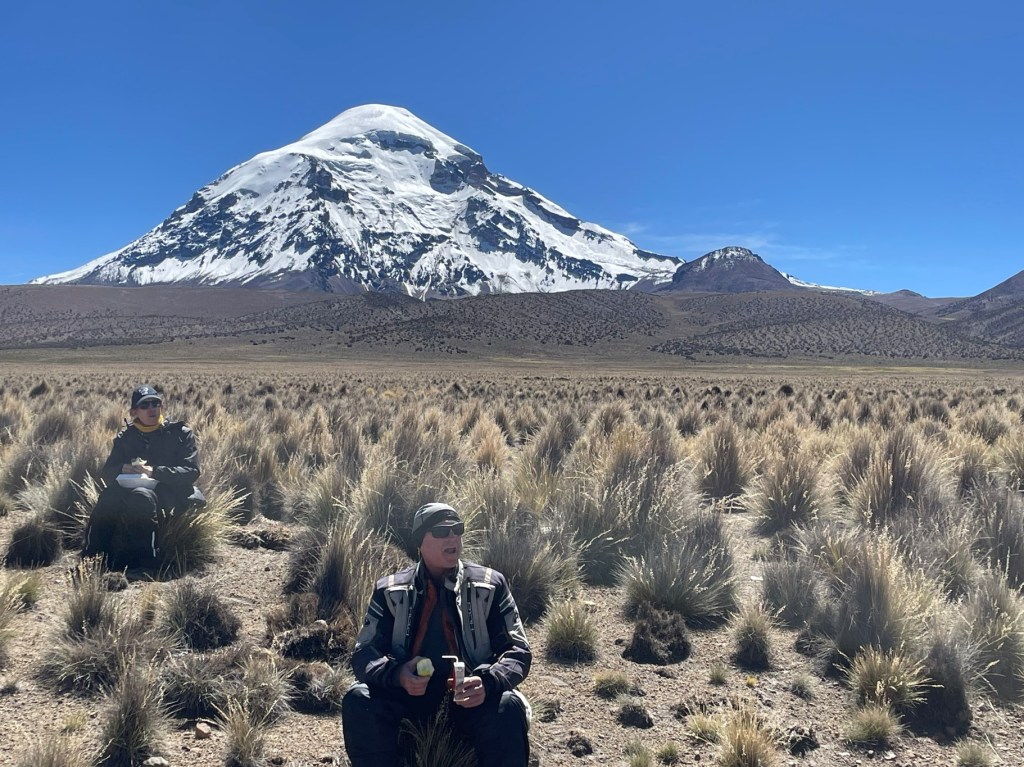
Day 61 we were up really early, and back into the bus for the steep climb back up to the bikes. Anna-Maria’s driveway renovations had progressed, with the architect choosing fashionable baby-head sized boulders for the top-coat, which were nervously looked at during a non-servo re-fuel and re-pack. Heading out, there was only one minor drop so only damage to pride, then the ride back south-east to Patacamaya where we’d take a 90° turn south-west to the Chilean border. Unfortunately missing a photo of the Taxi Aroma shop, presumably selling modern taxi scents such as Eau de BO and Old Vindaloo Spice, we re-fuelled for the last time, ironically very easily. Off toward the border, the scenery became frankly spectacular, especially when the high Andean volcanos appeared. A stop for lunch just before the border truly was a highlight lunch for the entire trip – especially with grass clumps that were incredibly comfortable just to lie down in.
Over to the border crossing which is at the highest point on the Andes ridge line, we were out of Bolivia reasonably easily, and back into Chile for the uncountableth time after dragging every bag out of the truck and through the X-Ray inspection without the benefit of being able to breathe. Then the descent on the winding road through the rocky mountain slopes and down into the Atacama Desert, this was truly some of the best scenery we’ve ever ridden in and can only be described as a land of giants – everything appears at a much larger scale. Riding along the Rio Lluta green ribbon added to the contrast with the utterly barren and sterile Atacama landscapes.
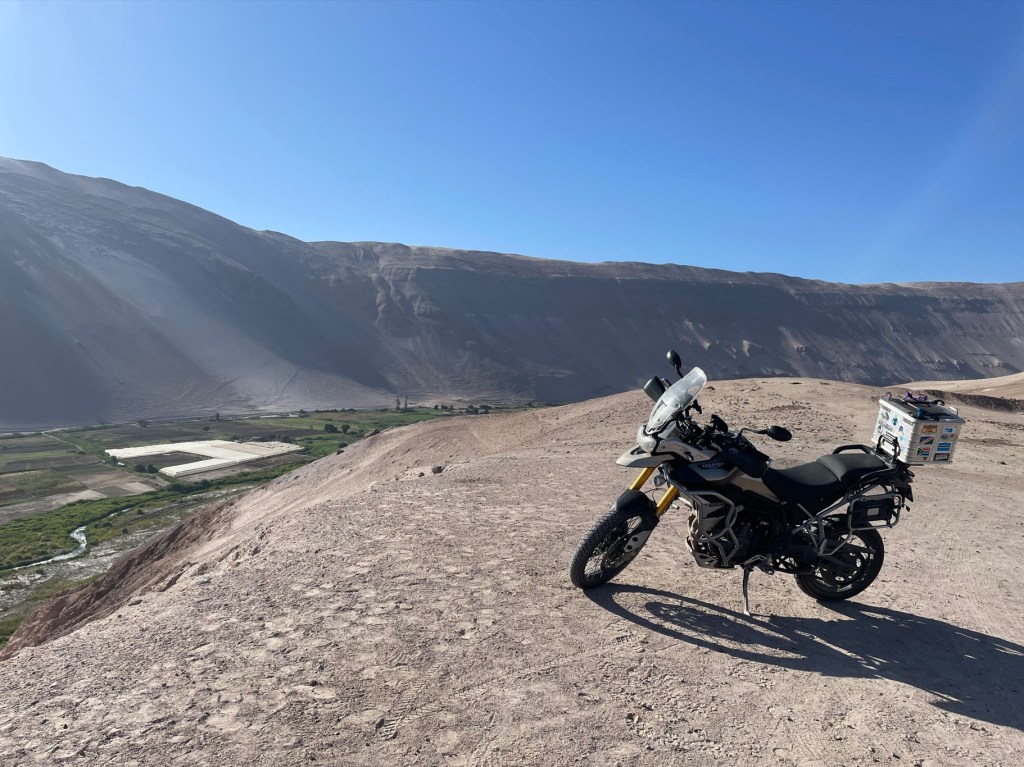
Completely blown away by the scenery, we were down into Arica for one night, staying at the luxurious Panamerica Hotel. The highlight of the evening was the drinks service, with one customer service technician causing mass confusion after the attempted payment for a gin and tonic, and attempted ordering of a single beer. Almost all the staff up to and including the manager made regular visits to our table to investigate what had happened at the bar, but none actually brought the anxiously needed beverage until a full panel of staff had discussed their findings and held a workshop next to our table while I said “Una cerveza, por favor” to any who looked my way.
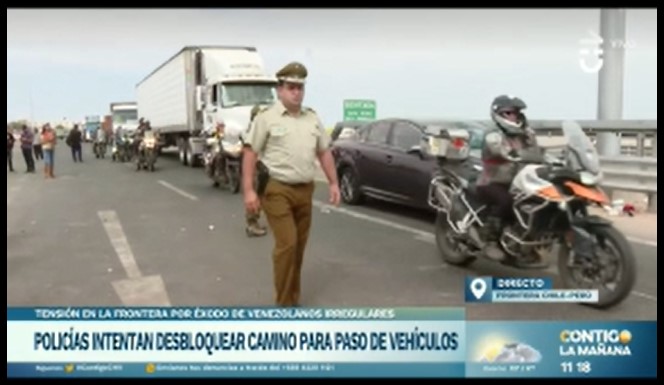
Up on Day 62, the plan was a border crossing into Peru and a mere 50 km to ride into Tacna, where we would wash the bikes, load them on a truck, and despatch them by road to Lima while we gallivanted around the country by aircraft and bus to avoid political and protest strife and damaged roads. We got to the border and joined a disturbingly long queue of cars trying to get into the border station. It didn’t move, then just as things started to be taken off in the heat cars would suddenly move a few places up. Normally not a problem, but people in cars in this queue were hyper-aggressive and would literally drive around a motorcyclist to push in. Then a big delay, and again things were taken off in the still rising heat. Binoculars showed there was something going on further up with crowds at the entry to the crossing. A bit of horseplay and buying water and things from the wandering vendors kept us amused, before suddenly all hell broke loose and everyone started racing for the border. David and I were at the back, but managed to get past the cars and trucks and military and police personnel until one particularly officious character made us stop and put our helmets on, allowing many vehicles past again. Arriving into a park just before one extremely aggressive and angry driver, he then decided to just block us in to prove his machismo.
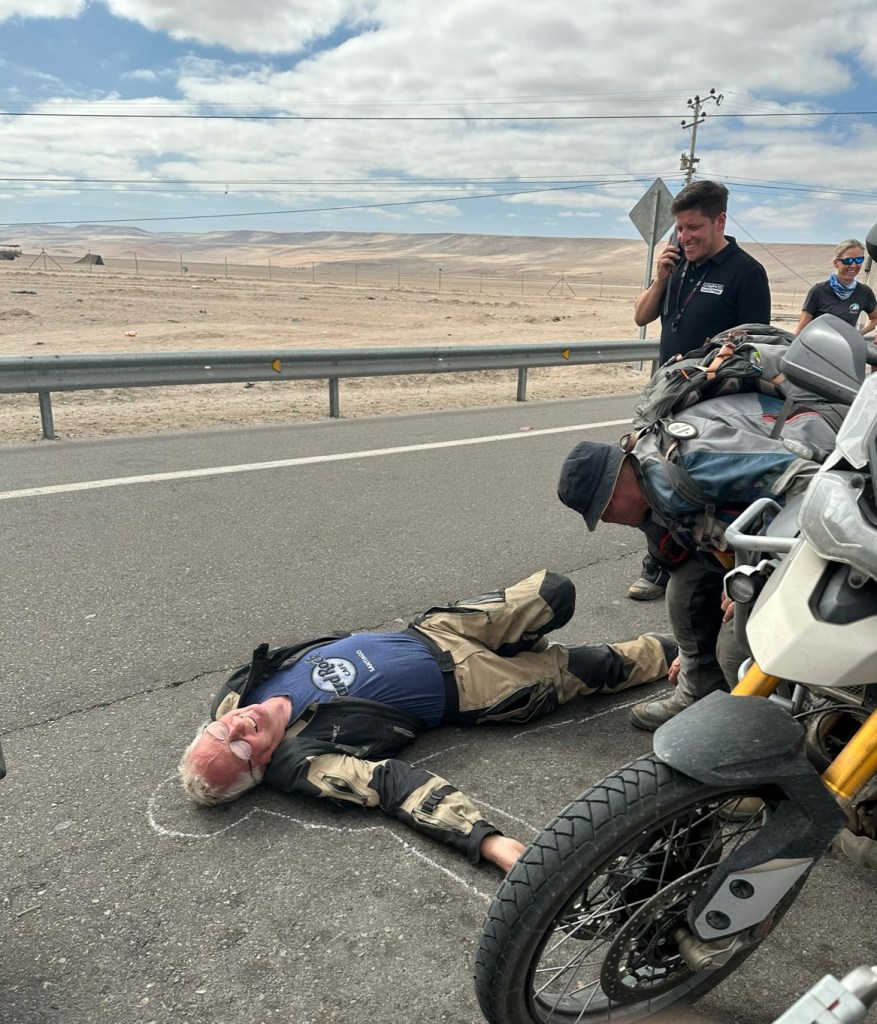
Another very hot and long border crossing later especially the customs to get the bikes into Peru, which did have the advantage of outlasting the aggressive machismo chap who had given up and left, and we rode the short distance to Tacna, led by yours truly as moi was the only one to have the hotel in the GPS. Flushed with success, we then headed to a car wash to get the bikes cleaned and play foosball before calling it a very long day in the quite good hotel. Later on we discovered we’d made the news as the border had been closed, the problem apparently being Venezuelan and other refugees trying to force their way into Peru to get back north.
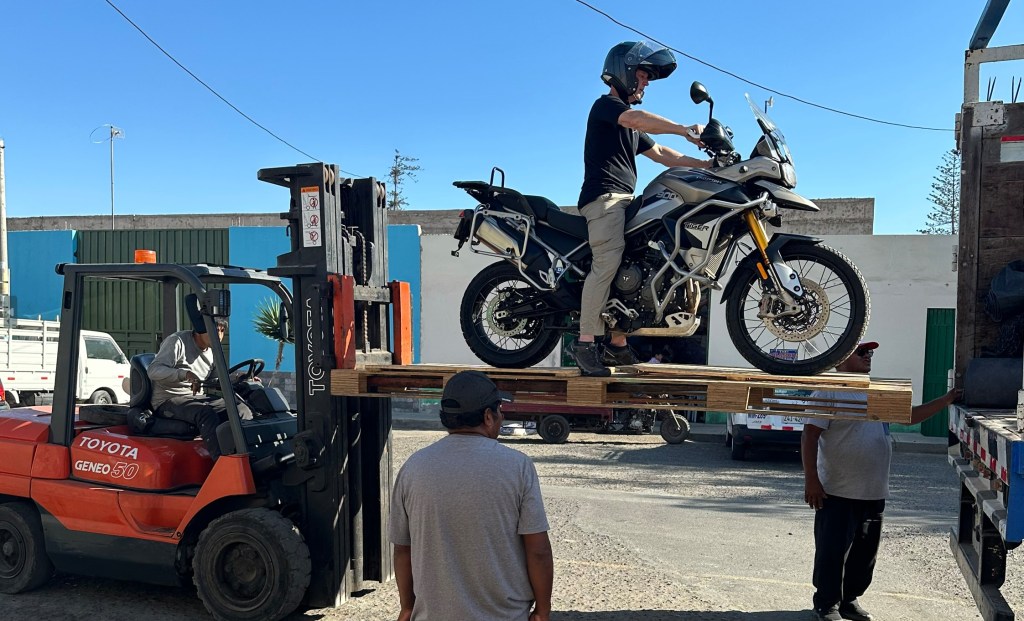
Day 63. The tragic end of biking for a couple o’ weeks. JC had organised a big flat-bed truck, and bought lots of jockey wheels and tie-downs from a local hardware shop. With the jockey wheel removed, the frame could be screwed to the wooden truck bed, and the axle bolt used as something to tie down to, four frames per bike.
With the bikes on their way to Lima, there was nothing left to do but pack the truck with our riding gear, as when not riding it is not really necessary to wear riding gear. Juan was then sacrificed to the Peruvian roads like a Isla de la Luna virgin, except he wasn’t a real virgin given his years of experience driving trucks in South America. The rest of us would be heading to the airport on the Day 64 morrow. Cindy is more emotionally stable so will write about our transition to plane-bus people, then I will pick up again from Lima after the pan-pipe induced coma.
 travellingbennetts