We left Part 1 at the close of the Compass Expeditions Reunion in Jindabyne. If you haven’t read Part 1, then nothing in this Part will make any sense whatever. You’ll be asking how on earth we managed to find ourselves on Triumph motorcycles starting in southern NSW and finishing in Hahndorf South Australia, and before you know it you’ll be looking at your partner or the cat and wondering what level of distraction will be required to get the TV remote back. Spill a noticeable amount of red on the carpet? Start a small fire? Start up a dry ‘Rona cough? Not worth the hassle, go back and read Part 1 and you won’t have to extinguish a burning cat…
Farewells to a lot of close friends completed, thanks not even close-to-adequate doled out to ride leaders Mick and Craig and Peter and Michele and Veronica and the rest of the Compass crew, we took our fully reloaded selves out on the road south at the start of Day 11. A fair bit of discussion and review had preceded the decision on the route this day – to Barry Way or not to Barry Way? That was the question. Opinions on the length of the gravel section and the rideability were as widely varied as the number of people asked, varying from 1 million kilometres and certain death to fully sealed and “she’ll be right”, presumably while looking at Cindy. “He’ll be right” still a vague hope for half the party, we decided to go for it.

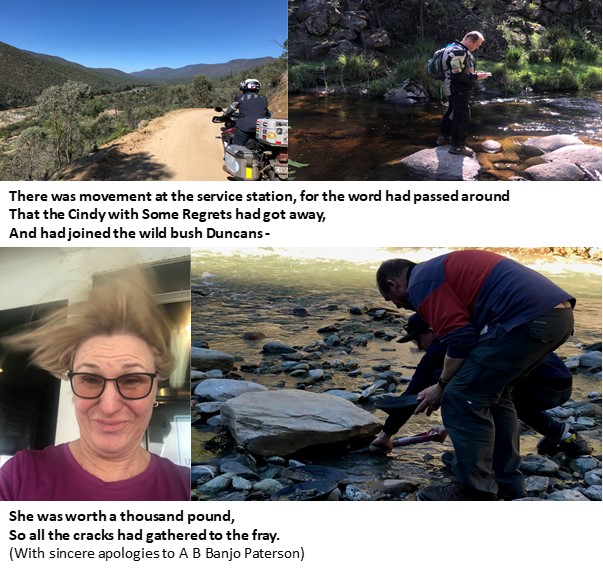
The actual rather than the wild guess Barry Way starts with about 30km of bitumen, then enters the wilderness feeding the famous Snowy River which rolls down into Victoria to the coast at Marlo. To quell the wild rumours we heard, the dirt runs for about 88km over the border. Apart from a couple of nasty drainage ditches and potholes, the surface was near perfect the entire way, with the small bonus of spectacular scenery and precisely zero traffic.
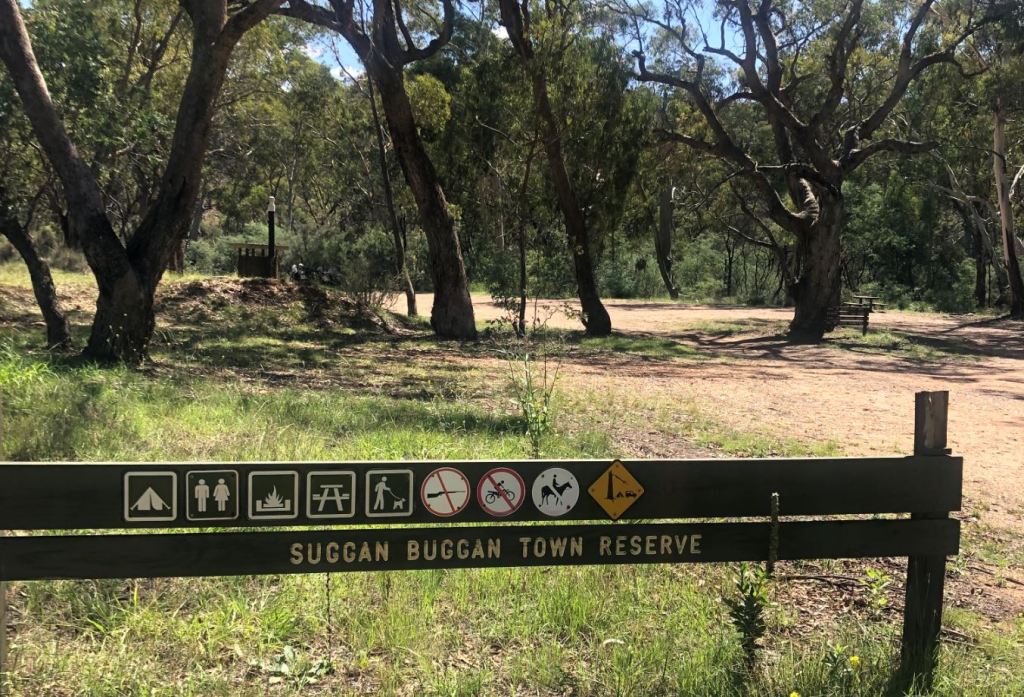
A very nice assembled-from-Woollies-stuff lunch with cup of tea over the border at the imaginatively named Suggan Buggan, population apparently zero, and we pressed on to where the bitumen suddenly and miraculously re-appeared like an accidentally flushed $100 note. The road through to Buchan (that Buchan road!) was the finale for burned out areas, and a stop in the small town lasted a lot longer than planned due to meeting a couple on a 1200GS who lived on the famous Black Spur outside Healesville near Melbourne. Their stories of picking weekend sports bike riders up off the road outside their house, plus their stories of travels in Africa and around the world had us enthralled for a long time, so we were heading into the later afternoon by the time we ran down a section of the Princes Highway into Lakes Entrance.

The accommodation selection process then commenced, honed over years of getting it horribly wrong, but this trip we were aided by the total exclusion of pubs following the Narrabri Tourist Hotel disaster of ’18 and a couple of others since. Criteria for the perfect motel are exacting – right in the middle of town, secure parking, huge rooms with space to spread every article of clothing and gear without any touching, bed the size of a tennis court, at least 45 power points, big screen TV with Netflix, 1GBps Wi-Fi, a washing machine and dryer, and almost embarrassingly cheap. We didn’t quite get there with the Bamboo Motel, selected on the logical basis of a tropical name in a distinctly un-tropical place, but not that far off. A big walk up and down the esplanade to discover I had zero memory of a place I was last saw in 1983, a spanking fish dinner at a seafood café, and the successful day was concluded.
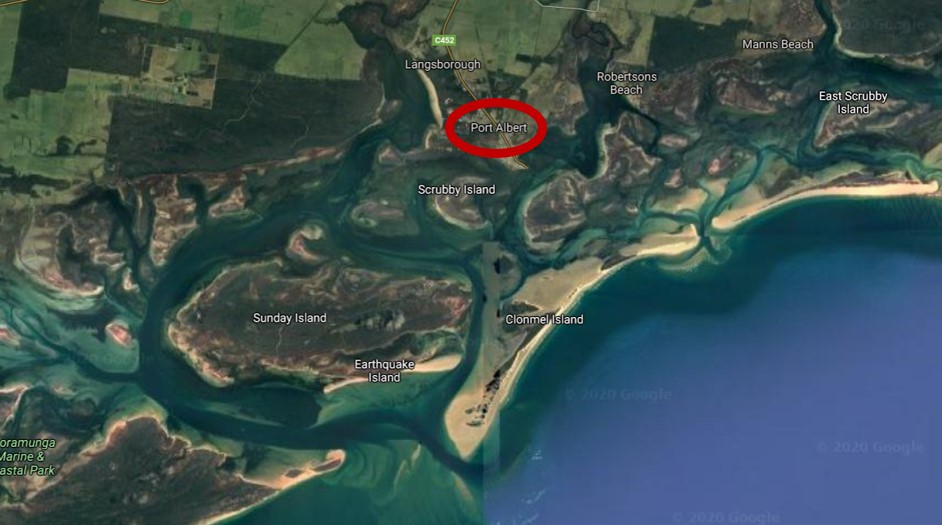
Day 12 objective was to ride west and ride on a ferry. The Portsea to Queenscliff ferry was the target, so the GPS was continually tweaked to avoid the highway after the breakfast stop in Bairnsdale. Yarram was the coffee and unnecessary cake top-up stop, before bouncing along the bottom (i.e. the Victorian coast). Past Port Albert, the scene of kayak glory in about 1980 when a school mate and I won the K2 kayak doubles event, simply because there was a howling some-direction-ly wind which generated huge seas and miraculously we were the only ones who didn’t sink or capsize or drown or get lost. Not sure where the small cheese platter trophy ended up, perhaps the Australian Sports Museum. We pressed on through Leongatha to luncheon at Pearcedale, apparently a town without toilets, but an incredibly tempting shrubbery behind the shopping centre. Temptation quickly overcome by discovering a child-care centre behind the shrubbery, it was a squirmy slog into the southern Melbourne ’burbs although fortunately too early to hit peak hour.
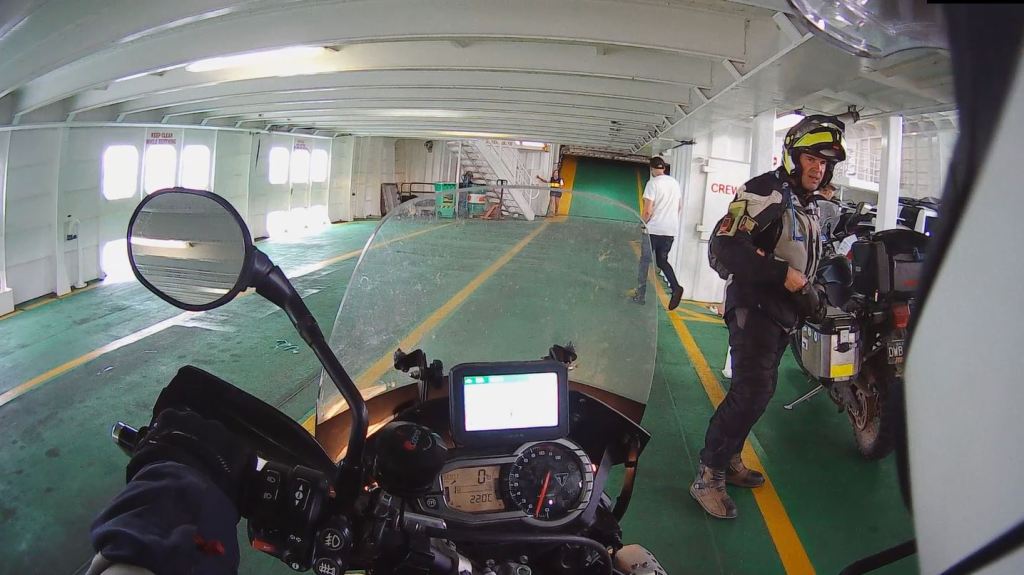
The ferry operates every hour on the hour, so our arrival at 2:45pm into the Sorrento terminal was an example of schedule perfection; off the main road, into the queue, and within about 5 minutes we were being directed to park in the centre of the boat. After a small domestic dispute over parking technique was resolved by a retreat verging on a rout by the least feminine and therefore most un-right of the spousal protagonists, we raced to the facilities then settled in for the crossing of the Port Phillip Bay heads. The heads are a notorious stretch of water, with all the Port Phillip Bay water attempting to get out and back in twice a day through the evocatively named The Rip. It was another of my old stamping grounds, with a lot of hours spent around Portsea and our destination of Queenscliff, reaching warp speed on drift dives toward The Rip and trying to surface before entering the shipping lanes in Bass Strait.
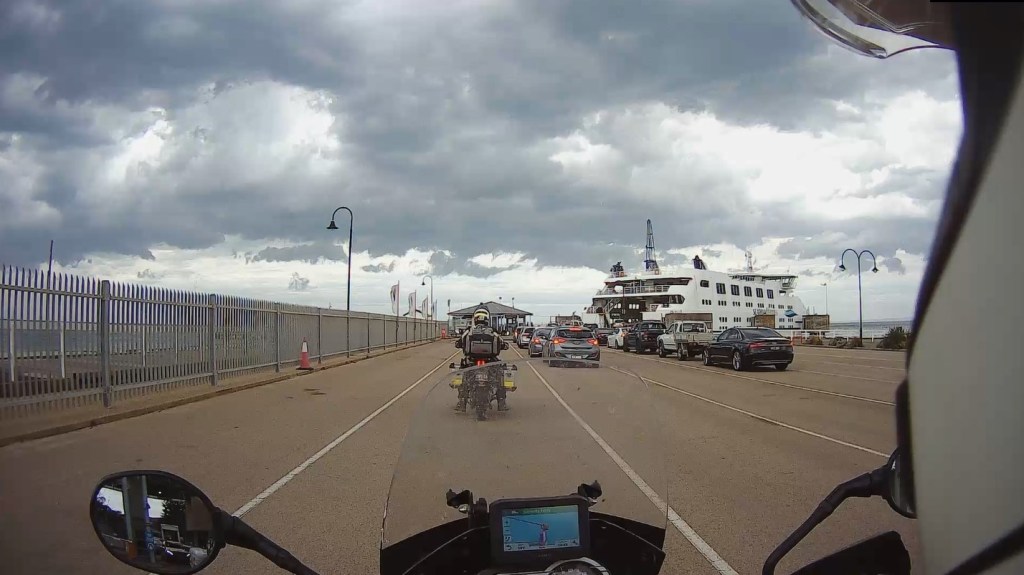
The trip across is fairly short, but the history on display is still powerful; fear of the Russians after the Crimean War prompted building of forts around the heads and construction of the Pope’s Eye to mount guns to stop the enemy getting in to Port Phillip Bay. The development of artillery outstripped the pace of building of the fort and guns that could fire projectiles more than half the distance across stopped the Pope’s Eye foundations when they were just above the water.
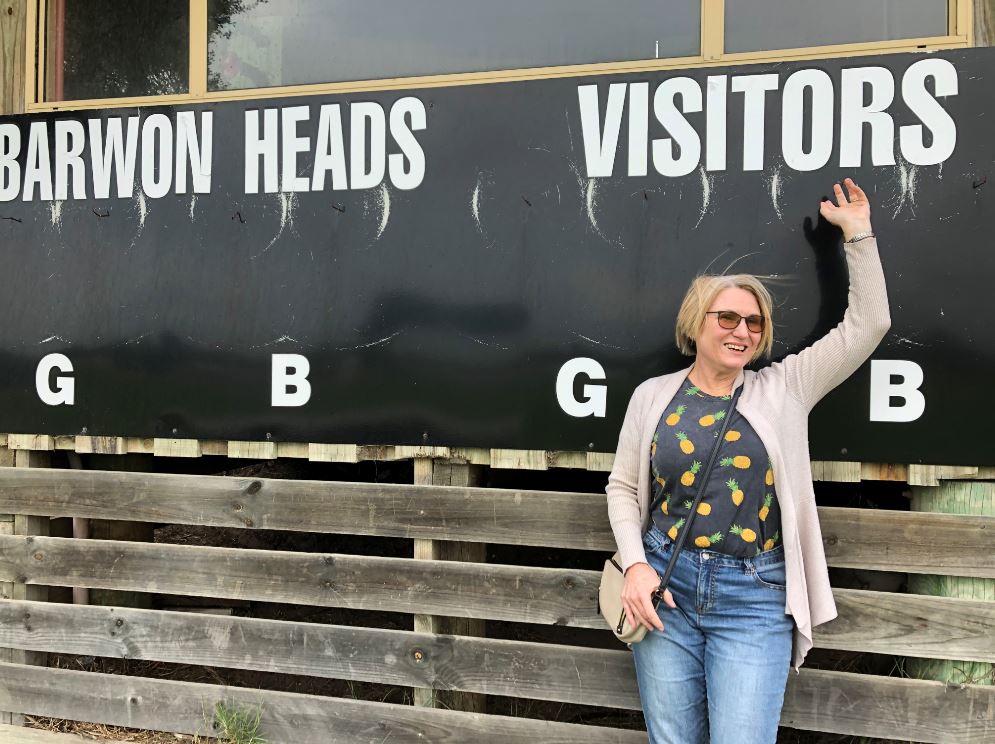
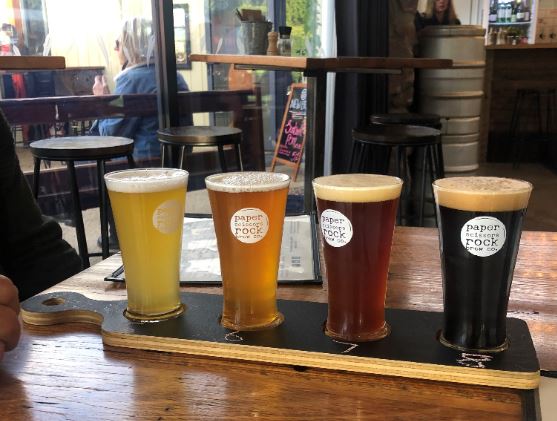
Disembarking nearly first after being given preference as is our right, we headed around the coast to our random destination of Barwon Heads. Expectations of finding the perfect motel in Barwon Heads were quickly downgraded to finding any motel at all – there just aren’t any. Eighteen loops around the same roads in a howling gale with threatening rain and a motel still hadn’t appeared, so we tried the Barwon Heads Caravan Park. Miraculously a last-minute cabin cancellation had occurred, although we realised we were starting to see the effects of The ‘Rona and weekend plans for many seemed to be tightening up. A wander down to the local craft brewery bar and a light dinner saw us out for the day, besides a bit of rolled-up sock basketball play on the courts near our cabin in the huge park.
Day 13 plan was the Great Ocean Road. We’d just missed this road due to time constraints in 2016, so on bikes it was a first for us. The road now seems more famous for slow tourist traffic, some of which travels on the wrong side of the road, than the scenery but regardless must be done. A breakfast in Anglesea at a small café, where an order was filled by racing out to buy the ingredients from somewhere not that close by, and we hit the road proper. The ‘Rona had clearly stopped some of the big sources of tourists visiting the road, so apart from the odd painful experience getting stuck behind people insisting that 30kmh was insane even when the scenery was mainly local resident’s wheelie bins, we were probably some of the very few in recent years who have ridden the road as it should be done.

A mandatory stop was taken for a photo of Cindy sitting on a lawn in Lorne, requesting guesses for where we might be on WhatsApp. Well done to Maxine Lawford of Victoria, unfortunately we forgot to send your prize, having forgotten to purchase it. Lorne has some interest to the family as my then six year old father remembers standing out on the front lawn outside their holiday house as embers and ash rained down during the infamous Black Friday bushfires on 13 January 1939, which burned out nearly 5,000,000 acres of Victorian bush and destroyed or severely damaged many towns, some of which would go through it all over again in 1983 and 2009. A coffee stop in the still-crowded Apollo Bay accompanied by half an hour trying to find a shop selling micro SD cards so Cindy could once again take photos of my bum from her helmet camera, and we headed into the wilderness of the Otway’s.
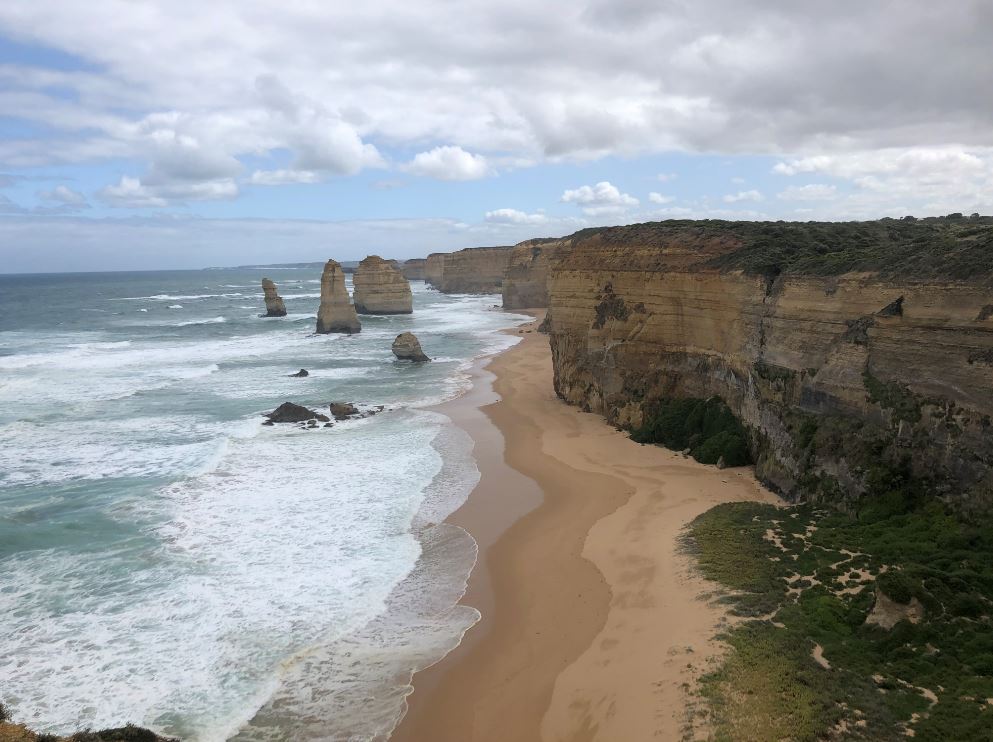
According to the Collins Dictionary, a chimera is an unrealistic idea that you have about something or a hope that you have that is unlikely to be fulfilled. Somewhere in the Otway’s, petrol stations transitioned from a numerous reality to a chimera, and a methodical yet increasingly moist-browed calculation indicated we were going to need to activate flux capacitor drive to make it to Lavers Hill. If we’d had flux capacitor drive, we could also have gone back in time to sensibly get fuel in Apollo Bay, but it doesn’t come standard on any Triumph Tiger 800 model. Luckily a rusty old pump with 91 which Garmin wasn’t aware of appeared around Glenaire, just as the moisture was spreading to the palms and the breathing was reaching a slightly panicky pant. Filled up and with renewed confidence in our ability to avoid adventure, we charged on to the most popular spot on the entire coast – The 12 Apostles. The carpark was reassuringly full – perhaps The ‘Rona wasn’t doing as much damage as we’d thought. We still had a big day ahead of us, so almost ran down to the viewing platform for the mandatory photos, then back to the bikes to plough on to Port Campbell for an excellent toasted sano lunch. Distracted and nodding at the random words coming from behind the counter, somehow we allowed tomato in with the ham and cheese; few realising that thermonuclear hot tomato slices in toasted sandwiches generate up to 63% of Sydney’s base-load power.

Nursing mouth burns, we pushed on to Warrnambool. This town is a constant refrain in the life of a Bennett so certain locations must be visited. Firstly “Goldicott”, with the great-great-grandfather’s property (which has a twin “Goldicott” in Brisbane built by the great-great-Uncle) wandered around, photographed, and blatantly trespassed in before realising we weren’t actually at Goldicott. Going two doors further down we discretely took a single photo of the real Goldicott from the footpath before heading on once more. Garmin was then given free rein to get us to Halls Gap in the Grampians, which is a bit like giving the cat free rein to prepare dinner; sometimes miracles occur. Having grown up in Stawell, expectations were that no possible view of the Grampians hadn’t already been viewed, so I was embarrassed by the GPS who chose a route via Caramut and Glenthompson to show the entire magnificent length of the range from the east. The GPS then put the boot in by taking us into the ranges proper via the Yarram Gap Road, which I strongly stated hadn’t existed in my day as the Yarram Gap rocks hadn’t been weathered down enough to get a road through.

Pulling into Halls Gap after a huge 450km day with much distraction, we were relieved by the total lack of pubs and therefore pub accommodation, it had to be a motel. Re-choosing the Country Plaza as it was the only place we’d ever stayed in Halls Gap, we gained a room down the back which may have been the same room as the previous stay during the Compass Reunion 2016 – there were $8 half-litre glasses of wine that night so the medium term memory wasn’t that precise. We wandered up the street for a craft beer, I seemed to remember as children in the 1970’s that we had do the Pinnacles Lookout climb before we were allowed a craft beer, but no-one was stationed at the door pointing at the mountains so we strolled right in. Somehow dinner ended up in the mix, closing out the day.
Day 14 was a very late start due to a breakfast engagement with friends Bill and Deb of 2019 Cape Town to Cairo fame. They had suffered the worst road conditions in 20 years in Namibia so it was carnage, but they didn’t die and had horrible stories and therefore totally met the only two important aims of adventure motorcycling. We rode into Stawell for the usual heritage tour – graves and houses – before heading in the wrong direction to Great Western, home of Best’s Winery. A few small bottles purchased for good luck, and we completed a loop through Ararat, Lake Bolac, and Mortlake to arrive back in Warrnambool. Insane navigation perhaps, but more relatives graves had been discovered via the web in a cemetery in Warrnambool and you never know when you’ll get back there again. Appropriately photographed, the graves were left in peace while we continued west. Portland had been the plan, but as usual on this flexible trip the plan changed to Port Fairy for reasons now lost in Sena communicator history. No regrets though, a wander into Coffin Sally’s for an excellent pizza and a few craft beers had the humours realigned and set for bed back in the Secombe Motel – right in the middle of town.

Day 15 was momentous. We would finally ride into the only state or territory that hadn’t been caressed by our motorcycle tyres – South Australia. But first we needed breakfast and so cruised into the last big western Victorian town of Portland, also a first. A jolly nice breakfast, a look over the aluminium smelter and port, and we coasted the final 70km of Victorian soil into a foreign land. First stop was at the beautiful yet notorious Piccaninni Ponds, a karst wetland famous for its crystal-clear water dropping down 110m into the limestone formation, and a lot of cave diver deaths. Snorkelling and diving is by permit only, with a chatty Tasmanian couple chewing up a good part of their 30 minute snorkelling time allotment keeping us amused with their stories before we insisted they get in and they insisted we must visit Mt Gambier. The pond has to be seen to be believed, not since our snorkelling in the gap between the tectonic plates in Iceland in 2016 had we seen water so clear it is impossible to understand how deep it is.

A brewed-up cuppa completed in the coffee van-less Ponds car park, we hit Mt Gambier. As towns go, Mt Gambier is jolly attractive and has some great sites. We decided to focus on sinkholes based on our Tasmanian snorkelling friends’ advice rather than get distracted by normal Australian town stuff. Unfortunately, the first settlers in Mt Gambier seemed to be escaping persecution in their respective old countries for having overly complicated names, and even more unfortunately they named the sinkholes after themselves. We started at the Englebrecht cave to see the hanging gardens, quickly realising we’d got the name mixed up with some other unpronounceable sinkhole because there were no hanging gardens. So a major backtrack to the Umpherston (watch out for spell check you modern Umpherstons!) sinkhole and we were into the hanging gardens.
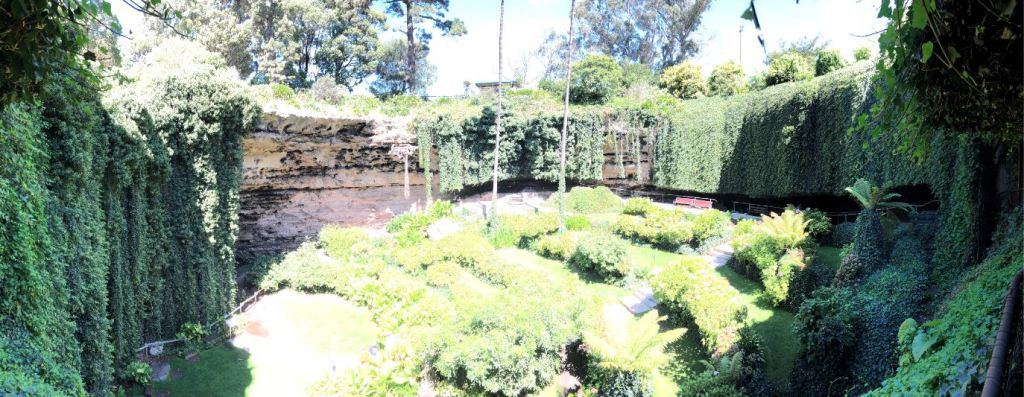
The gardens are very impressive, with a huge effort obviously put into regularly getting a mower down the stairs to do the lawns. The lowering water table in the area is notable; when the gardens were first developed about a third of the bottom was under water and Mr Umpherston had a boat in there to row visitors around.
Pressing on after a toasted sinkhole sandwich, we passed the Millicent Kimberley-Clark toilet paper mill where we expected to see zombie apocalypse scenes of clenching people with stiff-legged gaits attacking the fences. But nothing exciting disturbed the peace and the mill doesn’t have a gift shop, so we were forced to continue on toward Beachport. We stopped briefly at the memorial to the first Australians killed by enemy action on home soil in WW2 – two sailors trying to destroy an adrift German mine which had been towed to the beach were near it when it got picked up by a wave and thrown onto a detonator prong. The chosen destination for the day was Robe, and to make it interesting we decided to take the somewhat disturbingly named Bog Lane dirt road around between the coast and the lakes. The name of the lane was quickly forgotten once we passed the Sunland Holiday Nudist Village – our first active social distancing experience, although nothing to do with The ‘Rona. Pulling into Robe dusty and trying not to imagine what we didn’t actually see out at the Village, the routine of locating the cheap high quality motel and dis-Robing (the only time it is allowed to be capitalised) and heading out for a walk and dinner with drinks in the near-deserted town was completed without incident.

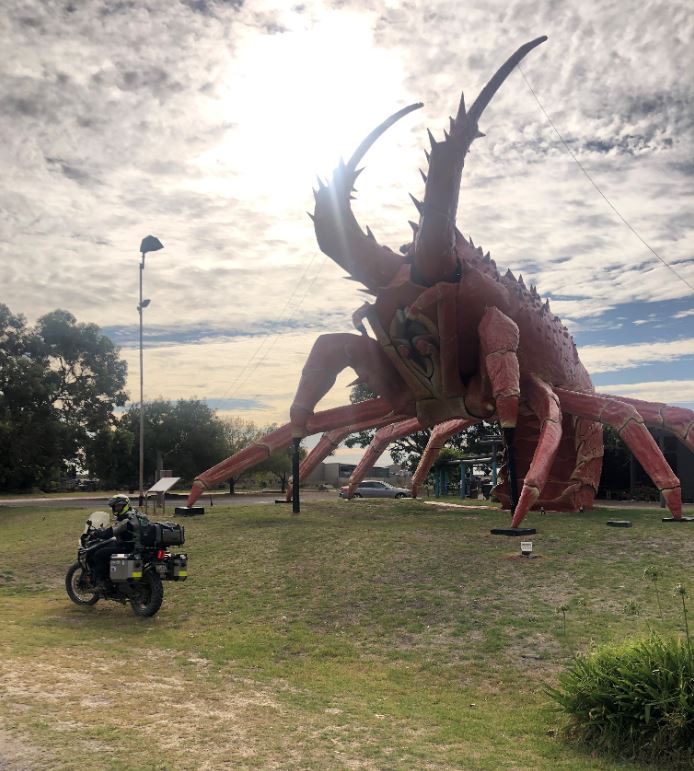
Day 16 plan, once re-Robed, was the Adelaide Hills. But first some more travelling up the coast past some spectacular sites including the giant Rock Lobster – officially named The Big Lobster – in Kingston. Then onto the peculiar Coorong which is an unbroken series of lagoons behind the coastal sand dunes creating the Younghusband Peninsular, although Cindy may have quietly mentioned over the communicator that she would be happy just seeing a Youngerhusband Peninsular – the reception wasn’t that good though.
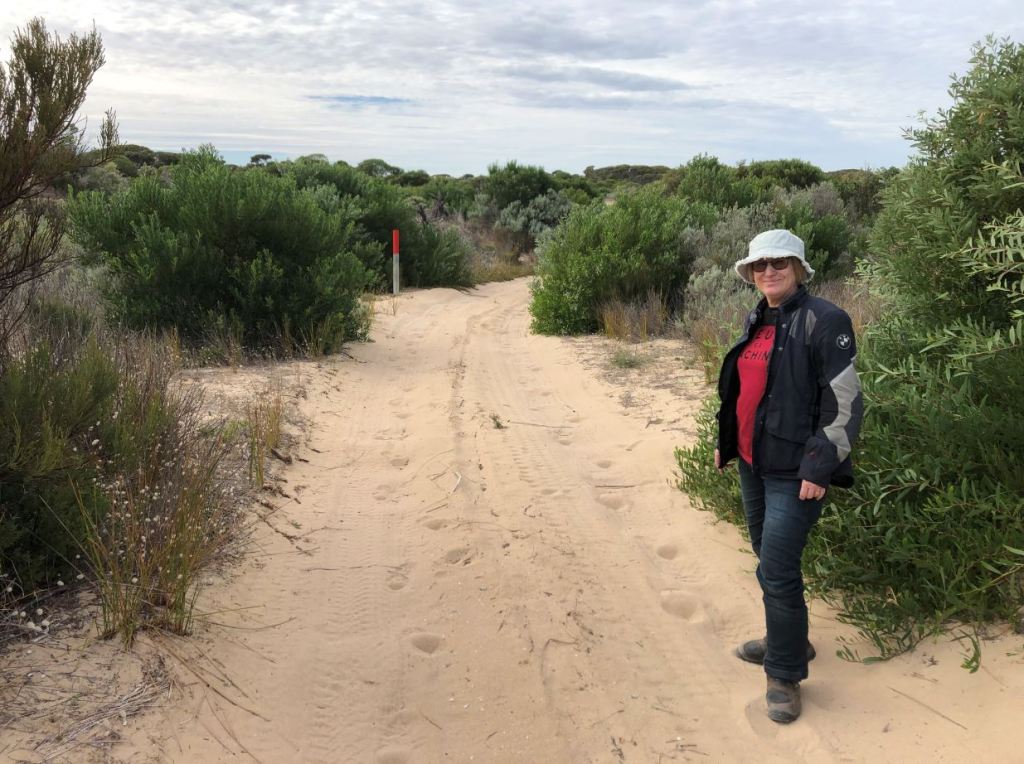
A navigational snafu meant we missed the Old Coorong Road southern turnoff, so had to back-track from the other end. A problem with the Coorong is that it is made up of the aforementioned coastal sand dunes, not an ideal surface for heavily laden adventure motorcycles, and it is really hard to figure out how far it is to the actual coast by looking at the back of the sand dunes. Climbing to the top of one didn’t help because there was always another one in front. Deciding against unloading and attempting to ride to the beach due to sensing how horribly wrong that can become, we got back on the main road and went north.
A second navigational snafu meant that we didn’t take the scenic route via Wellington and Strathalbyn but ended up in rising heat going through Tailem Bend to join the main highway. We completed our navigational snafu trifecta by accidentally turning off the highway to end up in Murray Bridge. We re-grouped for lunch at an anonymous family restaurant chain with a Caledonian name, before the final cruise up into the hills to the pre-booked Hahndorf motel. Seven runs up and back down the quiet main street of Hahndorf with voice tones becoming hysterical, we finally discovered the poorly signposted motel to be on the opposite side of the road to where Garmin thought it was, and we checked in with sweat coursing down everything. Excess heat was soon whisked away by a German Brauhaus, and a buffet dinner and a mainly empty restaurant saw out our day.
While riding (spoiler alert if you still haven’t read Part 1 – don’t finish reading this sentence!) down through NSW on the way to Jindabyne, Cindy had been called by the editor of the BMW Owner’s Club of South Australia who had read in our BMWMCQ journal that we fellow editors would be riding in his domain. So Day 17 was a fantastic ride around the scenic Adelaide Hills and a lunch in Meadows with a fun group of BMW club members, who were tragically unaware that we were both riding Triumphs until we turned up but were incredibly friendly and polite regardless. The latter part of Day 17 was unsuccessfully spent trying to find a laundry to resolve aroma issues, before needing to re-sample everything up at the German Brauhaus, just to be sure.

At Hahndorf The ‘Rona impact suddenly became obvious; a village normally seething with Chinese and other tourists starkly empty, quality restaurants closed except Friday and Saturday nights, supermarket shelves bare of things utterly unrelated to the sanitary product shortages caused by the pandemic, and the term “social distancing” entering the lexicon. But on motorcycles we’d been socially distant for weeks, so no need to change plans just yet.
End of Part 2
 travellingbennetts