It is Day 65. Heat is not moderated by high speed motorcycle movement as we pull into the Namibia immigration building, like Botswana a modern and well laid out facility, although the budget didn’t extend to the nice-to-haves like air conditioning. With a few brow drops of sweat smudging the truthiness of the written information on the arrivals form, we were very quickly through immigration and outside to wait in the marginally lower temperatures.

A border official’s ability to disguise their open skepticism is a fine example of their art; 11 people show up, all spending the same time in the country ± about 5 minutes, and all staying at the same accommodations. Yet the variation of data regarding number of days and the places we are staying on the 11 forms indicates that some will be attempting to ride through without stopping for fuel, while others may be in country long enough to qualify for permanent residency by default. No worries, the forms are stamped without a change in expression and we move to the customs window.
After a confusing payment of RSA165 for road tax or some other mysterious fee, and with Andrew and Bayne able to get the carnets processed just before dissolving into a sweat puddle, we were out into the wilds of Namibia, which starts with about 30km of C road, meaning either second class bitumen or “first class” gravel. On this occasion, first class gravel was the welcome mat to complete the last 126km of our big 528km day, but it was not so first class that the odd tiny corrugation hadn’t crept in, resulting in my unlocked top-box popping open about 1km in.
With the alert from Cindy noted, I pulled over to address the top-box, which had been secured by the time a 4WD pulled over next to me. With my visor down, I explained loudly that I was in no need of assistance as it was just a minor top-box issue, however that did not elicit any response from the 4WD. Assuming that my deployed visor was the issue, I lifted it to loudly repeat that I was in fine health, and as it was just my top-box lid I was in no need of assistance. Looking at the still deadpan lack of response from the passengers to this detailed briefing, my confusion was rising. And then I looked into the driver’s seat.
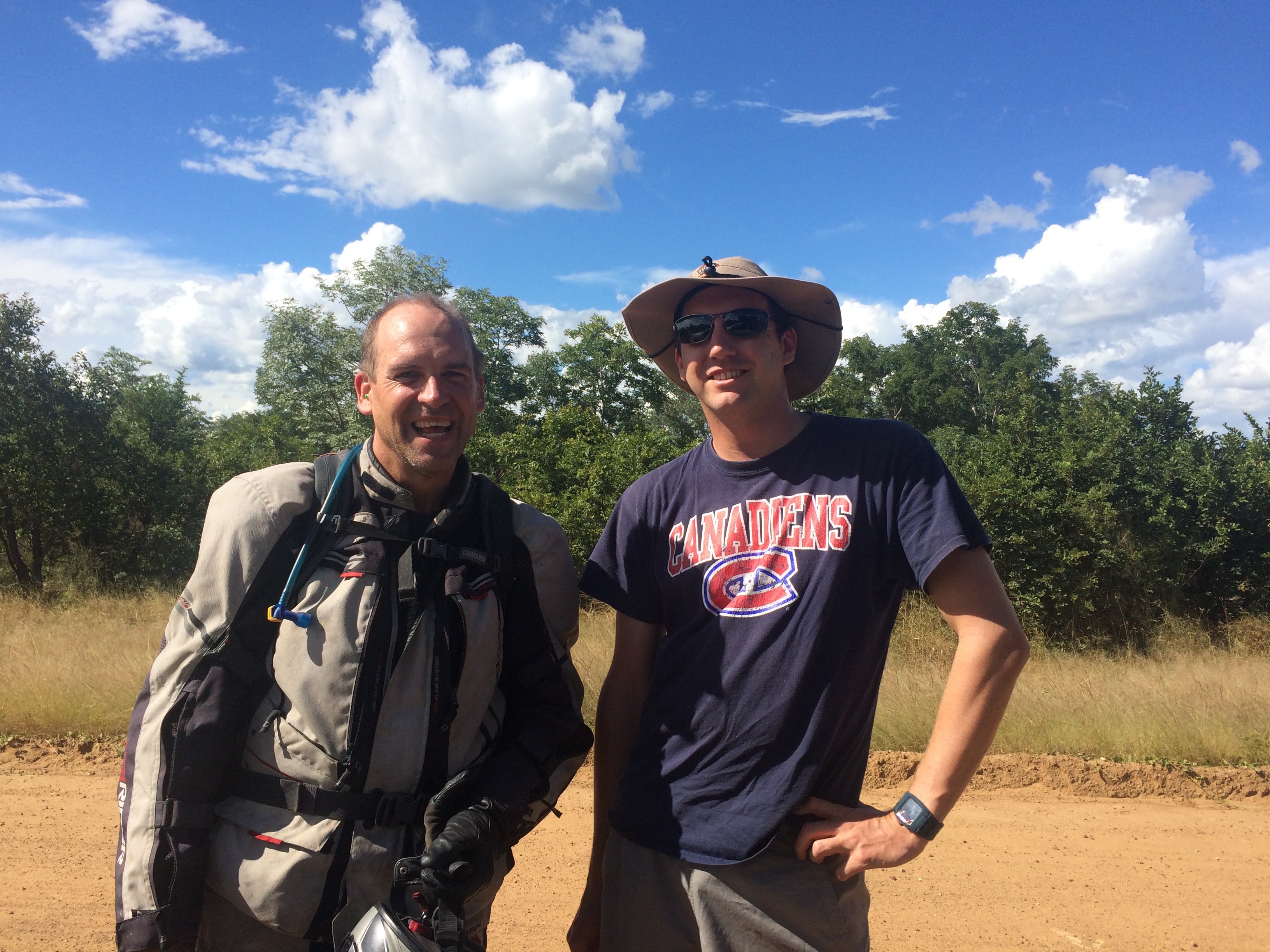
Minutes of meeting between Duncan Bennett – Principal Metallurgist (Chair) and Luke Gurieff – Senior Metallurgist as recorded by Sandy from the front passenger seat: Metallurgy discussion during which Duncan and Luke waffled on for ages about stuff that was excruciatingly boring. Absolutely no interesting non-work related discussion occurred. This is a correct record of the meeting and naturally allows for full claim of all trip expenses for the 2016/2017 return to the Australian Tax Office.
After that rather unusual and enjoyable meeting, I moved onto the next meeting, scheduled for later that afternoon with Cindy further down the road that miraculously turned from gravel to bitumen after 30km. We soldiered on through some nasty looking and heavy but brief rain for the last sector, and onto the Kayova River Lodge for the end of riding for the day. The lodge looked across the Okavango River at Angola, with immediate speculation as to whether a rock could be thrown that far, and if so would a state of war regretfully exist between the two countries? Pure speculation luckily, as a rock thrown further than 80m by a middle-aged tourist holding a beer in his other hand has rarely occurred, to the joy of the diplomatic corps.

Day 66 was an even longer ride of 534km to the Etosha National Park. The first stop was at Rundu, where the aspects of Namibia were on display with a modern town complete with shopping centres and people completely ignoring large adventure motorcycles. Following a solid hour in the town looking for an ATM without a huge queue, we turned southwest toward Grootfontien.
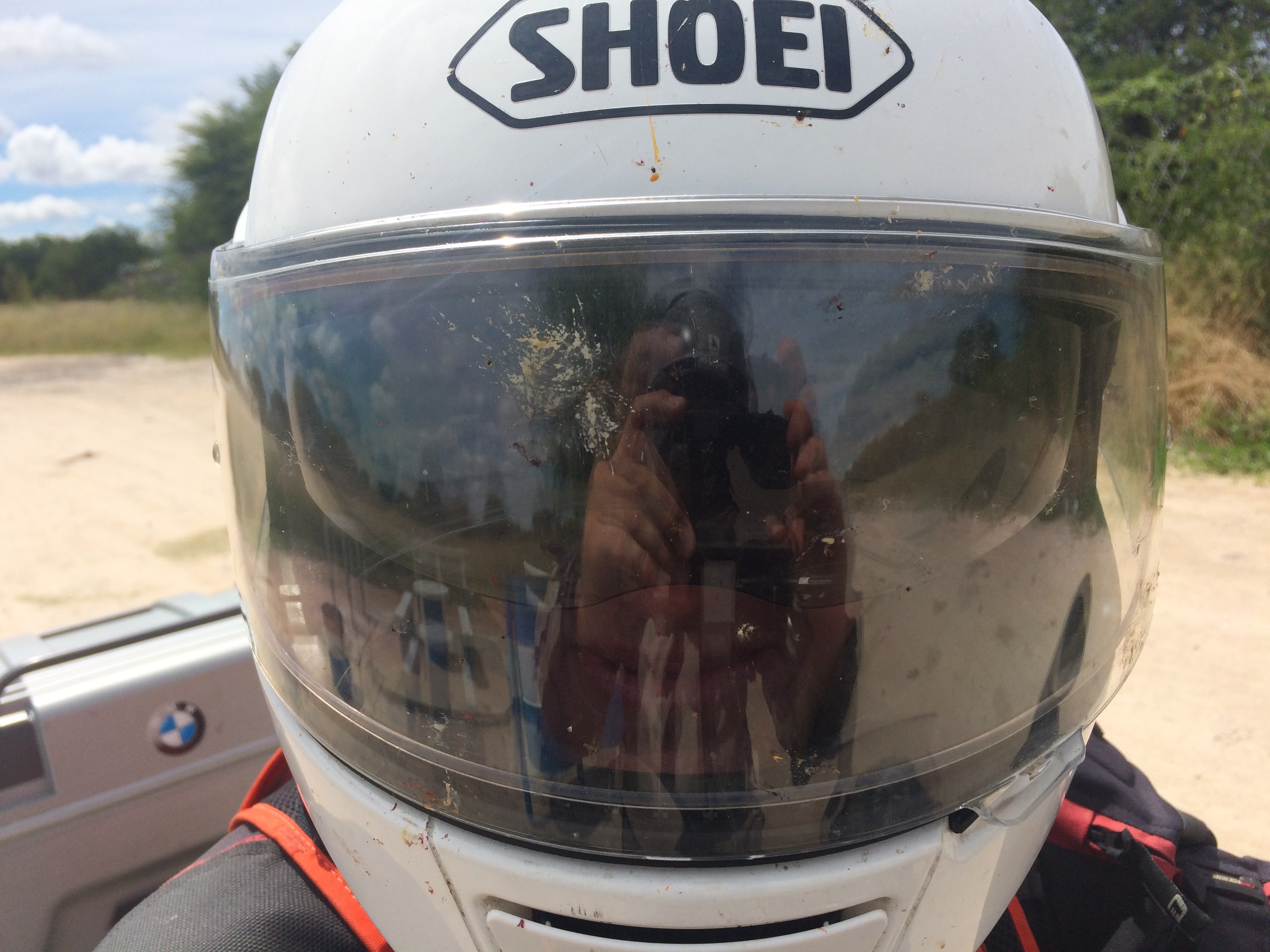
North-west Namibia has similarity to Australia, besides lack of marsupials, and was our first country in Africa with large farms and fences, rather than open ranges populated with small villages and the requirement for someone to look after the stock all day. The recent rains had made it all very green, which would have been nice to see, but butterflies were breeding like small flying rabbits and flocking to the roads to swirl aimlessly in the traffic, with the inevitable result that visors were constantly splattered.
Crossing through a foot and mouth quarantine station on the way, the unthinkable occurred and we encountered a group of Harley riders stopped at a café with a huge following of support vehicles. Eyes were turned to the rows of garishly coloured bikes, but discreetly so that we didn’t make eye contact with any of the riders and be forced to wave, which as we all know will never be returned. It was a visual clue to our re-joining the motorcycling world, Namibia and South Africa have very big motorcycling cultures and the sight of groups of >125cc bikes was our first of the continent.
We arrived very late to our pleasant lunch stop in one of the roadside picnic areas that come along every 10km or so, mainly due to the hour or so spent in Rundu. The picnic spots have concrete table and chairs, are usually clean, and are conveniently shielded from the bush with a high fence embroidered with razor wire, presumably to stop lion charging out from cover and bringing down your cucumber sandwich.
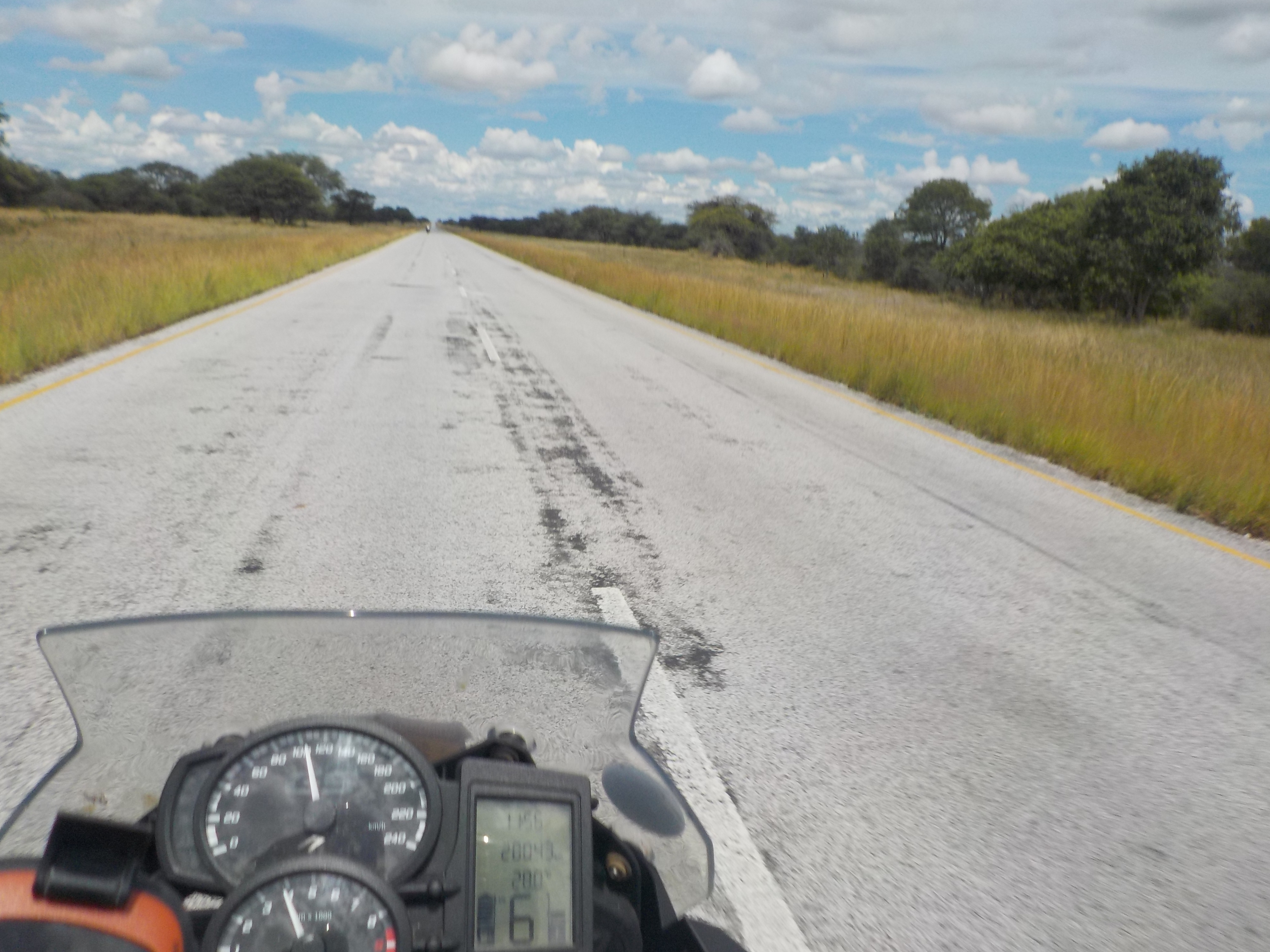
After a quick refuel in the very normal looking town of Grootfontien, we headed northwest past the large mining town of Tsumeb, then did 100 more kilometres into the Mokuti Lodge on the border of the Etosha National Park. The lodge arrival process hinted at luxury, a golf cart service was included to take bags and us to the rooms, although most of the group needed to be bumped from the cart to give the bags preference. The lodge reception design included the modern trend of getting the guests to sit down in comfortable leather chairs in front of a desk while the reception facilitator sits behind a computer on the desk, a bit like a job interview but with a lot less lying required.

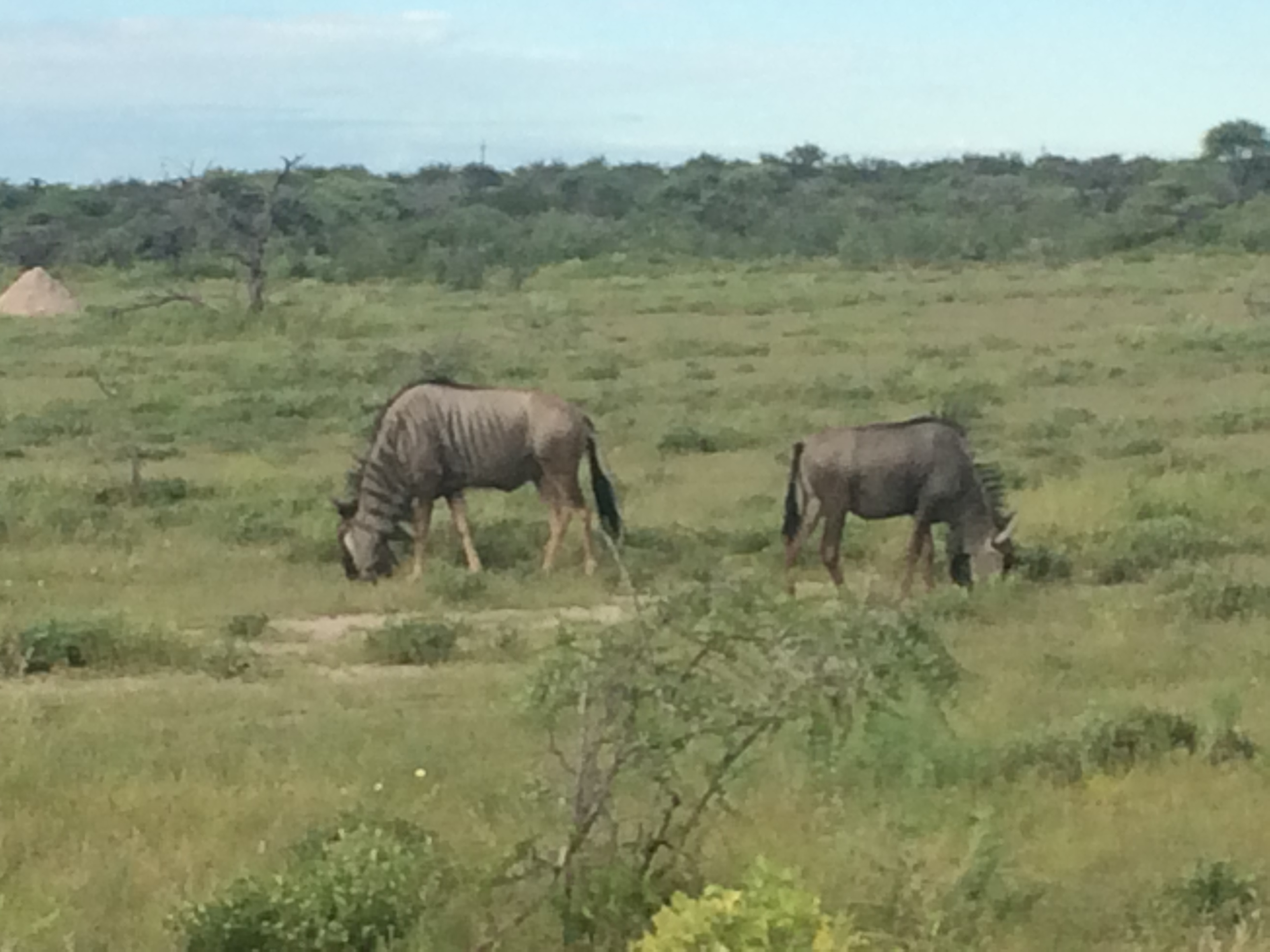
Day 67 included two game drives into Etosha, the first starting at 7am to catch the morning animal peak-hour before it became too hot. Having gotten the lodge Landcruiser into the park in a lengthy process, conducted as though the security personnel had never seen a safari vehicle from Mokuti Lodge before and assumed it was full of poachers, we were straight into impala gridlock. Having worked our way through that, we headed to the main waterholes regardless of the recent rains and puddles in the hope that waterholes are exactly the same as pubs; the regulars will show up regardless of how many trendy new wine bars are opening up nearby.


Having checked all the pubs, we moseyed around the park for a while with the guide radioing for updates on sightings from other vehicles, and occasionally parking in desperation to try to show us wildebeest or zebra while we all took the opportunity to pull out our smartphones and read emails, look at SnapChat, ask Adrian to check our longitude and latitude on his iPhone 7 app, or text randoms back home.
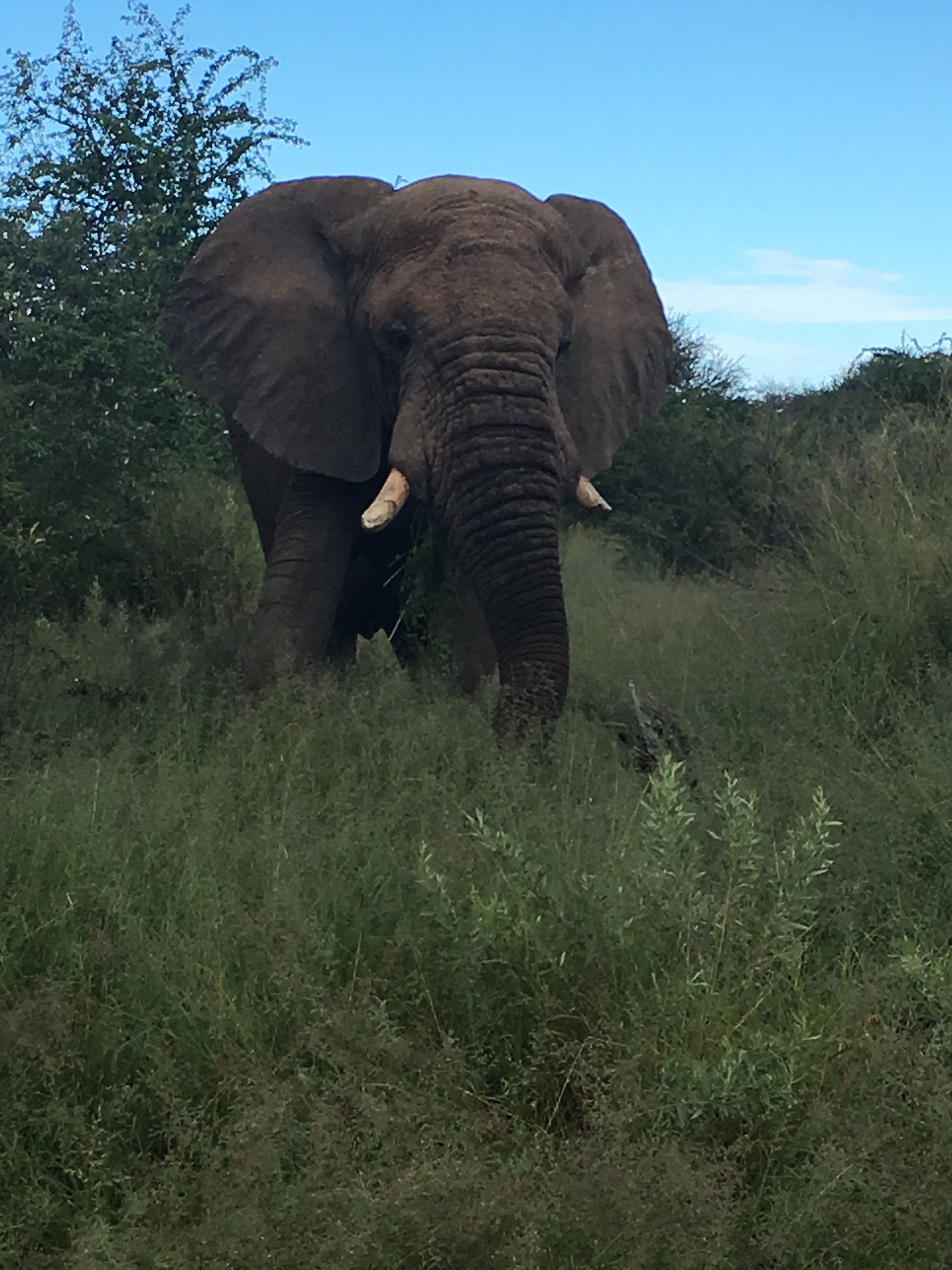
Then while moseying along a road with thick scrub alongside, Andrew spotted a kudu male and his harem, so we stopped while Nicolas realised one of his morning or life-long – can’t remember how important it was – photographic dreams and took snaps of the kudu over and through the other passengers as he was inevitably sitting on the wrong side of the vehicle. Further joy was encountered just up the road with a bull elephant in musth chewing up bushes only metres from the vehicle, again leading to speculation as to why with thousands of acres of dense scrub available, animals seem to feel most comfortable standing on or near roads.
After a few distant rhino, it was decided that the elephant would be hard to beat so we headed back to the Namutomi fort located in the park. The fort was originally a German police post, which then was used as a northern veterinary control point for German South West Africa to stop the spread of the infectious Rinderpest cattle disease, and then eventually as a POW camp for English prisoners in WW1.

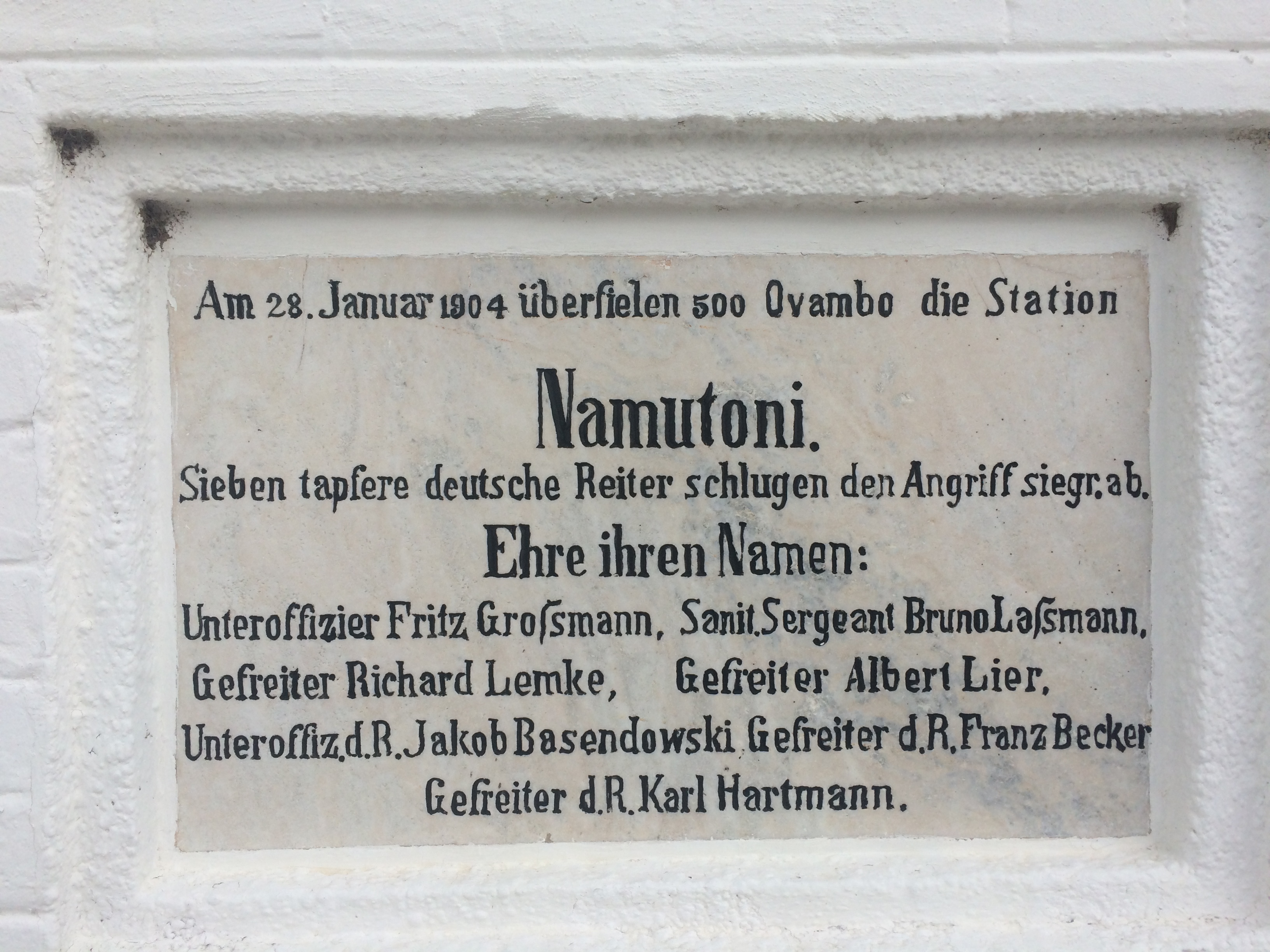
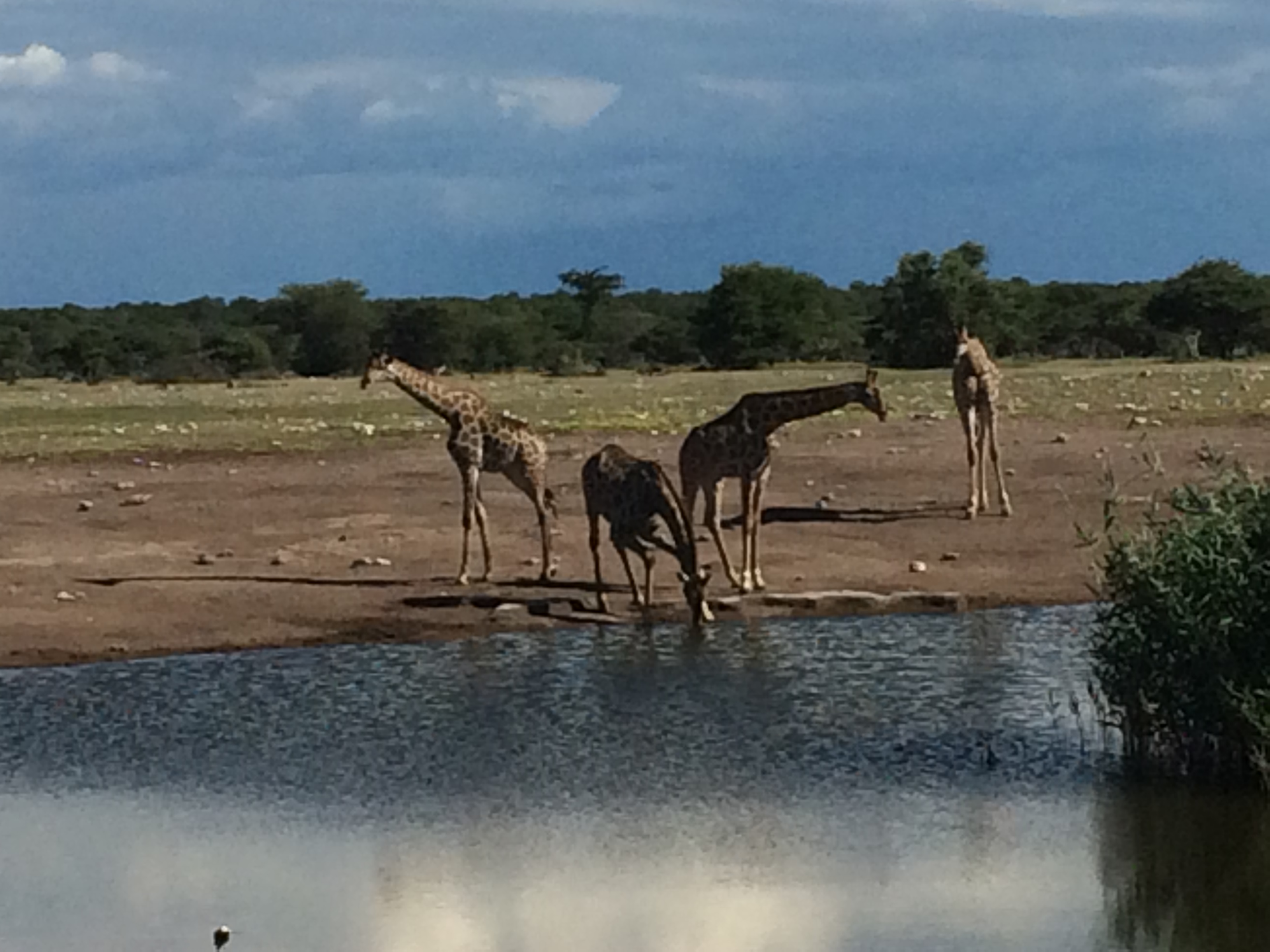
With some area history gleaned from looking through the windows of the closed museum inside the fort, the morning drive was declared finished and we headed back to the lodge for lunch. Those who hadn’t had enough safariing signed up for another tour of duty at 3pm, with large mobs of giraffe seen out on the pan and around the waterholes, and then as a finale to African game drives finding and following a black rhino wandering along 30 metres parallel to the road. Another visit to the fort found the museum to be open, however with the park main gate closing at 7pm we didn’t have time to read up on all the area history and facts before being whisked back to the hotel for another fabulous buffet including a full selection of roast meats that we’d only just been photographing on the hoof.

Day 69 was a 433km frolic southwest to Omaruru. We had to back-track about 100km to Tsumeb, where we happened upon a tour group of 1200GS riders who were officially told that they were the first real motorcyclists we had seen since arriving in Africa, apart from ourselves. We stopped again down the road in Otjiwarongo, and managed to get the first morning take-away coffee of Africa at the servo, while the 1200GS group and ourselves eyed each other off, being too shy to strike up a conversation.

Due to a big spread in the group, lunch was abandoned and ride leader Andrew decided to shout us pasties and pies instead, with fawning approval from the group. With a pastie carefully wrapped and nestled down on a bed of chain lube and greasy rags in the top box, we were back on the road and as soon as luncheon timing etiquette allowed, we pulled over into a roadside picnic area to dine.

Having finished the pastie repast, a cattle truck pulled over and a very nice bloke jumped out and introduced himself as Jacques, owner of two KLR650’s. In no time at all we were poring over the maps and getting transfer of his years of experience carting cattle down the roads we were planning to travel, particularly useful for the dirt and gravel sections which dominate in Namibia.
Whilst on the topic, Namibia has three main road categories in order of rider friendliness; B roads are prime bitumen, but only really connect the major centres up the middle and with Swakopmund and Luderitz on the west coast, C roads are by far the most variable quality and range from good bitumen to suicidal gravel but go to all the major tourist areas, and D roads are local gravel roads, sometimes worse quality than C roads but sometimes better.

Back onto the C bitumen road we made our way down to Omaruru past a large gold mine, where we refueled and emotionally prepared for our first 15km D road experience out to the Omaruru Game Lodge. Although we didn’t realise it until later, all gravel roads in Namibia are carefully groomed for the first 500m around intersections, giving the adventure rider a hit of confidence that it will all be easy. Our D road started beautifully, then destroyed hope with 20m boggy and sandy low points which usually look a lot worse than the ride through turns out to be, then back to hard packed and easy.
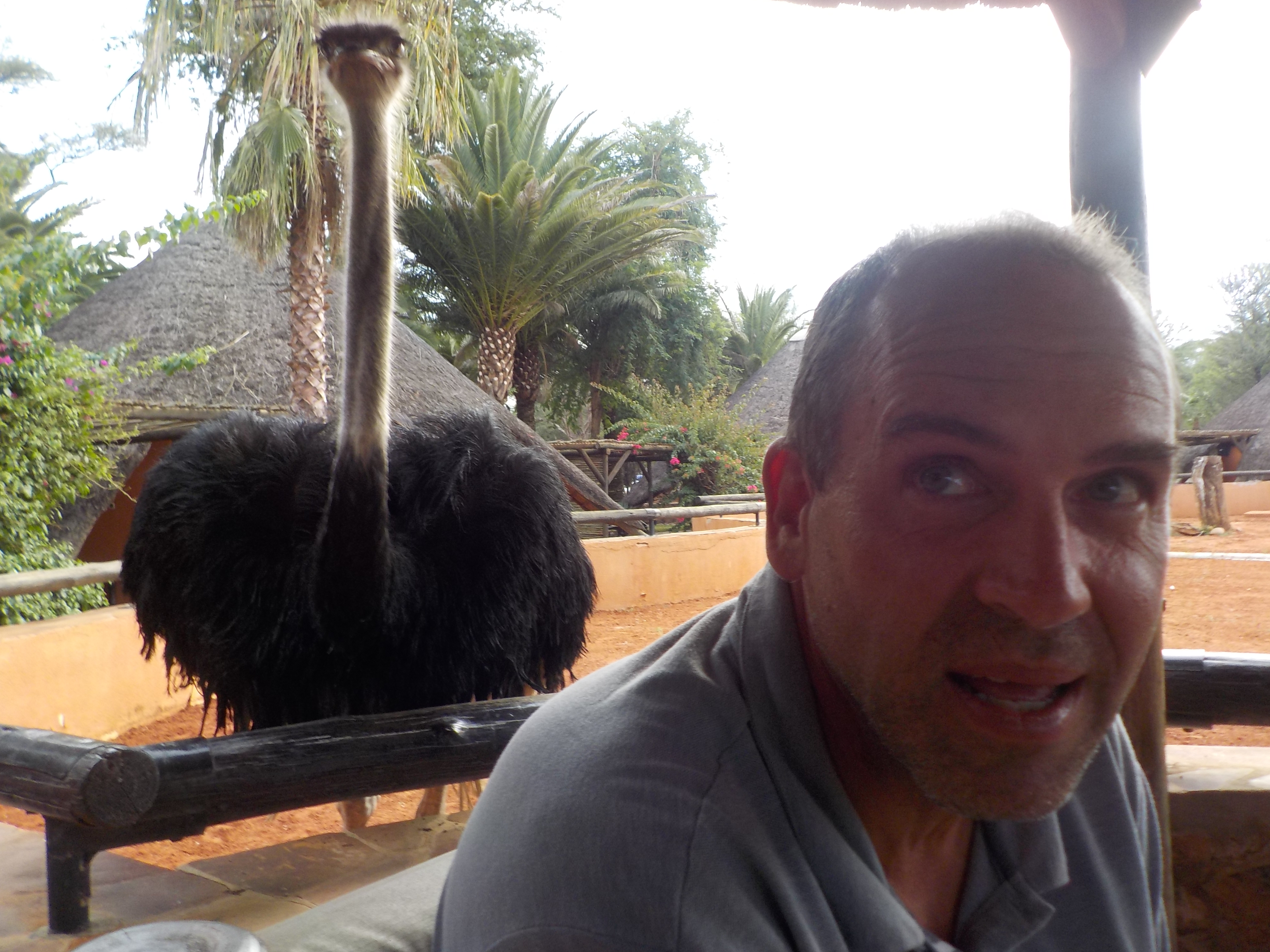
We pulled into the Omaruru Game Lodge without an “off”, unfortunately a fraction late to de-sweat and join the game drive, but just in time to get into the freezing pool. After freshening up, we further freshed ourselves with some refreshments at the bar, which overlooked a waterhole. A resident ostrich made a nuisance of itself trying to peck at anything shiny within reach including balding scalps with a patina of fear sweat, so seat selection was important while we waited for the main show to begin at dusk. A brief distraction away from the bar was feeding of the resident cheetah, like most living in parks in Namibia orphaned when young and so unable to fend for themselves.
Those who had headed out on the game drive came in with a terabyte of photos, and stories of a mob of elephant charging the vehicle and one attempting to steal a French hors’ devour in Nicolas, before using its trunk to engage in an activity for which no words exist in French.
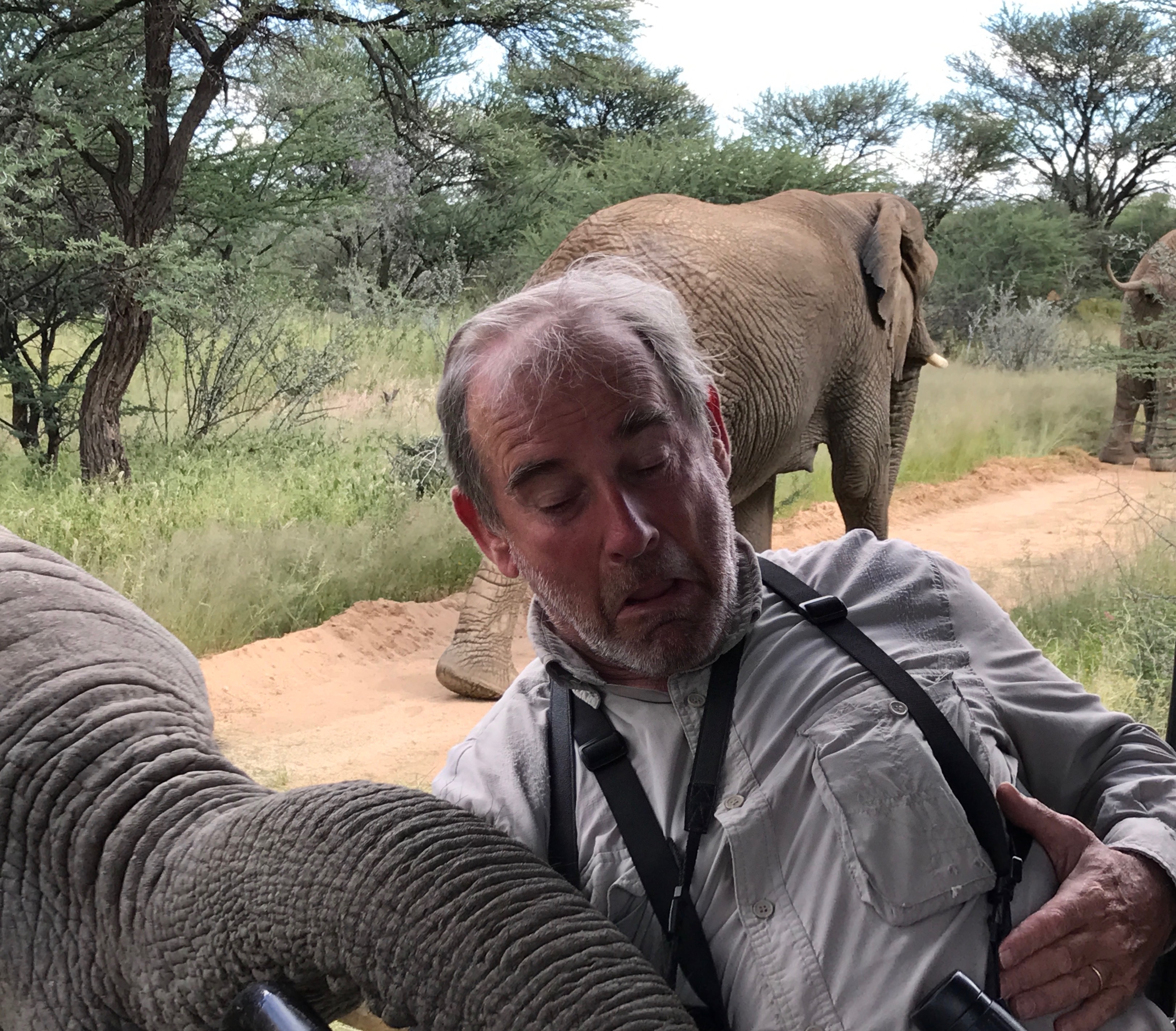
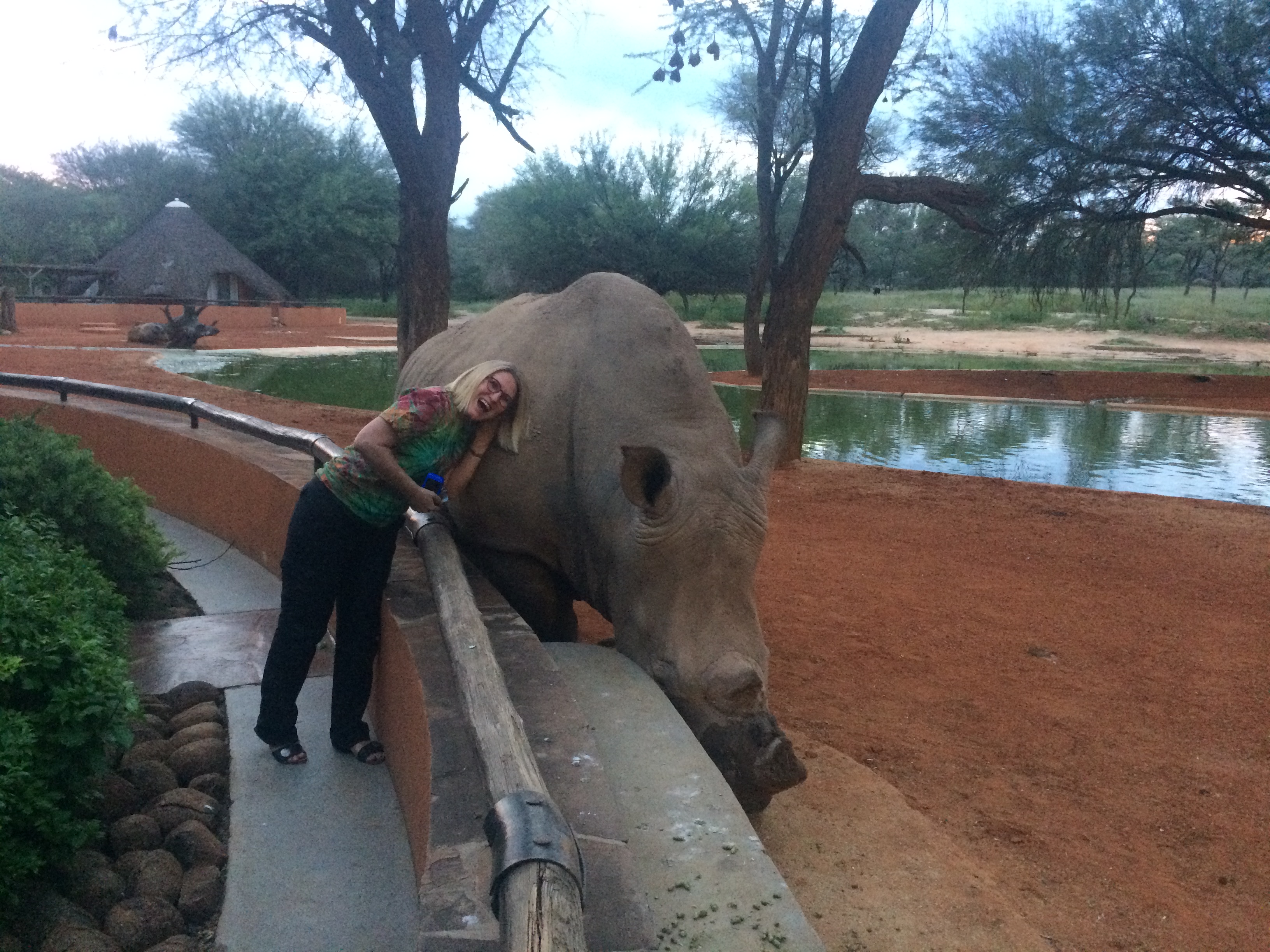
Sure enough and on schedule, giraffe and rhino wandered in to the waterhole, followed by eland that look like a huge Brahman cow with a sheep’s head. The animals are fed so were very familiar, allowing the bar patrons to get up close and personal.
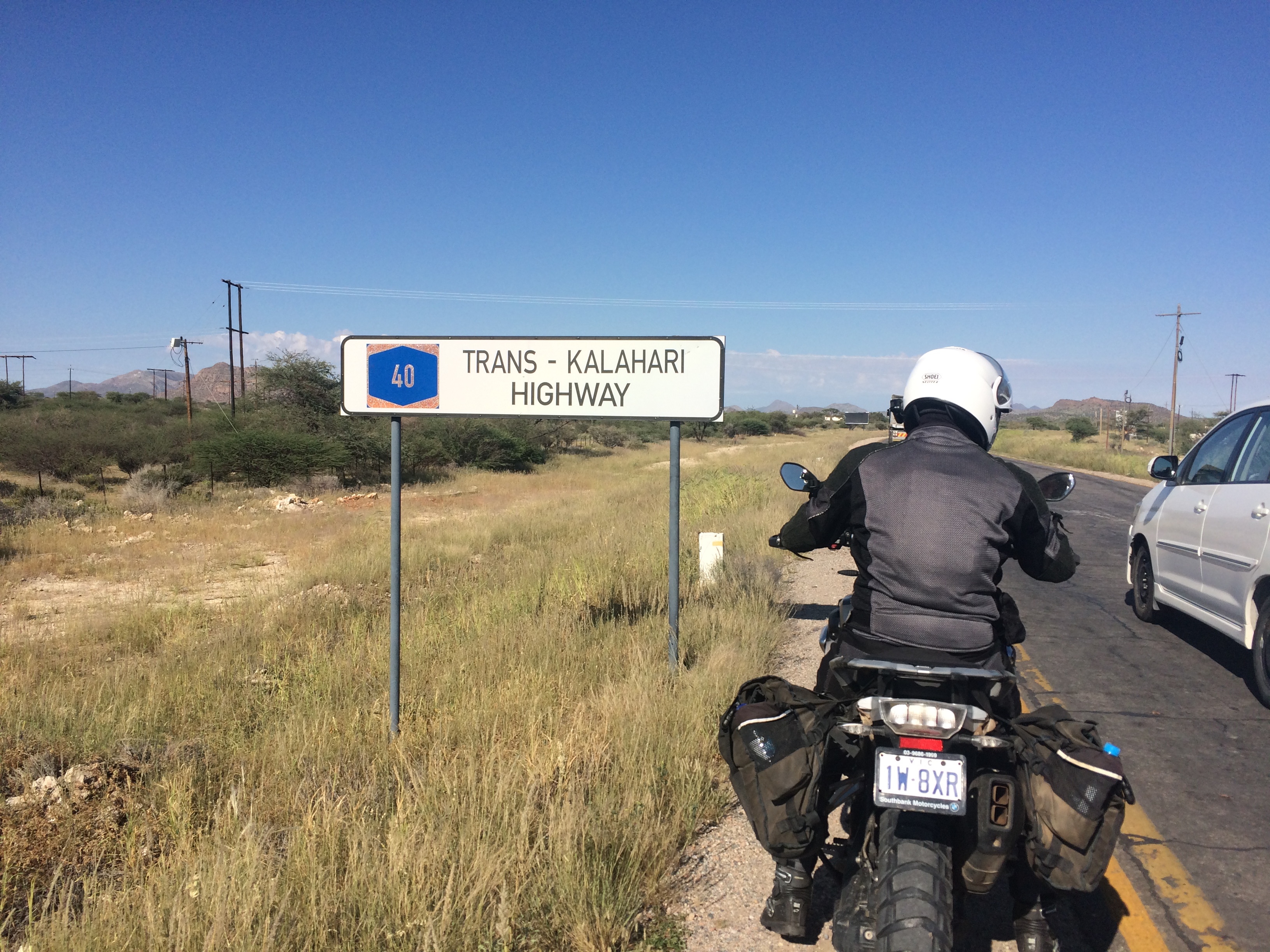
Day 70 started with a backtrack up the 15km D road, as always it is better the second time as it has already been practiced, with the ultimate destination of Swakopmund on the west coast. We refueled in Karibib, which is a large mining centre, then without getting too distracted looking at waste dumps and processing facilities we headed west. The landscape changes dramatically in Namibia over a relatively short distance, from Omaruru where it was quite green and agricultural, to Karibib where it has the appearance of the eastern goldfields in Western Australia, to fair dinkum desert dropping off the plains at Usakos.
A few kilometers out of Usakos, the group split between those who wanted to go straight to Swakopmund, and those who wanted to see the Gross Spitzkuppe, which means Awful Spittoon according to my translation supported by three years of German at school. So we D roaded west and north, to find ourselves in spectacular granite outcrops with the highest peak of Mt Awful Spittoon reaching 1730m. Well, most of the group did, I managed to take a wrong turn and go 20km east which was odd as 1700m peaks in flat desert are pretty hard to miss.
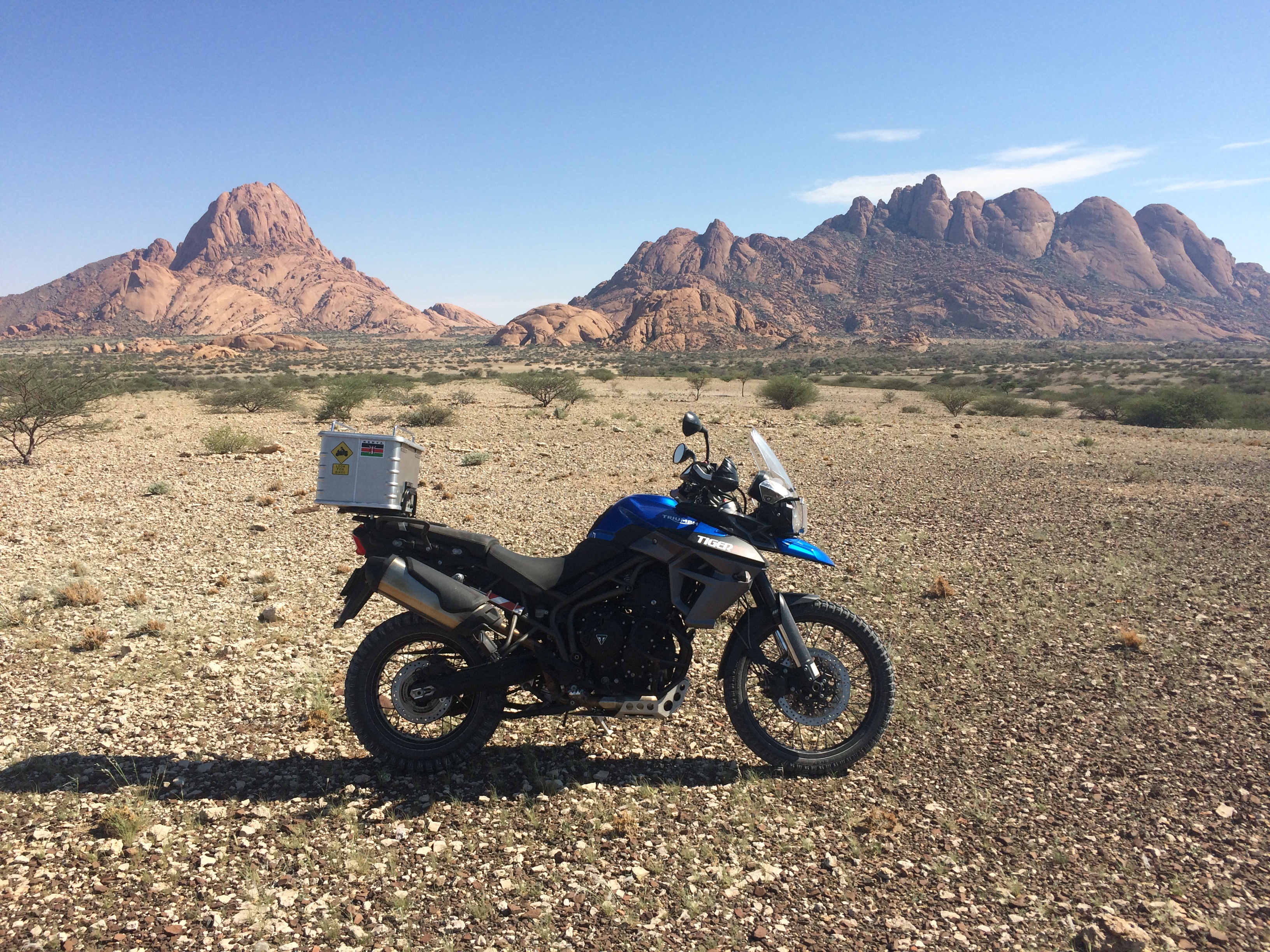
Once I’d completed a performance review with the GPS and had it on a strict management plan, it got me into the rocks. The attractions included rock pools and an arch of dubious geotechnical stability, but I stood underneath it for photos based in the belief that I couldn’t possibly be that unlucky, which turned out to be a good call. A feature of the granite was the coarseness of the crystals in the rock, with western Namibia one of the great natural crystal sources.


The road out the western side was some patches of serious sand riding, but all managed to get out and back onto the westerly D road without an “off”. The next destination was about 90km west at Henties Bay, through the Namib Desert. The D road was generally very good condition, but travelling along at 100kmh there was one 100m section of sandy gravel that got the back wheel fish-tailing wildly, resulting in a stop to assess trouser condition and review the “riding on gravel roads you’ve never seen before” risk assessment, before proceeding at a more sensible pace.

A stop at Henties Bay for lunch was unusual; it was our first overlooking more than a puddle of water, with the South Atlantic and the cool winds making the event a celebration of reaching the most westerly point of the C2C. The Skeleton Coast is very like the Atacama Desert coast in Chile, a cold sea and an utterly lifeless desert running into it.
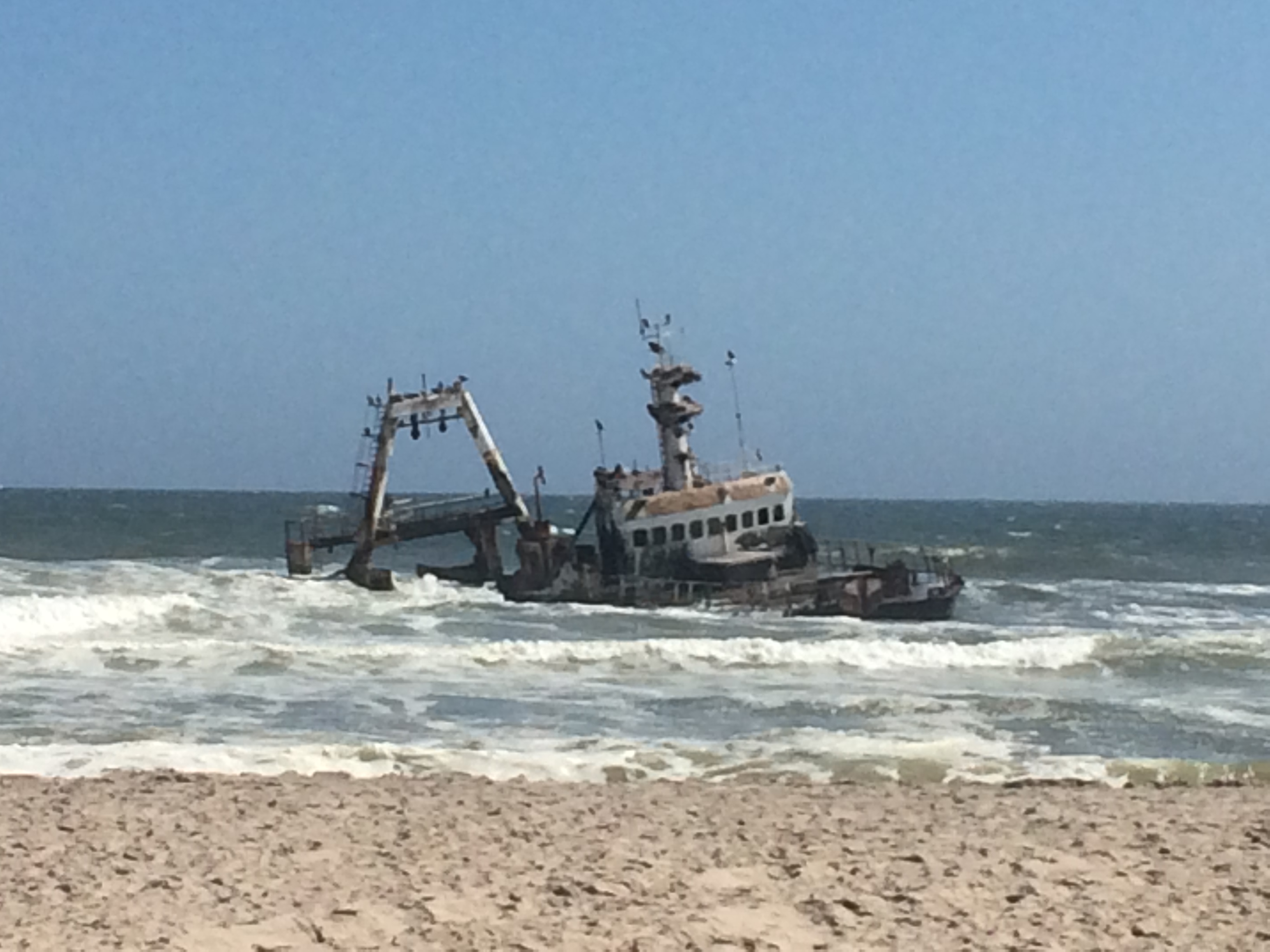
Following a good look around the town, which seemed to specialise in blocks of salt production based on some trucks we saw leaving, we headed down the salt-sprayed and very hard road to Swakopmund. The GPS highlighted about five shipwrecks, but as the coast is hammered all year round only one is visible; the Zelia of Hangana which ran aground on the 25th August 2008. Some very persistent touts were at the scene selling crystals of quartz, tourmaline, and some pretty ordinary looking rocks, and it may have been that the captain was sneaking in close to shore to see if he could get a bargain on a piece of topaz when the Zelia bottomed out.
Swakopmund was our first real “westernised town” stay of the trip. The accommodation was excellent, close to the action, with lots of restaurants and attractions to choose from, plus normal shops and even a motorcycle dealer that had a Metzeler Karoo 3 rear tyre for Adrian’s 1200GS on the shelf. A garden party was organised to celebrate our arrival on the west coast, with another happy confirmation on the trip to the bottlo; alcohol is very cheap in Namibia and the procurement of a large bottle of gin, loads of tonic, a bottle of excellent red wine and ice set us back about A$45. A slightly off-centre walk up into town for fish and chips gave the evening the coup de grace, with a sleep-in on the cards for the following morning.
Day 71 was a free day, nothing was organised as part of the C2C, so naturally the priority was to go and see the world’s largest quartz crystal cluster, weighing a meaty 14 tonnes and standing 3m high. As it was a Wednesday, we went before lunch to get through before the exhibit really packed out, after lunch the queues would be expected to go around the block with no guarantee of getting in before closing time, such is the public’s shared excitement over rocks.

Unwillingly dragged away for lunch, we then hit the Swakopmund museum for a quick history lesson, then pretended to be guests of the Strand Hotel and caught the complimentary shuttle bus back to our accommodation where ‘we were catching up with friends at their unfortunate lodgings, and going skydiving, and yes we will find our own way back to the hotel, thank you’. Some of that was actually true, Cindy and Bayne and Andrew had organised a 2pm skydive, while I was attending as a witness for a future inquest, just in case. Funds duly transferred, we were off to the Swakopmund aerodrome, happily noting on the way that there was practically zero chance of a skydiver hitting a tree in the Namib Desert.

All safely slowly ascending and rapidly descending, celebratory drinks were had by the jubilant jumpers while the trailing partners sat quietly in the background, then it was back to the accommodation for a wander up the street to the Swakopmund Brauhaus. A glorious German meatloaf washed down with a bloody enormous beer was used to celebrate successful viewing of bloody enormous crystals. And Cindy falling from a bloody enormous height.
Day 72 was back on the bikes, in off-road mode for The Precious, or Enduro mode for the 1200GS brigade, or no idea for the Africa Twin. 368km for the day to Sesriem, practically all on dirt roads apart from the initial 40-odd kilometres to Walvis Bay. The full selection of C roads was on display, at least we thought it was, starting off with salt sprayed and very hard, and slowly degenerating throughout the day.

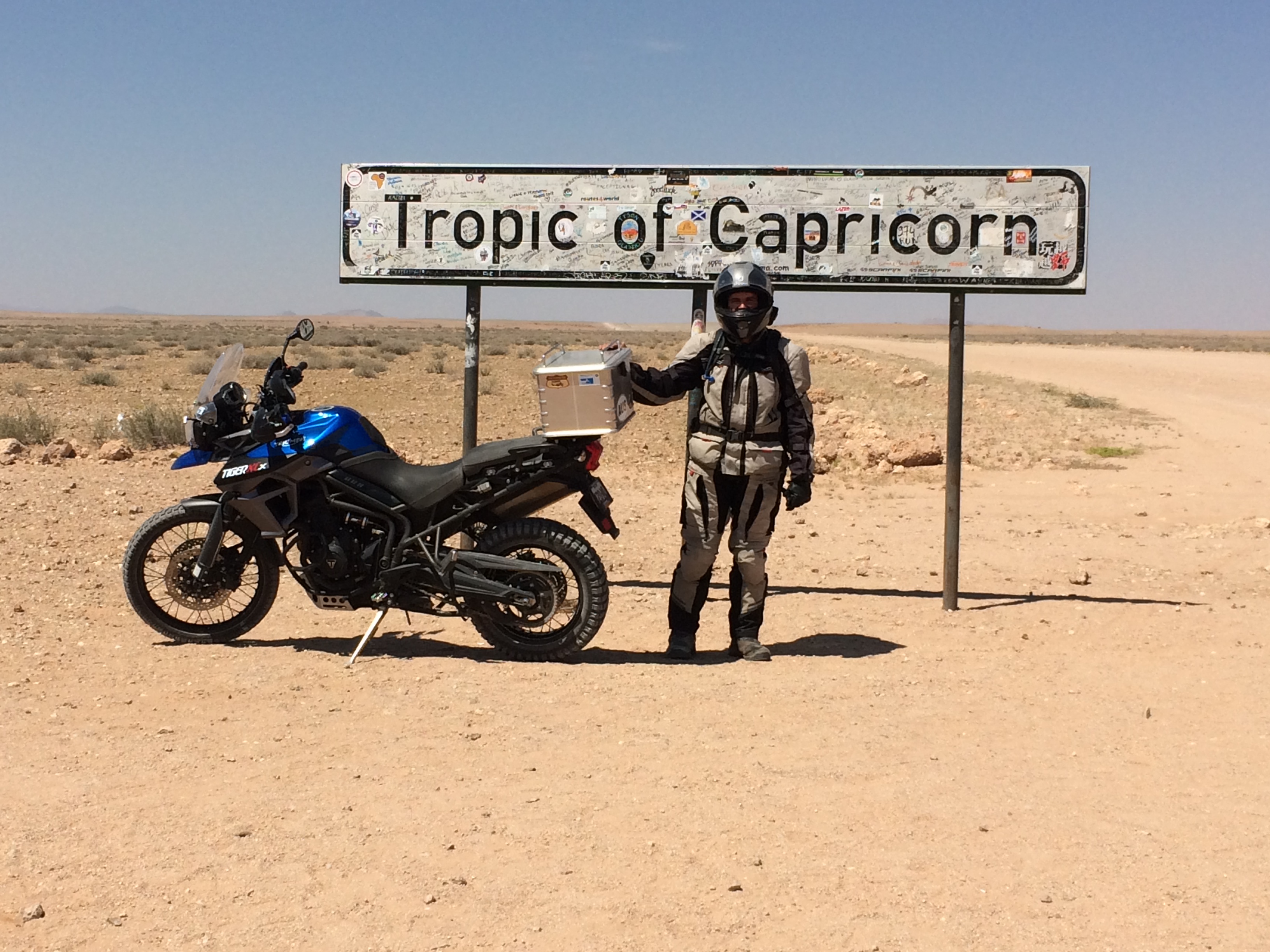
The most remarkable part of the morning’s ride was the increase in temperature from a chilly 20° near the coast, to 30° within about 500m once into the Namib Desert. We headed up into the mica sheet rocky hills and over the Kuiseb River, which runs into the South Atlantic at Walvis Bay, and then through the reference point of the Tropic of Capricorn, although the GPS claimed that the sign was 3.7km too far south.
A lunch and sculling of about 80 gallons of water to re-hydrate, and a re-fuel in Solitaire, and we were into the final 105km of the day on the C19. The obvious issue with gravel roads is that riding ease coincides with the grading schedule, and is disproportionate to traffic volumes. As we approached the tourist areas, the C roads either became better because the loose gravel had been pushed off to the sides of the wheel tracks, or worse because the surface had loosened and become sandy or corrugations had set in. The C19 wasn’t too bad, but there were a few patches of looseness and a few areas of corrugation requiring continual vigilance, so it was with relief that we finished off the very long and very hot day at the Le Mirage Sesriem with the traditional quaffing of beer and gin and tonics.
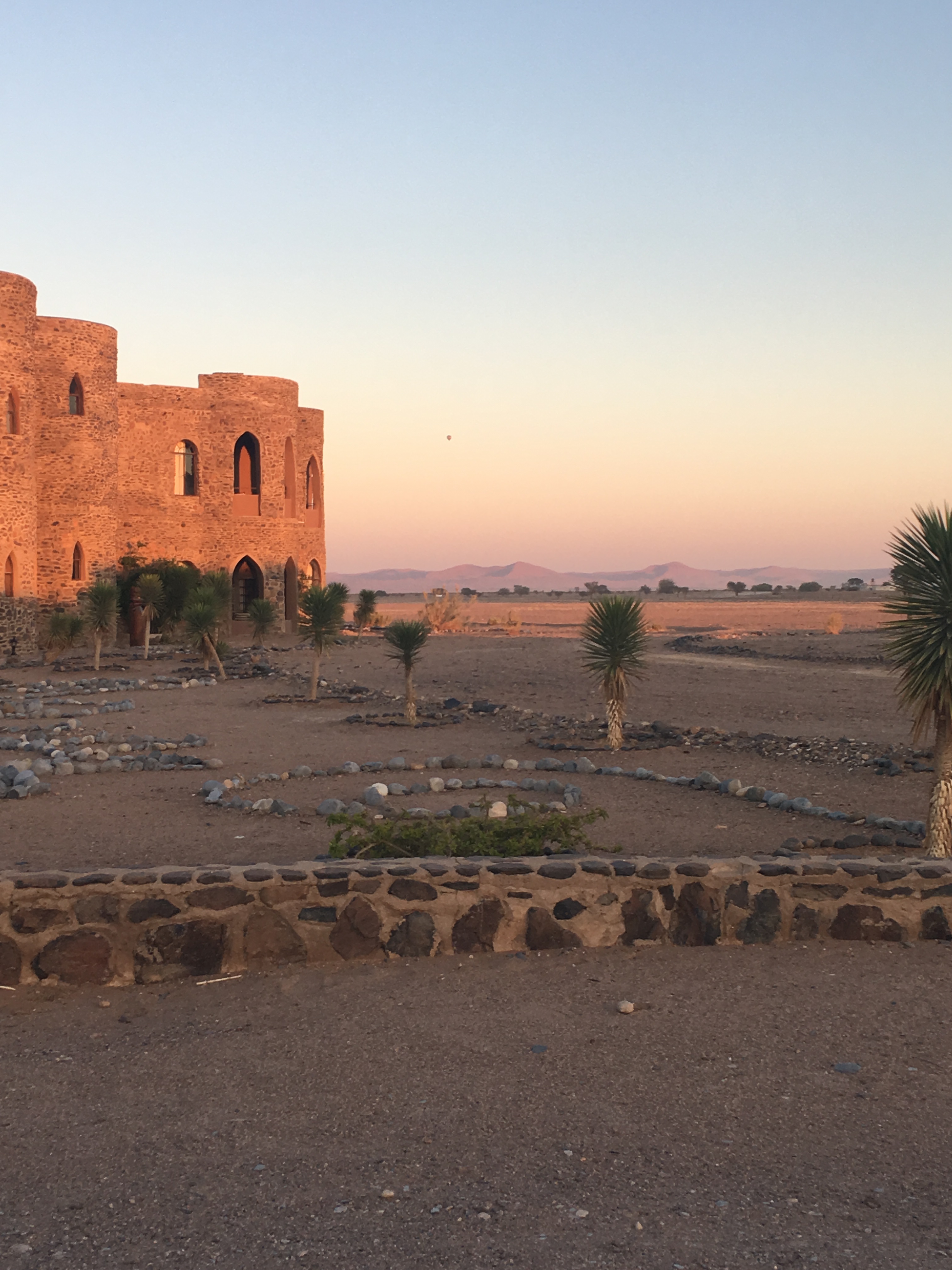
Day 72 was our final “stay in the same place twice”, as a tour of the famous dunes had been organised. Due to the heat an early start was planned and executed perfectly by the guests, but not by one of the drivers who slept in resulting in us having to drive around to his place to get him out of bed. We were only a bit late as we drove through the Namib Naukluft park gate, and about 40km later we were amongst the red dunes that sit on either side of a flat valley floor. First question was; why don’t the dunes work their way down and fill the valley? Answer; the dunes are based on rocky ridges, and the sand is rich in iron oxide so is quite heavy and tends not to move very much.

We pulled up at Dune 45, one of only three in the park that people are permitted to climb. With a hydration pack at the ready, we charged up the ridge, fully expecting a ‘1 step up, 0.99 step slide back’ experience, but the heavy sand was surprisingly supportive. In the time it takes to get a driver who’s forgotten to set his alarm out of bed, we reached the top of the ridge. It was like Everest during peak climbing season, the people who have reached the top seemed to only want to go back the way they came, creating a traffic snarl. Terry said some Canadian words to the effect of “bugger this, I’m going over the side”, which had a flow-on effect as Andrew led a tour group charge down the windward side, only for everyone else to go down the lee side. It turned out to be surprisingly easy due to the weight of the sand, and took about 2 minutes including stops to look back up at the unadventurous slowly traversing the ridge.

After further re-hydration, we continued west in the vehicle to get to the Deadvlei, advertised by the guide as a petrified forest near the 350m Big Daddy dune. After several near-bogged incidents and a fair old 1km slog through sand, there was some disappointment amongst the group that the trees were about 50 million years shy of petrification, and in fact smokers needed to be careful not to set the 700 year old dead trees on fire, however the fact that they are so old and grew from a flood a long time ago sort of made up for it.
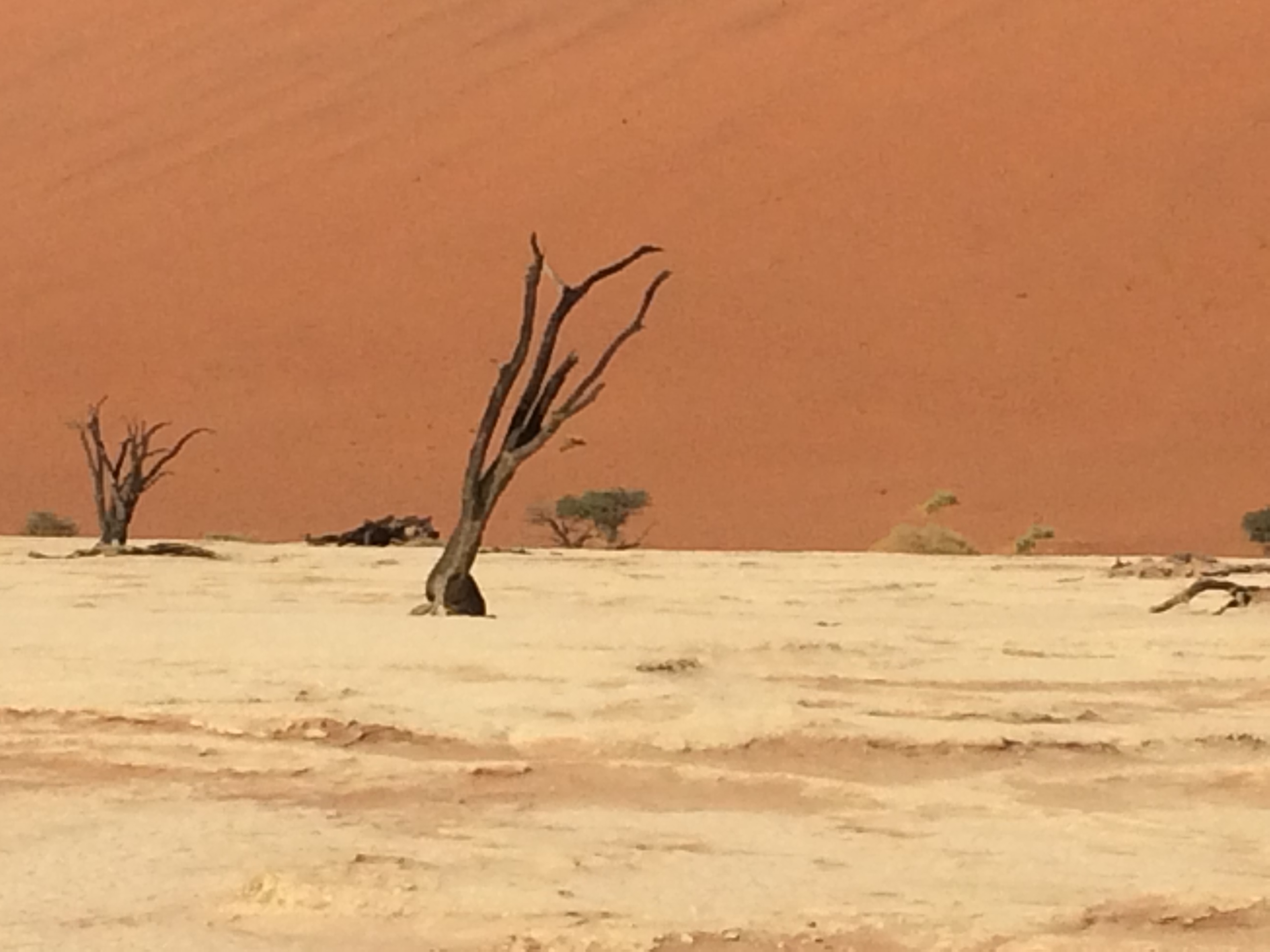
Back in the vehicle to re-re-hydrate, we drove out of the park, stopping only to photograph some Oryx that are quite common, then making a final tour stop at the Sesriem Canyon which is a narrow 60m deep gorge cut by the Tsauchab River through the conglomerate rock which was probably deposited on the plains by rivers and glaciers a few years back.
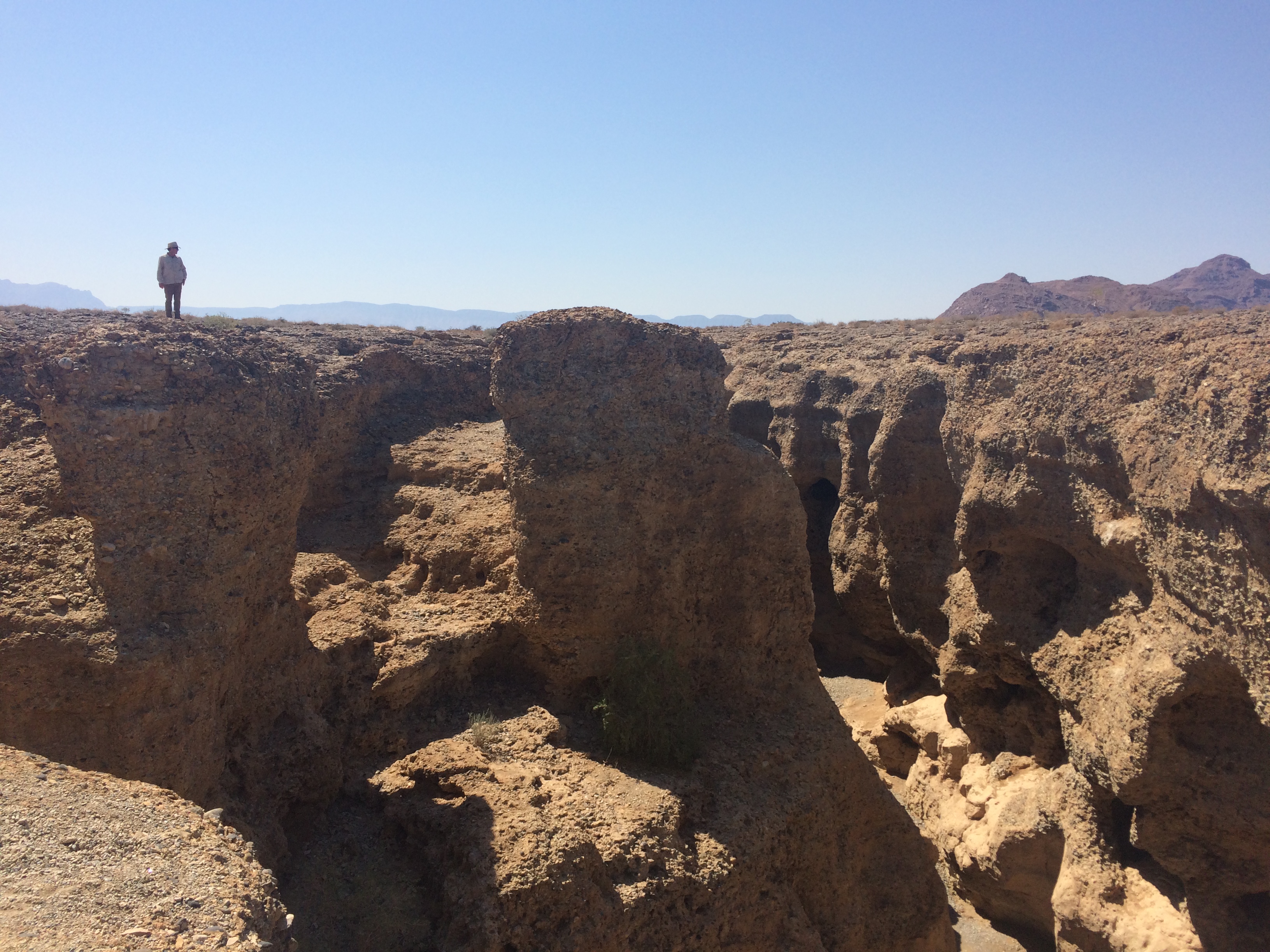
Back to the hotel by lunchtime with no tip to the guide due to the fake petrified forest incident, there was some fourth order hydration undertaken and then whole of body hydration in the pool. With leftover gin and vodka from Swakopmund still weighing down the luggage, a happy hydration session was held in the grounds before a decent dinner and preparation for getting back on the bikes on the morrow.

Day 73 dawned under cold leaden skies, with flurries of sleet whipping across the icy desert landscape. Wrapped in thermals and all our riding gear, we slowly crunched down the frosted gravel toward our planned overnight at the un-inspirationally named Burgsdorf Goat and Guest Farm. Actually it was about 30°C at 7am, so we stopped fantasising about cool weather and left early to try to get as far down the track as possible before running out of water in the ‘no idea how much I’ve got left’ Camelbak. We started on the C27, and then took a shortcut across the D845 to get back to the C19 toward Maltahohe. The D845 had some patches of sandy ugliness, but taken slowly it was OK.

Once back on the C19, we climbed out of the plains and onto the escarpment, and the road quality soon equaled the world’s best dirt surface – very hard packed and nothing loose so 80kmh was a minimum standard and with the glorious scenery very enjoyable riding.
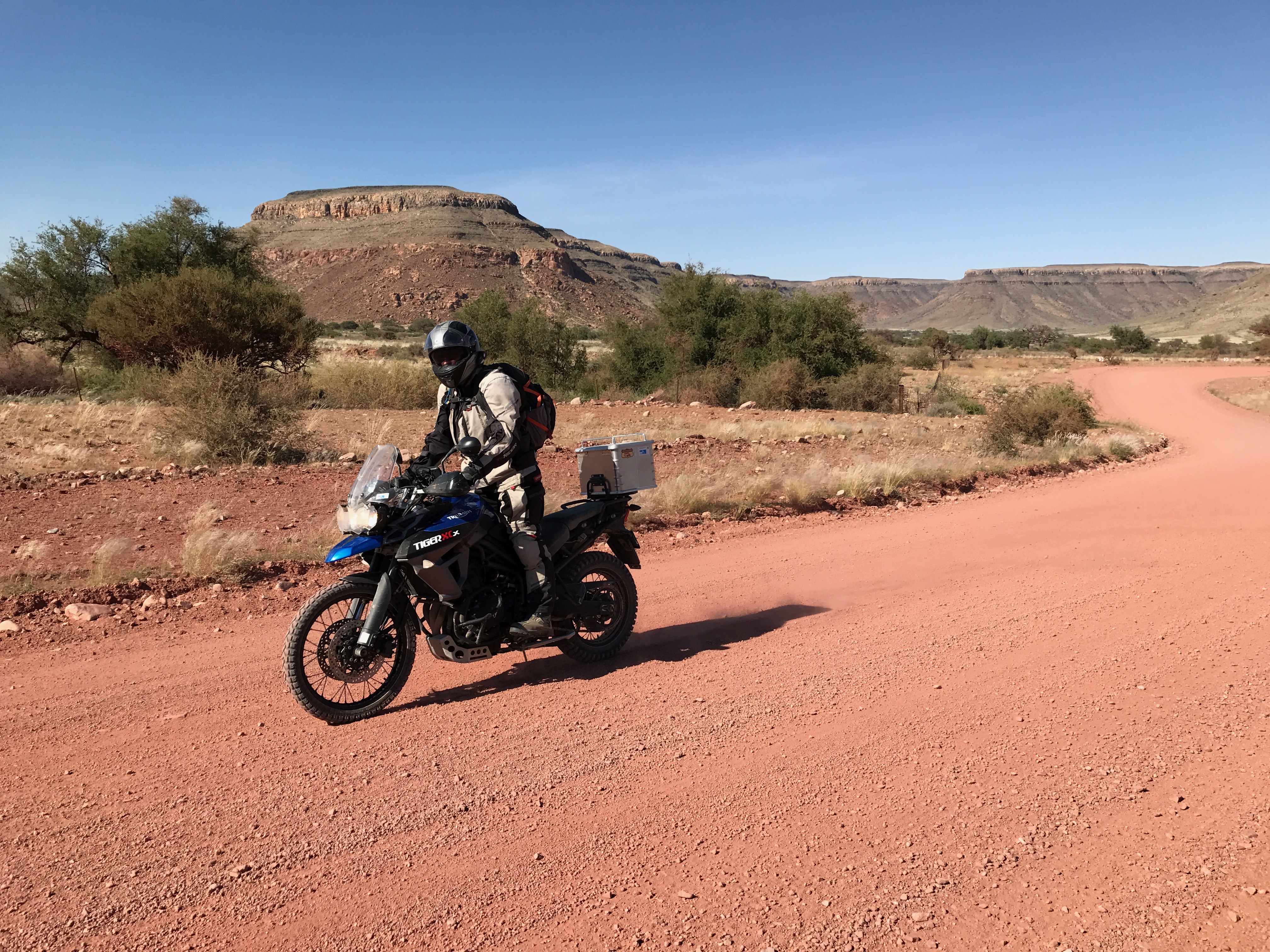
With only 140km for the day, by lunchtime we were re-fueling in Maltahohe, and then heading back out to the Goat and Guest Farm. 10km of sometimes wobbly sand track had to be negotiated, and the thought of spending the afternoon and night in some squalid place petting goats had the humours on edge by the time we arrived. However, the rule of thumb that the worse the access track the better the place held firm, with Cindy giving a near-record 4.5 out of 5 score. Fabulous lagoon-front rooms, lovely facilities and grounds, decent wifi, and even a pool and an honesty system bar more than compensated for the road in. Given that she didn’t have an “off”, 4.75 would probably have been fair. After a quick lunch, we settled down for some relaxation and social media-ing around the pool, and then headed off for a well-deserved nap.

Barely had we de-shoed, when Adrian strongly suggested we might like to come out onto the grass out the front of the room on the shore of the lagoon. Unhurried in expectation that he was photographing Hera petting a goat, our surprise at seeing two rhino just metres way drinking from the lagoon had us rushing back in for the cameras.
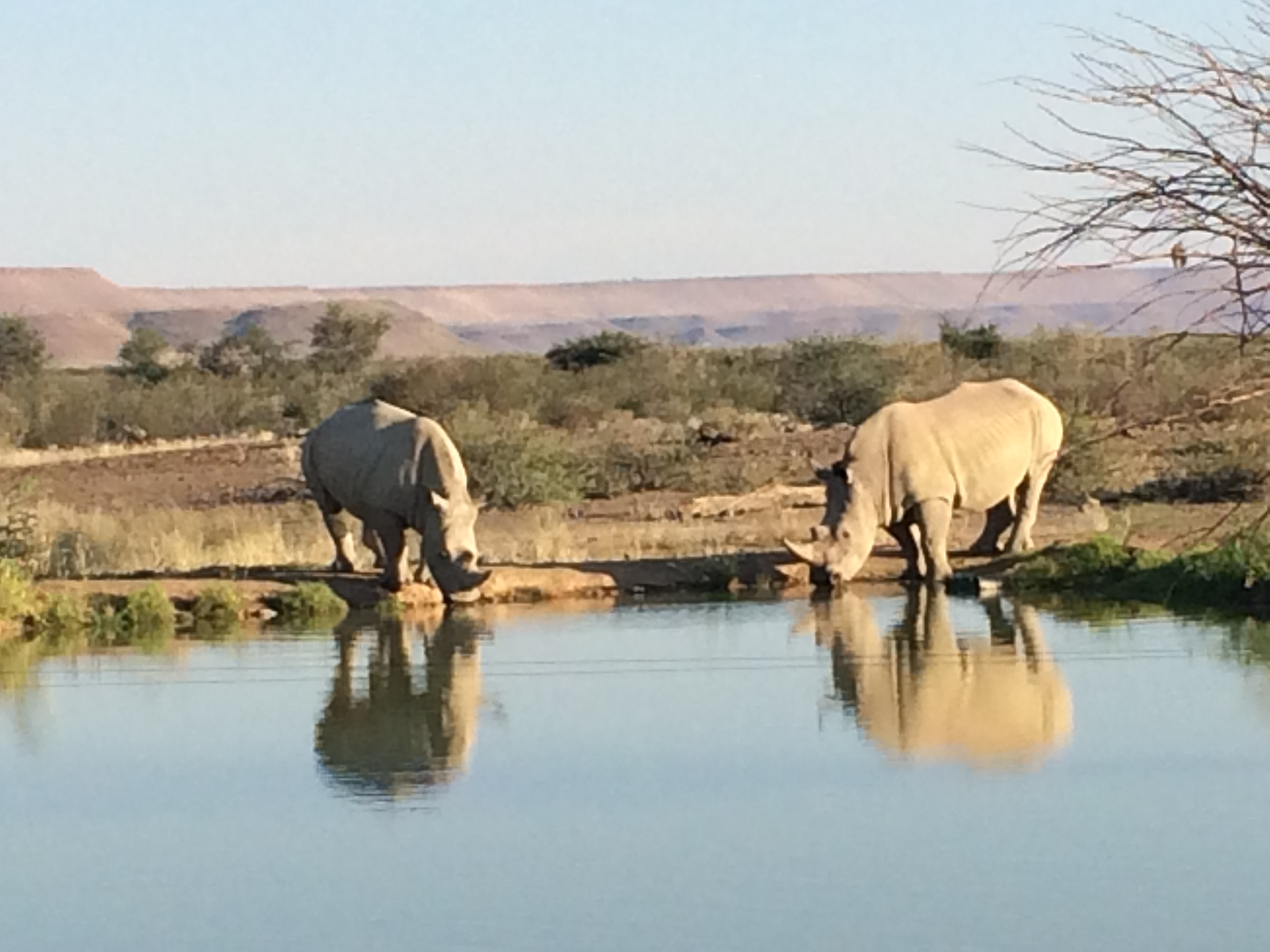
And that was about as bad as the experience got, with the rhinos wandering over to the fence, and then seeing a cheetah run around to an enclosure near the bar. We likewise ran over, and were shocked when the farm owner suggested we could come into enclosure. Quickly re-reading our travel insurance policy section regarding knowingly entering cages containing large cats, we followed Andrew in under the assumption that we could probably outrun a cheetah if it first ate a whole 80kg bloke. The female cheetah named Tulah was 8 years old, had been orphaned, and behaved precisely as a pet cat does, sitting down for pats and purring loudly. The only issue was the licking, which felt like someone running a belt sander over the skin.

That experience now firmly placed in the upper echelons of stuff done on the C2C, a frenzy of posting cute cheetah cuddling photos on social media ensued, before a very good dinner of kudu, and sleep no longer disturbed by fear of African cats. Except for the standard nightmare about entering a leopard enclosure and finding oneself naked.
Day 74 started with the challenging 10km back out to the C14, with a dreaded bit going up a deep sand ramp to get over a pipeline handled okay by all, except one rider who will remain nameless. According to her partner Craig, the rider went very fast which was good, but into the wrong side in bottomless sand against all his advice. Not that he mentioned the incident at the bar later on.
The C14 down to the fuel stop at Helmeringhausen was good quality C gravel, hard packed and fairly quick so no dramas. The instant we left the little town and turned onto the C13, the number had immediate influence on our luck. Firstly there was a section of red sand which had no surface colour contrast between really deep bits and well packed bits, resulting in either getting through OK or a face plant in the soft sand.

After that is became a real slog, we thought we were good when the road colour changed back to the light brown with red undertones that had previously indicated a hard surface, but instead meant a thick layer of gravelly sand that again brought a few down. Pace dropped to very slow and the heat sucked the energy out, but eventually the road surface improved enough to pick up the pace and make it into Aus for a fairly late and well deserved lunch.


We then blasted down the B4 bitumen like riders released; no more delays or hard work on the 120kmh surface. We dropped off the escarpment back into the lifeless Namib Desert, and immediately experienced a 10°C increase in temperature which inspired even faster riding to get the air conditioning working, before hitting the coast coming into Luderitz and having the temperature drop back 15°C to something reasonable. A refuel with service attendant Johannes giving 100% on cleaning our headlights, and we were rolling into the Luderitz Nest Hotel. Checked in and looking out our bedroom window into the harbour, the program was a drink, tighten Cindy’s chain, then wander into town to check out ATMs and the possibility of a non-hotel seafood dinner somewhere.

As it was a Sunday, or just because it was Luderitz, the place was fully synchronised with the Namib Desert and utterly lifeless. Apart from a seedy looking club with blaring music and little chance of a good a la carte menu, which we didn’t risk reconnoitering, so back to the hotel for a jolly good buffet.
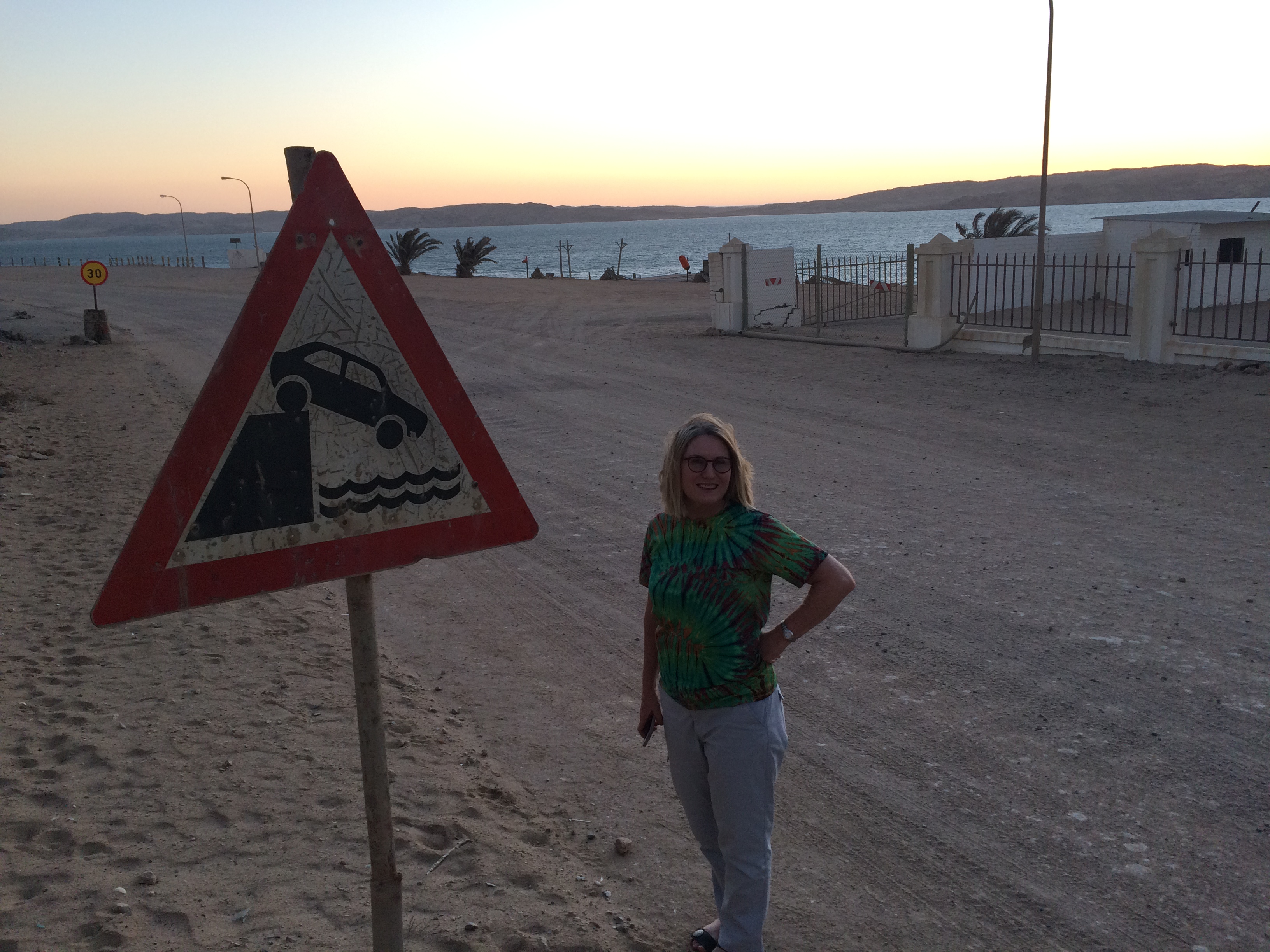

Dinner completed on schedule and close enough to budget, we joined the group in the bar for champagne and speeches, to celebrate Nicolas getting past the point of a horrible rib and shoulder breaking crash on a bad section near Helmeringhausen, on his original epic Nord Kapp to South African Cape journey.
Day 75 commenced at 3am for ride leader Andrew, who woke suddenly to the thought that I hadn’t tightened Cindy’s bike rear axle nut after adjusting the chain, thereby destroying a lucrative travel and life insurance claim by a grieving partner. With that situation resolved and the nut tightened to the precise 110Nm BMW specification, ± about 50Nm, we headed off for the 404km to the Fish River Canyon Roadhouse.

Again the blast of heat and a 10°C increase in temperature as we crossed the Namib Desert for the fourth time, but as it was bitumen warp speeds were achieved to get to Aus for a refuel, some biltong, and toothpicks to sort out the meat-caulking dental disaster created by biltong. The opportunity to see a Commonwealth War Graves cemetery in such a remote place could not be missed, and although it nearly was missed as a wrong and bottomless sand road was initially taken, it was reached successfully thanks to the 21” front wheel and a bit of judicious throttle.

The graves were from WW1, and there were two distinct periods of deaths, the first around April and May of 1915 when South African forces landed at Luderitz and forced the under-manned Germans into retreat back up past Windhoek resulting in their surrender on 9 July 1915. The second period was in October and November of 1918, when the prisoner of war camp and Aus were victims of the Spanish Influenza, with shared numbers of deaths between the German captives and the South African captors.
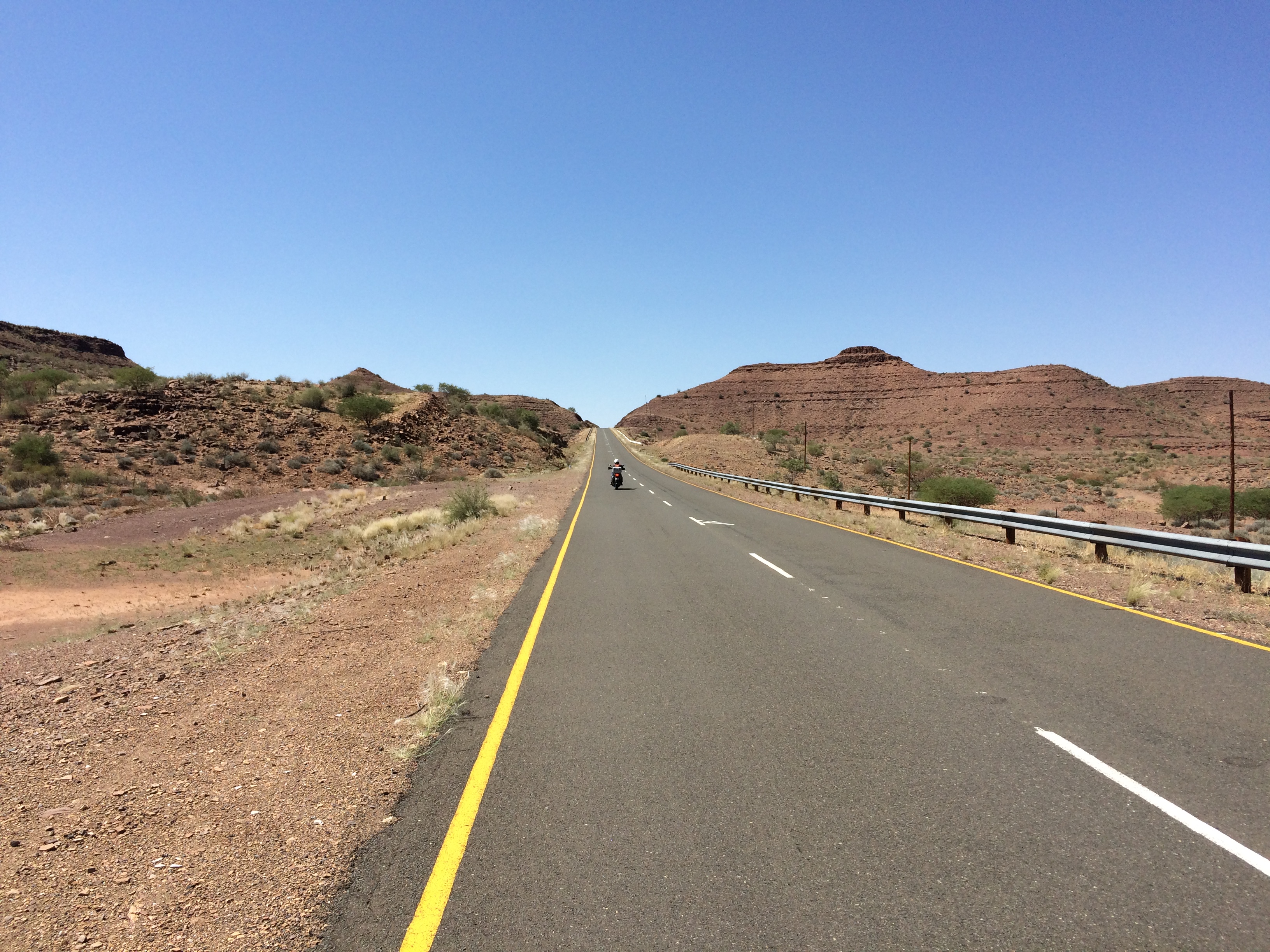
Continuing east, we climbed the escarpment for the second time, and reached the famous Fish River for a timely lunch just as the last of the biltong in tooth gap inventory was depleted. The Fish River rises just to the north of the fondly missed Burgsdorf Goat and Guest Farm, and heads north before doing a long radius easterly 180° turn to the south where it eventually runs into the Gariep River which forms the border with South Africa.

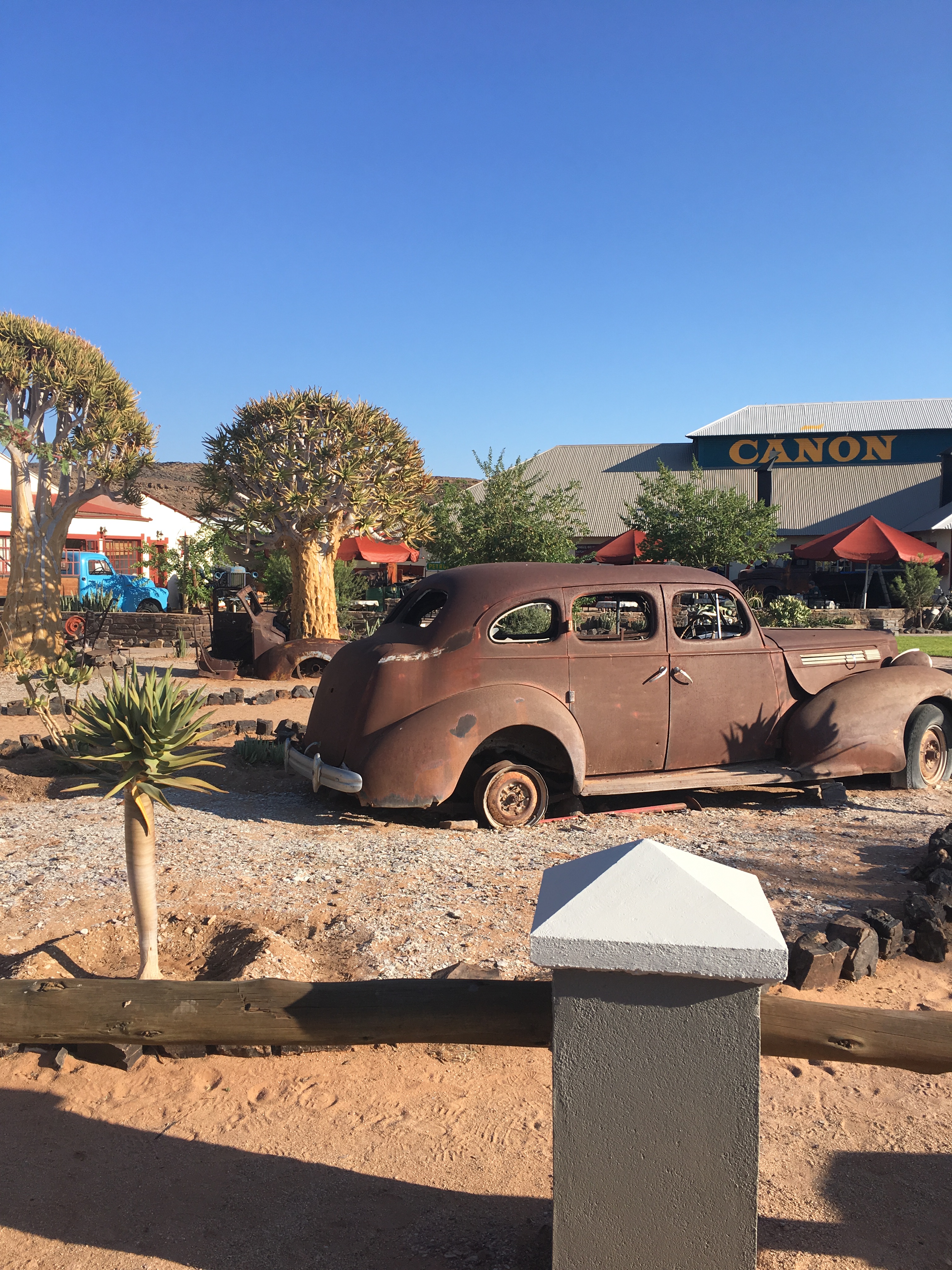
With calorific value restored, we all turned south just after Seeheim on the C12 gravel road. Except Nicolas, who insisted that everyone including their GPS was wrong, and that we should be taking the F605 road directly from Seeheim instead. The C12 was good quality so nothing much exciting happened for the 80km to our final destination of the Canon Road House. Nicolas had about an hour head start, which he used up navigating down a road he later described like something out of the Heart of Darkness – the horror, the horror. Now firmly re-attached to the group bosom at the Road House, only his slightly whiter hair signified any lasting trauma from taking a road 2 levels below a D.

Day 76 involved a 20km trip down to the Fish River Canyon to start the day on a mildly corrugated road with a swathe of traffic going in for an early start. The geology board is always most interesting, so that was studied prior to viewing the canyon to get an understanding of how such a tiny river created the world’s second biggest canyon. The viewing platform is on a bend in the river, and looks down into the canyon that is actually a canyon within a canyon.

A more challenging viewing option for the aggressive adventure rider was to ride along the canyon on a rocky road, with a spot available with no restriction as to how close to park to the edge. When 3m from about 500m drop on loose and irregular stones, all the skills learned about slow speed maneuvering and making sure you put the correct foot down come to the fore, and the nerves are shrieking like a banshee who finds her 25 year old Grange Hermitage has corked.
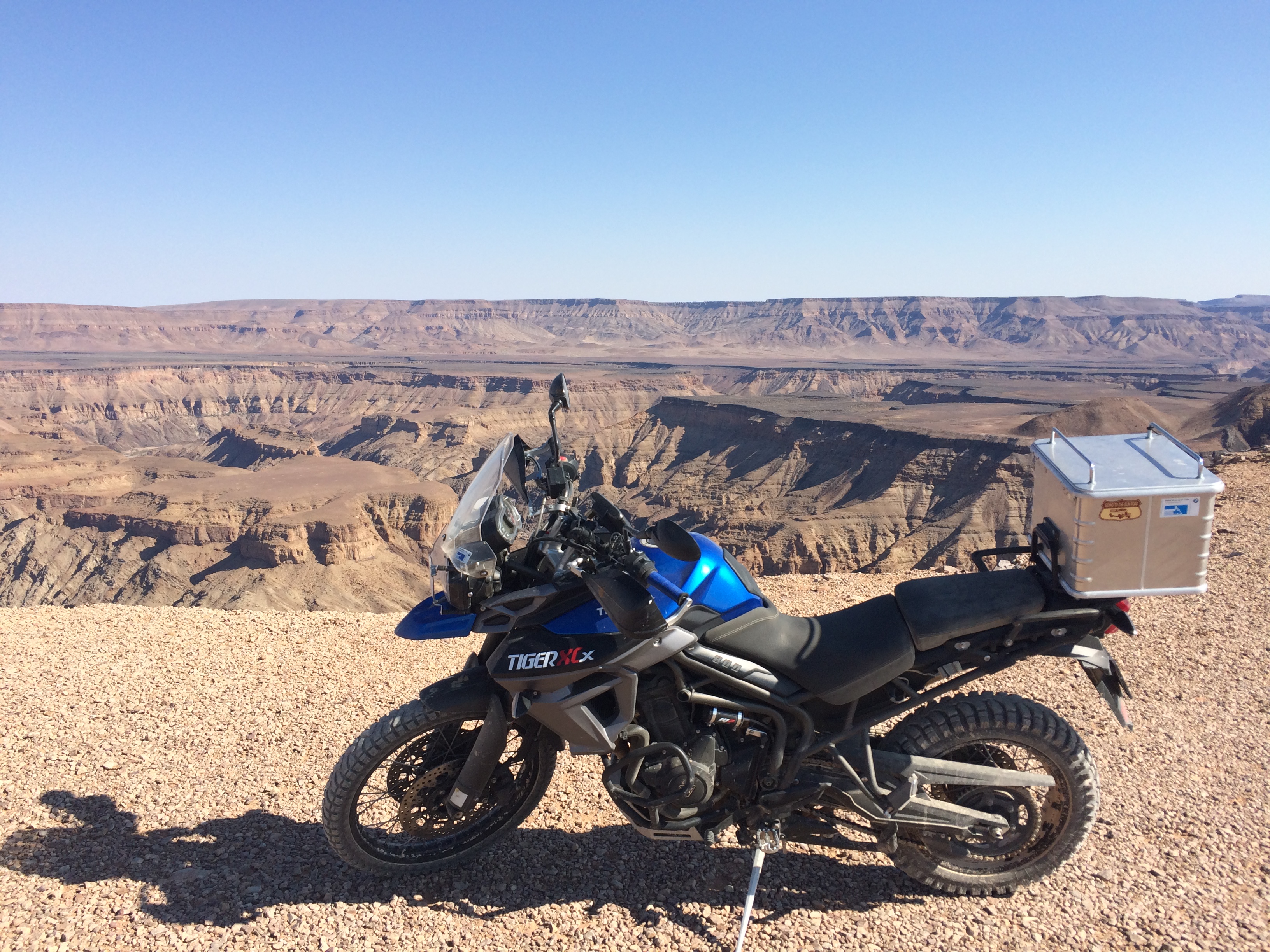
The awesomeness of the canyon fully absorbed, we were back on the trusty steeds and out of the park, and onto the C37 that was pretty good quality gravel with no sections requiring screaming in terror. A lunch date was held in probably the most deserted place in C2C history, with hideous looking camel spiders that are actually more closely related to scorpions running in from everywhere to distressingly find shade under jackets, bags, and other wearable paraphernalia.

With lunch done and camel spiders pushed out of conscious thought, we rolled into the Aussenkehr nature reserve with some spectacular coloured landscapes, and before we knew it we were into the Gariep River valley with its vineyards and irrigated farming. A bit further on, we finished with gravel for the C2C and turned off the bitumen into the Norotsharma River Resort. The Resort got a score of 3.75 out of five from Cindy, who marked it down due to some mosquitoes in the room, and she was not as influenced in scoring by the appearance of the senior receptionist as a single male judge who’d been on tour for 76 days would have been. Getting the young lady to pose on their bike became a mission for some who shall remain nameless, let’s just call them Everybloke.

Our last night in Namibia was an extravagant feast, with a kind of personal vertical kebab for me with lots of succulent meat juice dripping on chips, the type of meal one would be proud to have described by the Coroner as the cause of death. Then to bed; perchance to sleep, but also perchance to get bitten by mozzies.
Day 77 was supposed to start with about 60km of gravel, however Main Roads Namibia had done us a favour and tarred it. A stop in the final town of Noordoewer for blowing of final Namibian dollars on fuel and more biltong, and a mere 4km further on we were at the border.
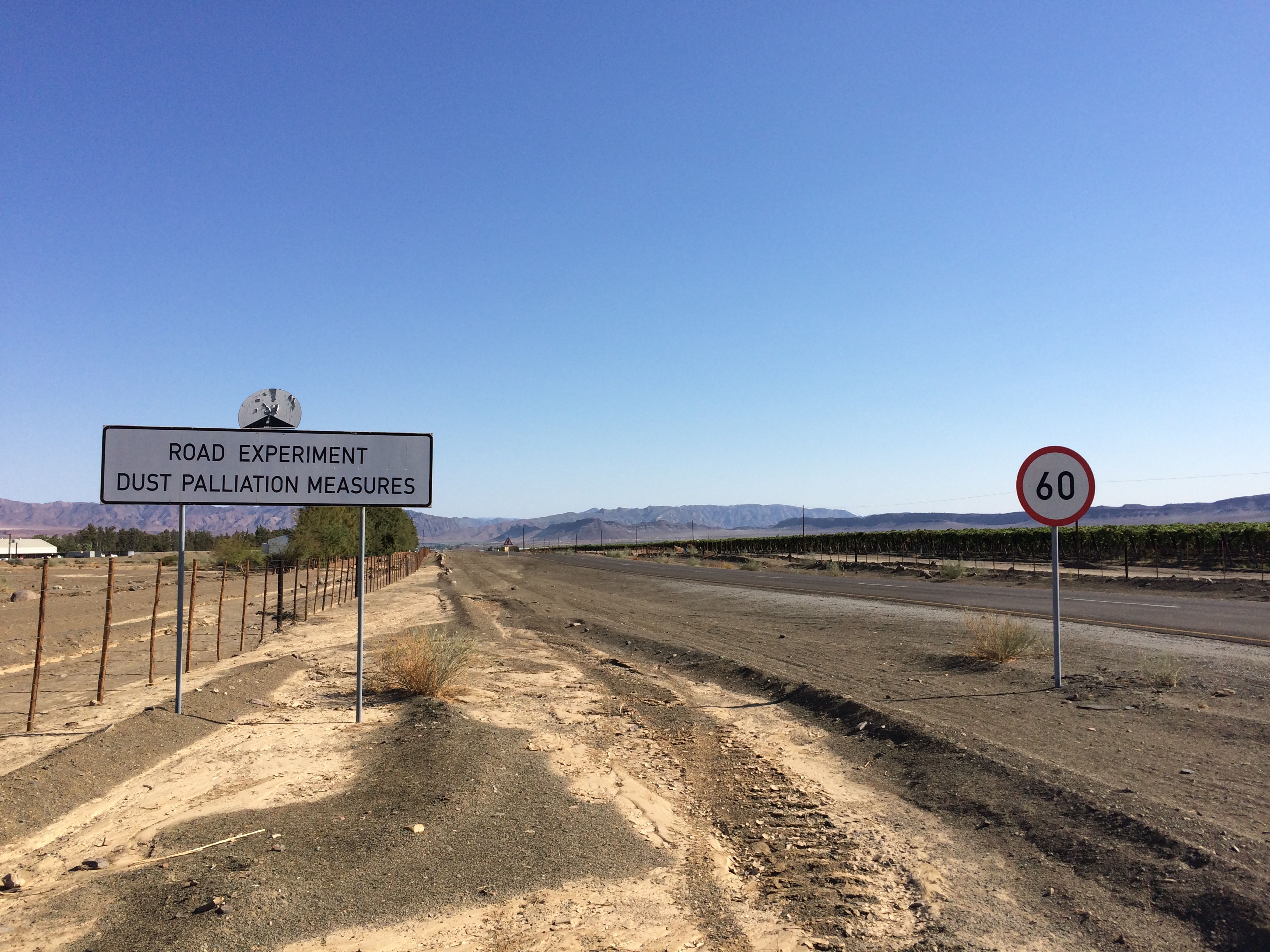
The Namibian immigration office was a fitting end to our experience, modern, fast, and reasonably shaded to relieve our final period of bureaucratic sweating. In no time at all we were out, to face the last entry. But first we had to spend our last Namibian change on some mutton stew provided by the most southerly of the ‘tween borders random people.

Namibia was by far the most modern country of the trip so far, and apart from Ethiopia our longest stay. Many places looked and felt like Australia, the people were very welcoming, and the major towns have that air of German efficiency at odds with the rest of Africa we saw. The fact that the German settlers build a brewery before worrying about trifling detail such as houses certainly doesn’t hurt its appeal, and food and drink is cheap by our standards. Some of the best things we did and saw were in Namibia; scenery in general, the Burgsdorf goat farm with the cheetah, Swakopmund with Cindy now a keen skydiver and the whole group now sort of vaguely aware of the existence of mineral crystals, the dunes, and the very interesting history.
Namibia has a lot of gravel and sand and the roads are highly variable. From a riding perspective, I was very glad I practiced sand prior to the trip and was reasonably prepared as the heat and dust make it tough and the days can be long. That said, Kathy with virtually no off road experience before the C2C, and Cindy with one useful leg both got through okay, a positive attitude when things are grim and a few offs are had goes a long way.
10 down. 1 to go. 15,250km ridden, which means Terry has finally had to refuel the 1200GSA Mothership. Started at 18°S, and finally got some traction heading south again getting over the Tropic of Capricorn to finish at 28° 50’S.
 travellingbennetts