The entry into Zimbabwe on Day 52 commenced with a small movement up the road past the Mozambique gate, where we were directed by someone to park up a steep gravelly slope under a tree. Firstly filling in our arrivals card, we clutched the passport and the completed card and entered the immigration and customs building and dished up our US$45 for a multiple entry visa, just in case we wanted to wander over into Zambia while at Victoria Falls. Then commenced a waiting period to get the visas processed, and allow Bayne and Andrew time to sort out the carnets.
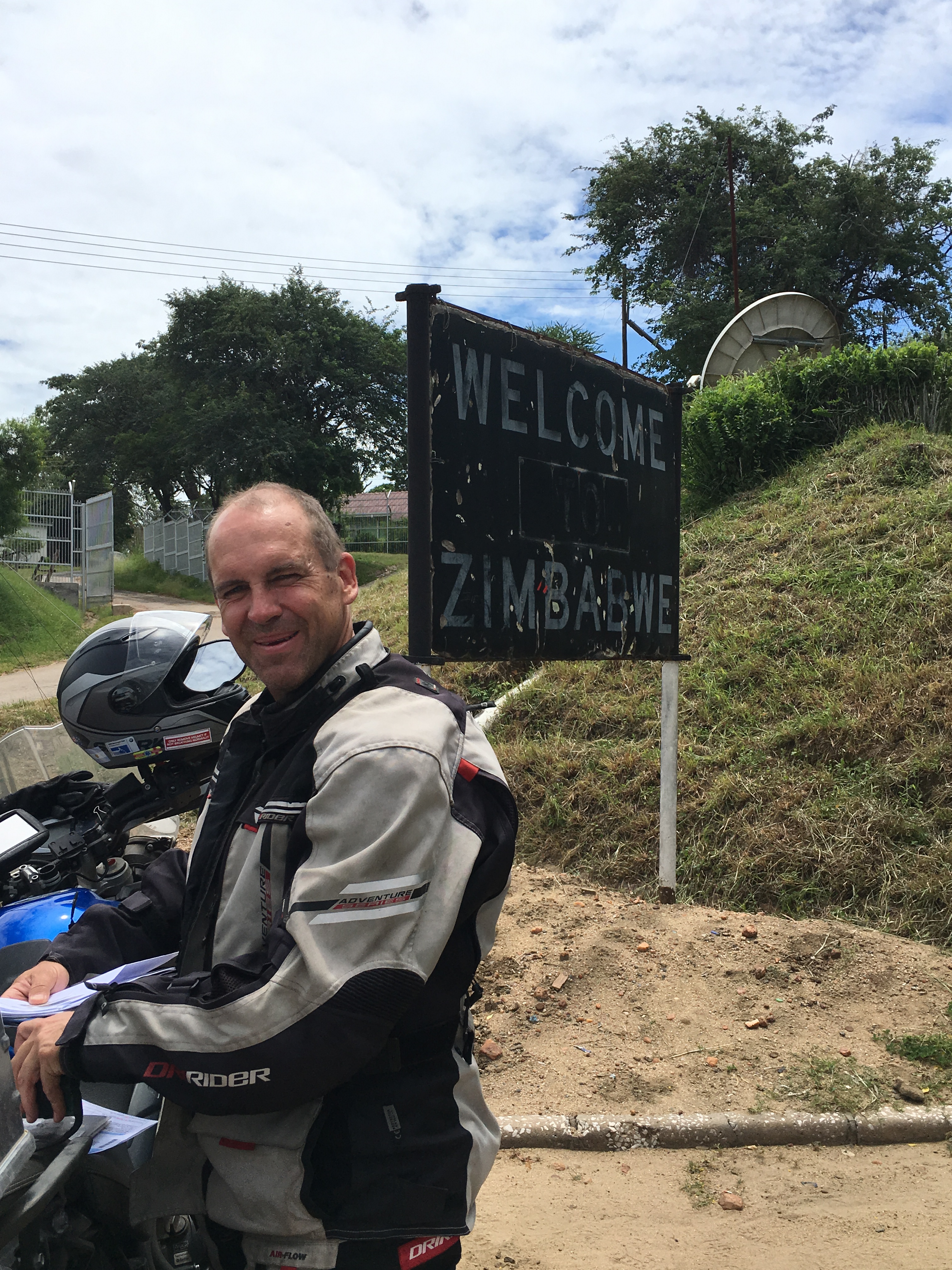
Our shortage of US$ had been a problem since Ethiopia, and Cindy and I had almost reached the point of holding our hands out to the rest of the riding group at border crossings, and then throwing a rock if no cash was given. We believed that our problems were solved with arrival into Zimbabwe; finally a country where the official currency was US$ after the infamous runaway inflation in 2008. We would just need to find an ATM, however there did not appear to be any at the border.
Then some more calls against our minute inventory of US$ for road tax and carbon tax, and we were allowed to get on the bikes and ride through the gate. Almost. We had to stop at the gate, produce all the documents that had inevitably been put away somewhere, and open the top boxes and panniers on the bikes for inspection. Once through the gate, we prepared to accelerate away, only to be pulled up and asked to park neatly near a tent. This was a registration check, to ensure that the name on the motorcycle registration certificate matched the name on the passport, and this seemed to conclude formalities. Almost. We were then told to leave the bikes, and walk back through the gate to the support vehicle for a baggage inspection.
Unfortunately a bus had come through after us, and the passenger’s baggage was neatly lined up while sniffer dogs walked up and down and suspicious smelling items were pulled aside. Once they were finished, random bags from our vehicle were selected and the owner had to open them for checks, although a peek into the average bag jammed with putrescent riding gear quickly dulled any inspector fervour. We were then allowed through the customs shed after another passport inspection, or not if we’d left it back on the other side, and then finally back to the bikes. With a low level of certainty, we mounted up for the fourth time and headed toward the second gate, however the process requirements had been satisfied so we were allowed to proceed.

We didn’t get far before lunch was called, and happily Andrew and Bayne had organised a big meat platter from the Tete hotel, which was set upon like lions on a Serengeti wildebeest carrying a groin injury.

Our nerves were on high alert entering Zimbabwe; we had been told in Malawi that the police had not been paid for 6 months, so the only way they could earn cash was through fines. So not breaking any laws, keeping within speed limits, and making sure all paperwork and the bike were in order was paramount. Fines of US$100 had been mentioned; naturally this made those without any cash especially concerned. As it was, the 240km road down to Harare was good quality, signage looked quite okay, and although passing through many police check points we were generally unmolested.
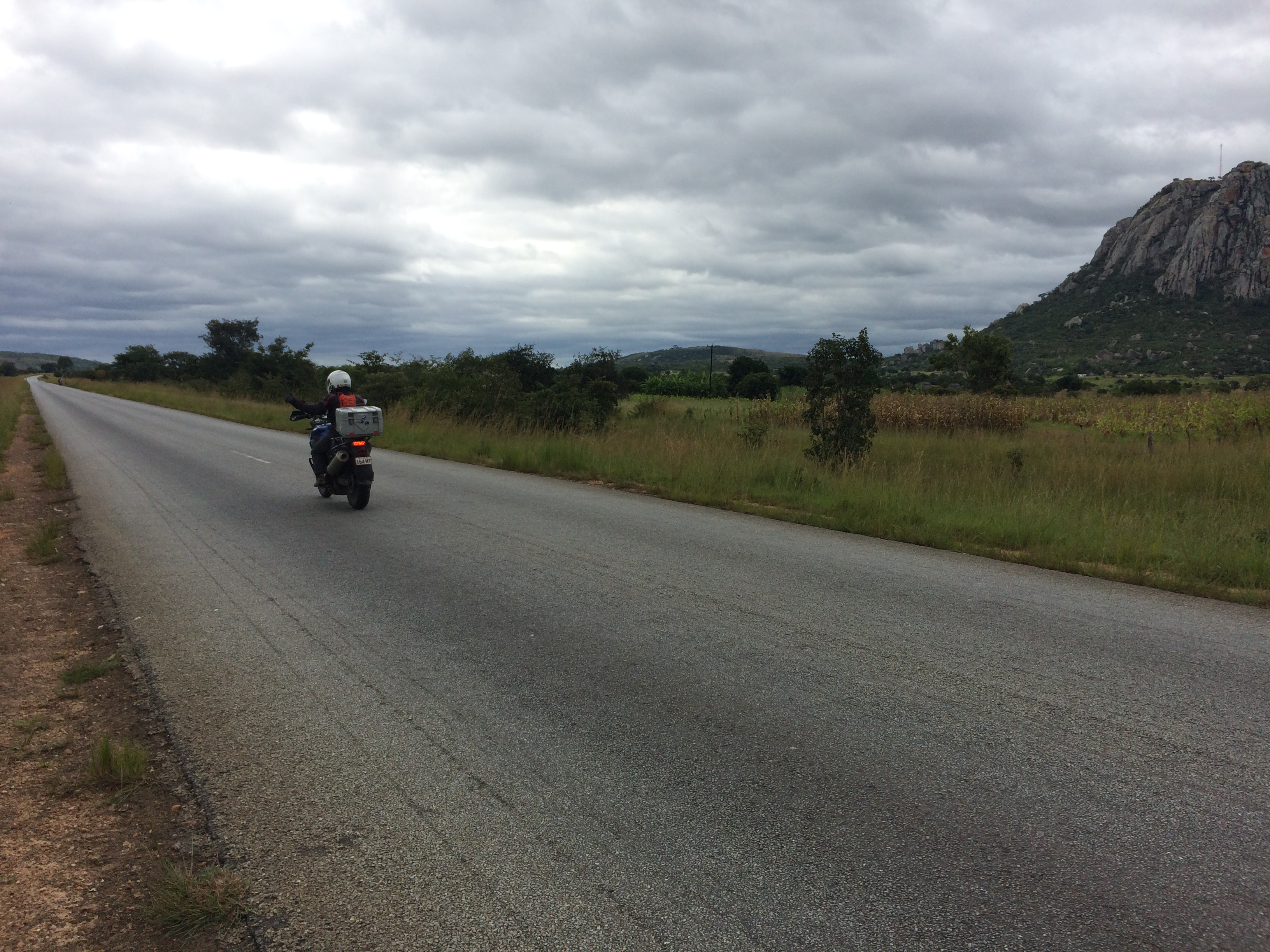
Heading into Harare, just after crossing the 10,000km milestone on the tour, a stop at a tollbooth was required, with Cindy and me, Kathy and Craig, and Andrew lined up to go through on the bikes and Bayne bringing up the rear in the vehicle. No fee is charged for motorcycles, but the attendant said we should move quickly once the gate was up, an instruction not clearly enunciated to those at the back. Once up, the front row charged, but just as Andrew rode through the boom came down and collected him in the face. A graceful and slow motion fall from the bike followed, and we rushed back as one to render assistance. Dazed, but with no noticeable diminishment of a strong vocabulary to utilise against the boom gate attendant, Andrew fortunately was able to get back on fairly quickly and continue in his capacity as ride leader, as losing his boyish good looks amazingly doesn’t render his Compass Expeditions employment contract null and void. We later found out that the same attendant had lowered the same boom onto Terry and knocked him off, and nearly knocked himself and Bayne out with the boom during the Andrew incident. So he’d had a big day, and was probably required to shout the bar at the toll booth attendant’s club that evening.
On arrival at the Rainbow Towers hotel near downtown Harare, some issues with Zimbabwe began to become apparent. Asking the concierge where the nearest ATM was, he looked rather surprised and said there is a cash crisis in Zimbabwe. We could go into town and try he said, and even though most of the ATMs work, they do not contain any US money. There are also special problems for foreigners trying to get cash; often only Zimbabwe accounts can get money out to stop foreigners withdrawing cash and then leaving the country. ‘Swipe’ has entered the vocabulary, with the only way to buy things to pay on cards.

A working ATM is usually obvious; it will have a huge line-up of people and will only give US$50 or Zimbabwe “funny money”. The hunger for cash is huge, and the quality of notes is utterly irrelevant, I paid for laundry with my remaining US$11 that consisted of one and two dollar notes that looked like they’d been used to line adult diapers in the Explosive Dysentery ward of the local hospital.
Day 53 was a free day in Harare, some cruised the town, others had a sleep in and checked their emails and spokes, but as it was a Sunday many of the big attractions were closed so the shopping centres seemed to be the main attraction. The buildings and infrastructure show a history of grandeur and there are some very large new homes, but in general it has an air of decline and the best days are well behind it. The locals appear desperate for things to turn around, and believe that once President Bob the Non-Builder has gone there is hope for a return to the days of foreign investment and economic prosperity.
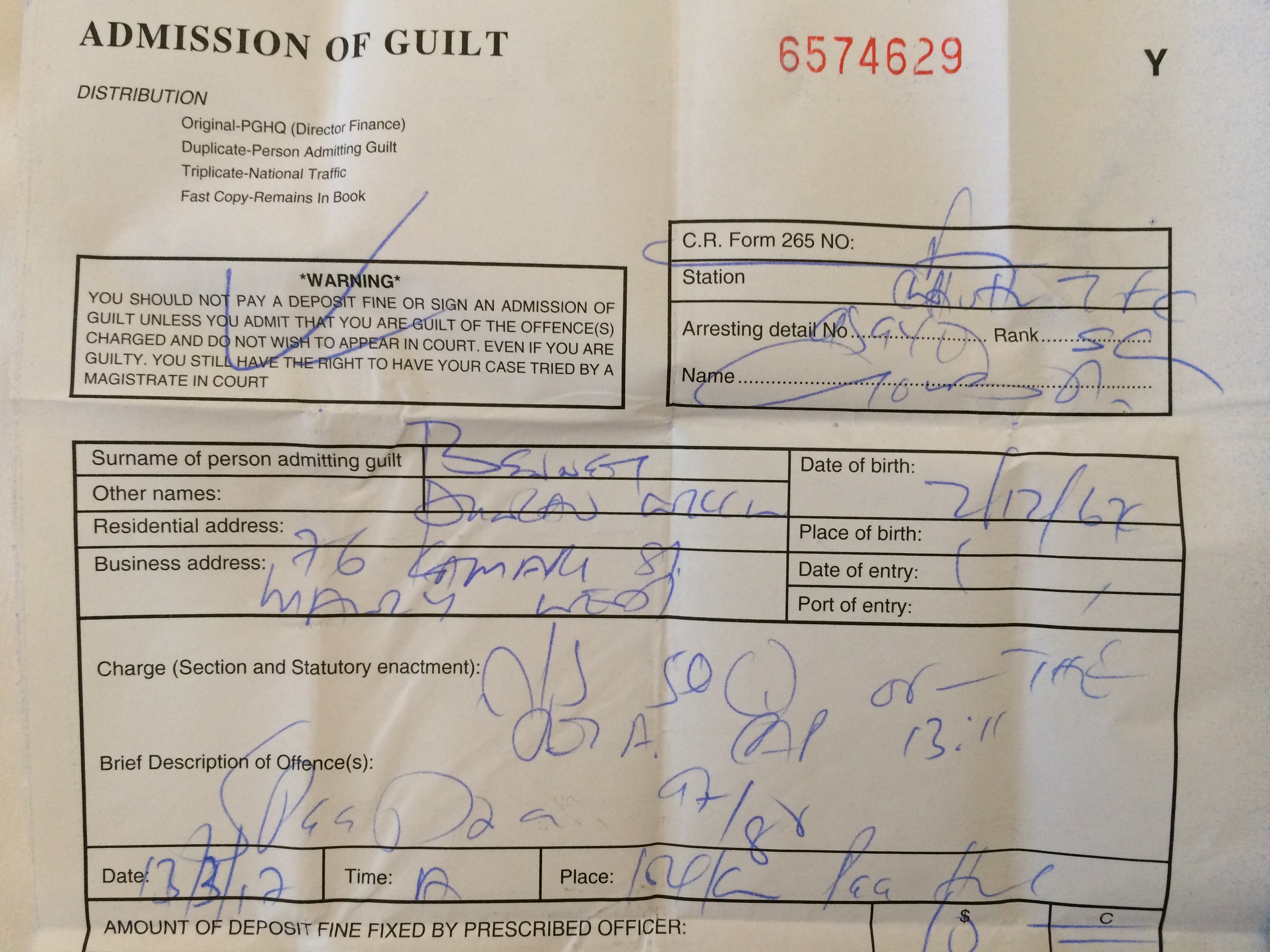
Day 54 was a jaunt of 326km to Masvingo and the Great Zimbabwe Ruins. We didn’t start off too well with our Gollum-like retention of our meagre stock of US$ – the service station on the outskirts of Harare tried the Swipe but only Zimbabwe cards would work. Then somewhere before Chivu, an extraordinarily long distance after a built-up area was ridden with no de-restriction sign seen. The sophisticated trick of spotting the 80kmh restriction sign going the other way was used to assume that the limit was now 100kmh, but no, the cunning main roads people don’t line up the speed restriction and de-restriction signs, meaning the police sit looking for the southbound sophisticated people. 91kmh in an 80 zone was the charge, US$10 the sentence. At the side-of-road arraignment in the court of Justice Moo Cow the plea was guilty. Terry was also sophisticated, but managed to talk the police down to US$5 as that was all he had and they refused to consider the option of a CAD$5 bonus.
Arriving in Masvingo, fortune finally favoured the fortunate and we found a service station chain where the Swipe was on. Then a cunning ploy for getting US$ was discovered; simply overestimate the amount of fuel required, fill up, and the excess value is returned as cash. Brilliant, but overestimating by 150 litres for getting US$200 in one hit is unlikely to fool any but the most dimwitted attendant while looking at two motorcycles.

Then a quick ride around the town looking for an ATM, the Barclays Bank ATM worked which was fabulous, but the pathetic options were account balance and return card. Another ATM up the road looked like it was dispensing vouchers for an essential oils massage from Beyoncé while Jay Z is away on tour, the queue went around the block, and there was no guarantee foreigners could get anything useful so was not attempted. Another 30km down the road we arrived at the Great Zimbabwe, perhaps unsurprisingly the source of the country name, apparently meaning “venerated house”. Following a lodge car park lunch, it was off to the ruins to have a look.
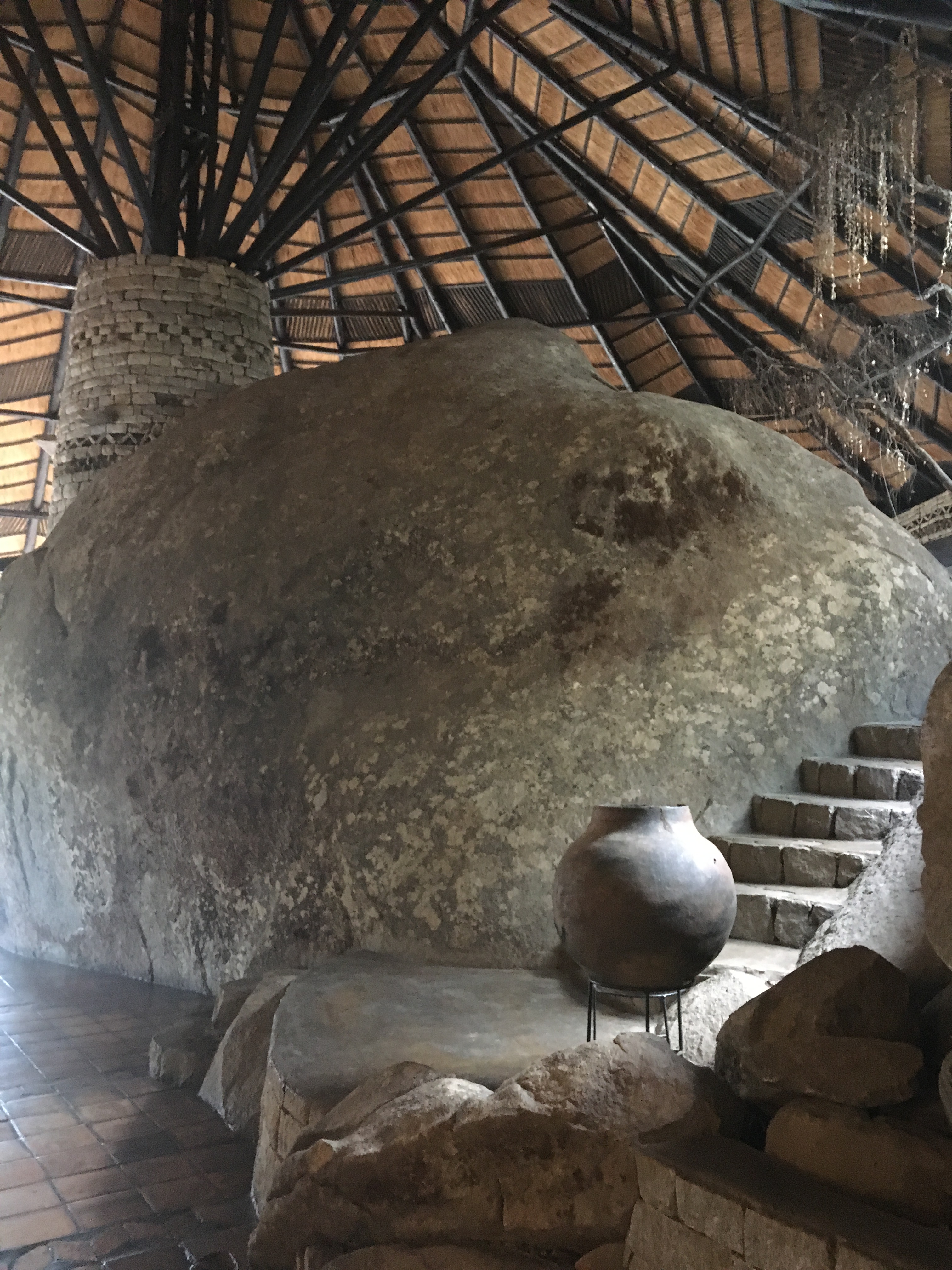
The ruins are 11th to 15th century late Iron Age and were the work of Shona kings to create what can best be described as a fortress and town combination at a significant trading centre. The first effort was on the top a steep hill of granite boulders, with pink granite similar to the final coating on the Giza pyramids, in small slabs used to create walls of impressive mortar-less stability and height. Later development toward the end of the era increased the impressiveness factor, culminating in the Great Enclosure that looks very modern from a distance. The place is spread out over a large area, with some regret that I hadn’t changed out of the riding gear before embarking, but it was well worth the sub-optimal internal pant condition regardless.

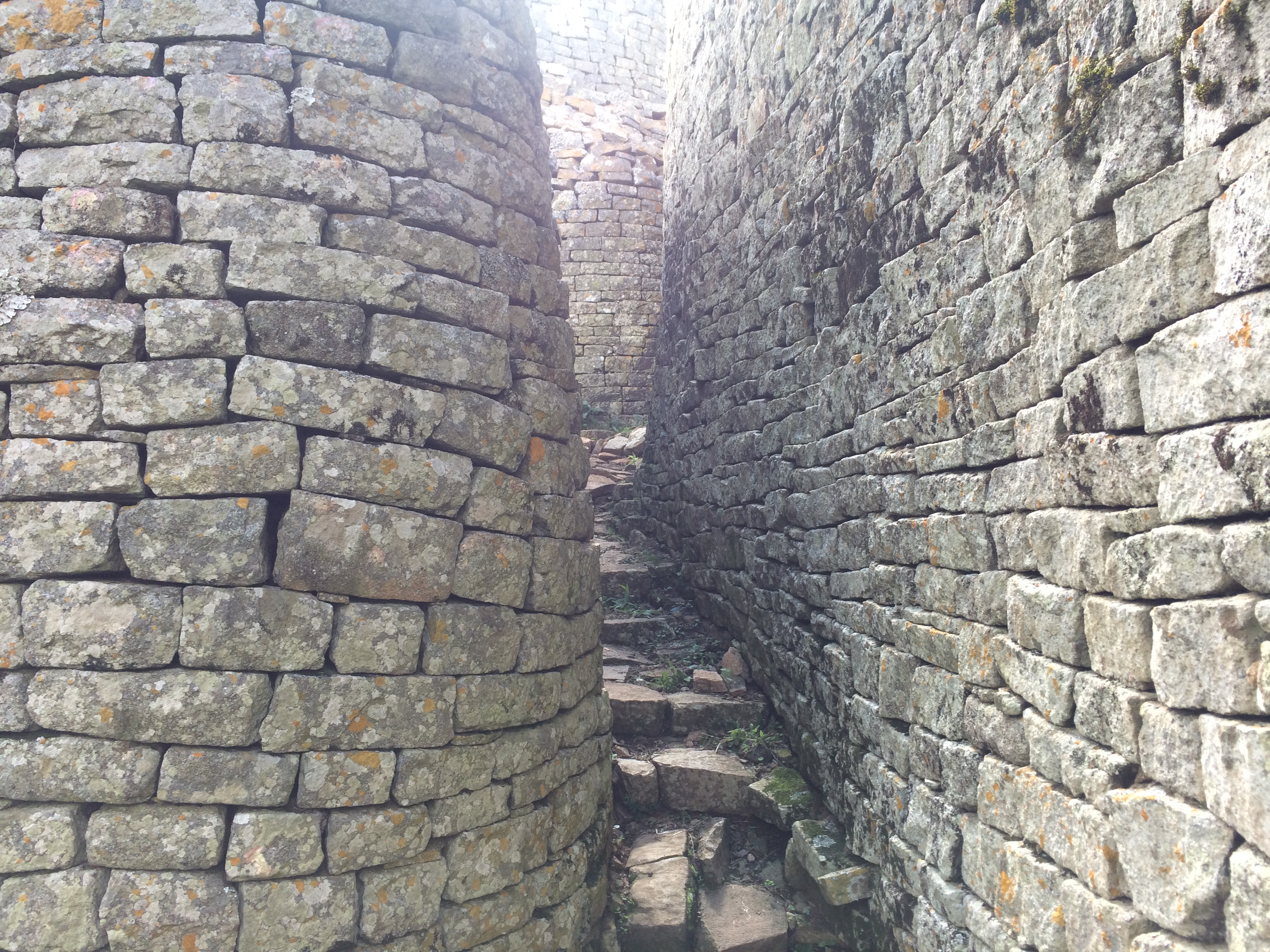

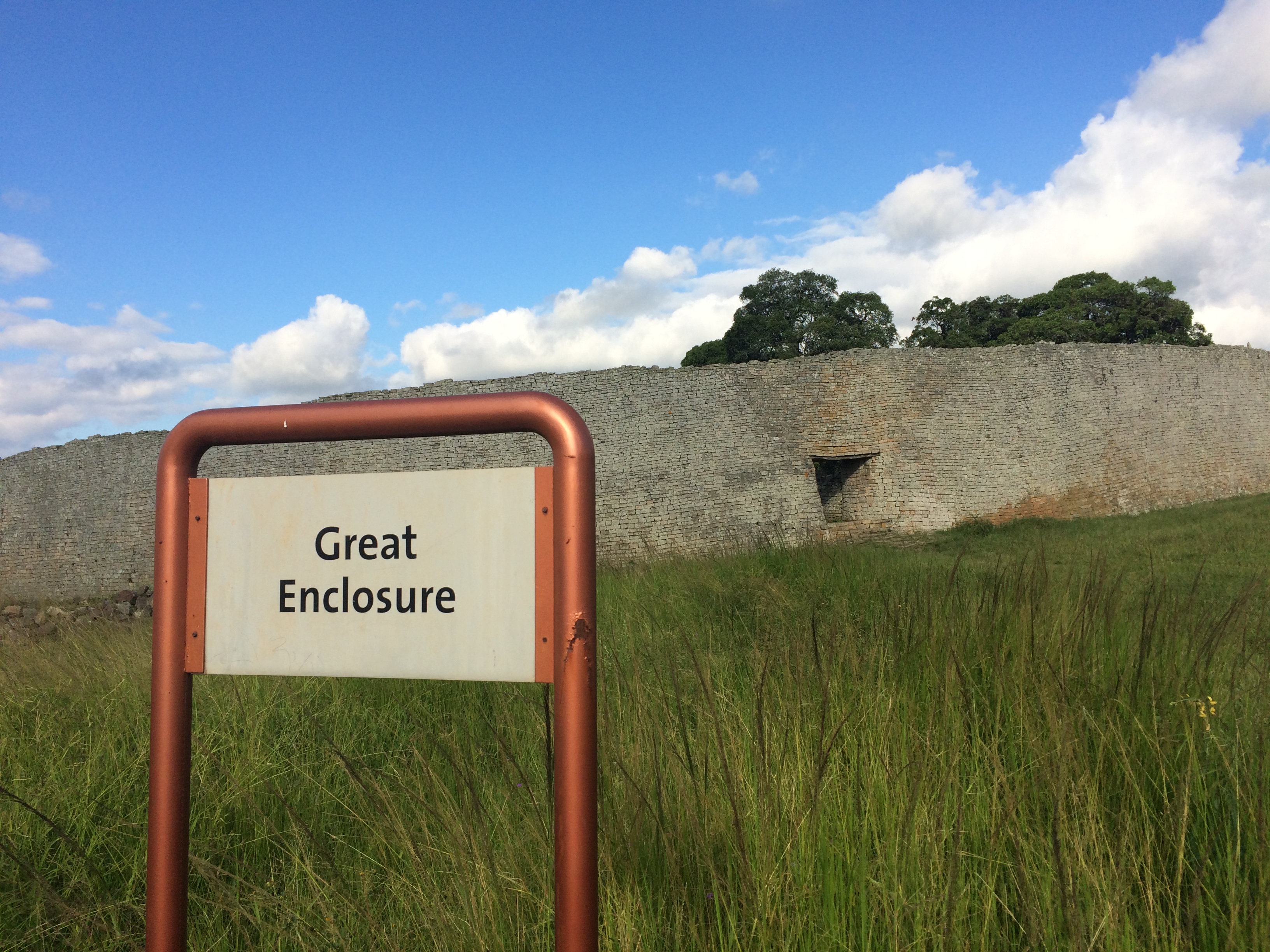
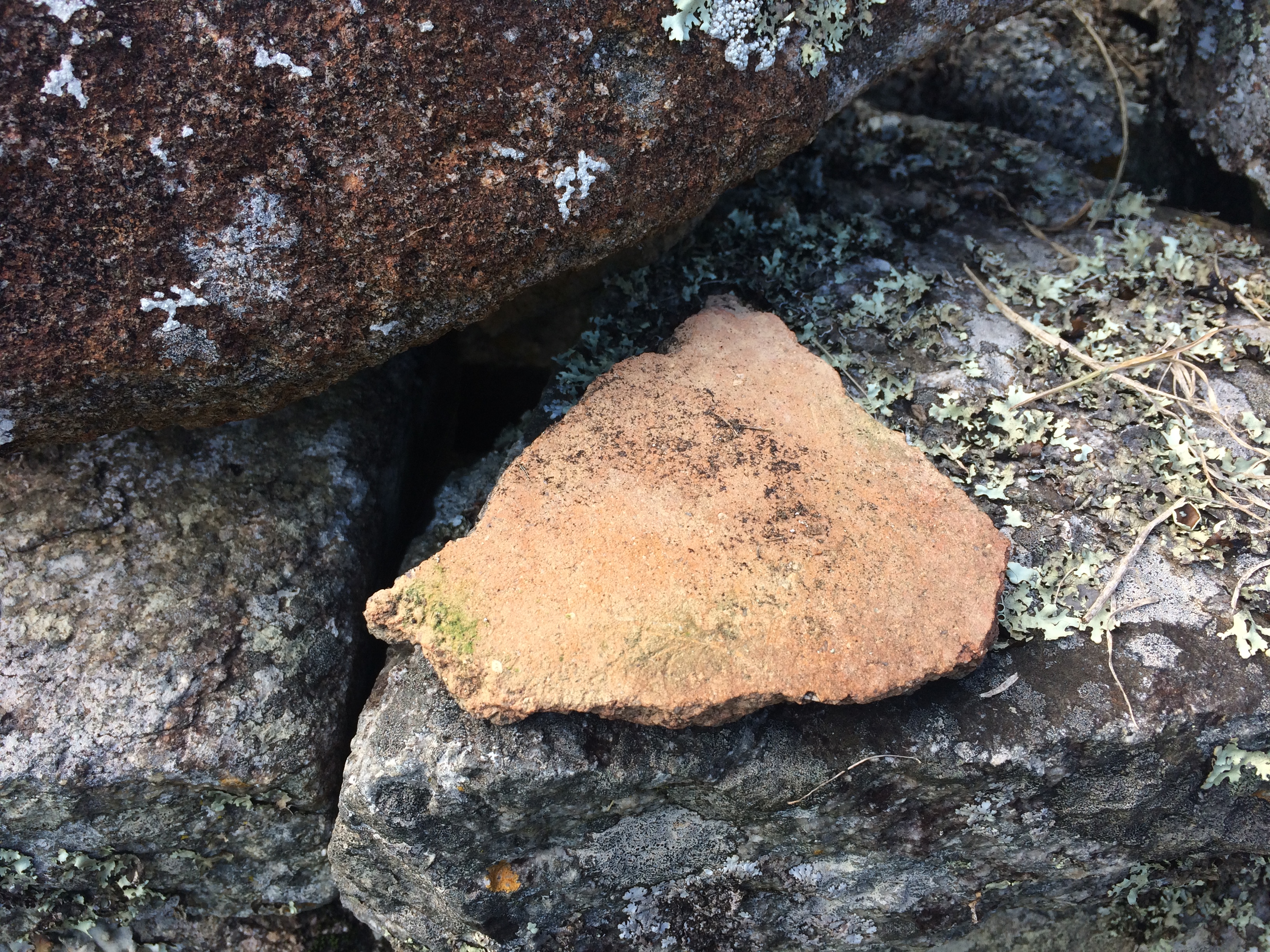
Back at the lodge with our room conveniently the closest due to Cindy’s infirmity, the calories lost in sweat were soon replaced at the bar and by a very impressive dinner. The lodge was designed to copy the hill enclosure design, with dry rock walls built on the natural boulders, and it certainly got a good ranking in the vast number and quality of the accommodation utilised on tour so far.
Day 55 plan was 206km to Antelope Park at Gweru, heading northwest, so making Great Zimbabwe the most southeasterly point of the C2C, everyone got really excited about that quasi-statistic when I mentioned it. From here on, we were transferring to the western side before continuing south.


The road to Gweru started off reasonably well while we headed west, then we turned off north west on a road that serviced the local mines, so lots of heavy vehicles. Potholes that could hide a VW Beetle nearly caused cardiac infarction amongst the newly be-spoked, however we managed to slalom around them without any major dramas as they were all about volume rather than quantity.

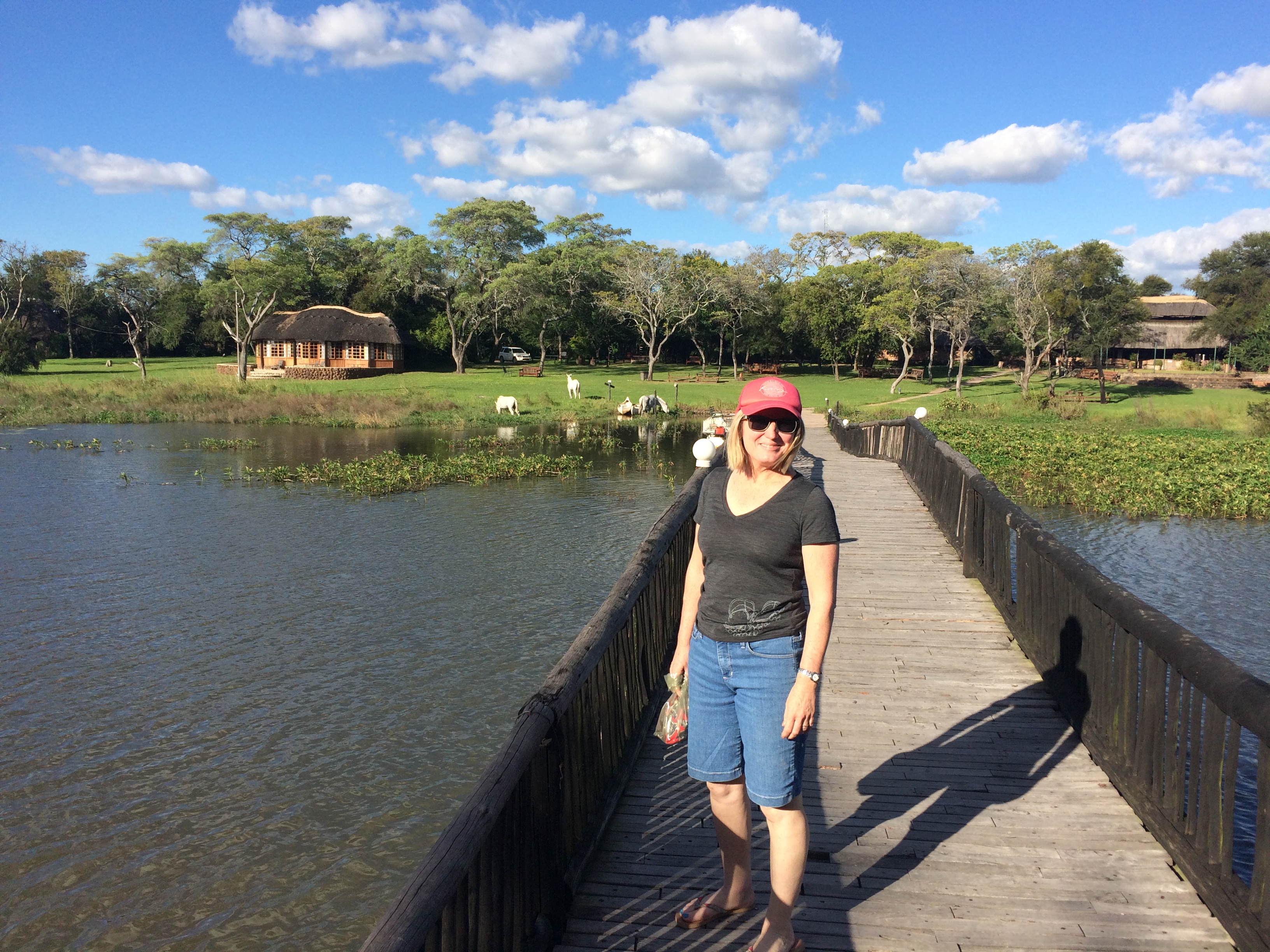
Arriving into Gweru, we rode around and around the town which had seen much better days, until we alighted upon our service station brand of choice, Engen. Then totally stuffed it up by underestimating the amount of fuel required, so not even filling the tanks. A short way out of town, the turnoff to the Antelope Park was well signposted, directing the rider straight into an enormous puddle at the start of a very average looking 6km dirt road. With Cindy’s leg still top priority, some portage was required with me riding both bikes through the really uncertain bits, but otherwise the sandy/rocky/muddy track was negotiated without incident. Again, the track quality was completely at odds with the lodge quality, it was just getting better and better.
We were given a comprehensive and very interesting briefing by Gary the General Manager, who described the origins of the park and the purpose – it is designed to get lions back into the wild. The premise is that lions are like domestic cats; their instincts are dominant so when released into the wild, they will kill things. The park trains them from a young age to prepare them, and while we were there the lion inventory was 119, making the park one of the worst places in the world for nervous prey to get a good night’s sleep. Roaring starts at about 7pm and rolls on until about 6am.
A comprehensive range of activities was on offer, the most popular is the Walking with Lions and was selected by all, even with a 6am start the next day after listening to a solid 11 hours of roaring to be at peak mental readiness. Three 16 month old lions were to be walked, with a serious briefing given and a large number of rules laid out about how to behave with the lions who think that people are part of their pride. Maintaining the illusion of being higher up the biting/scratching order is critical, if they think you are a lesser being then you’d best have your last will and testament taped into your hat in a solid container that will hopefully survive passage.
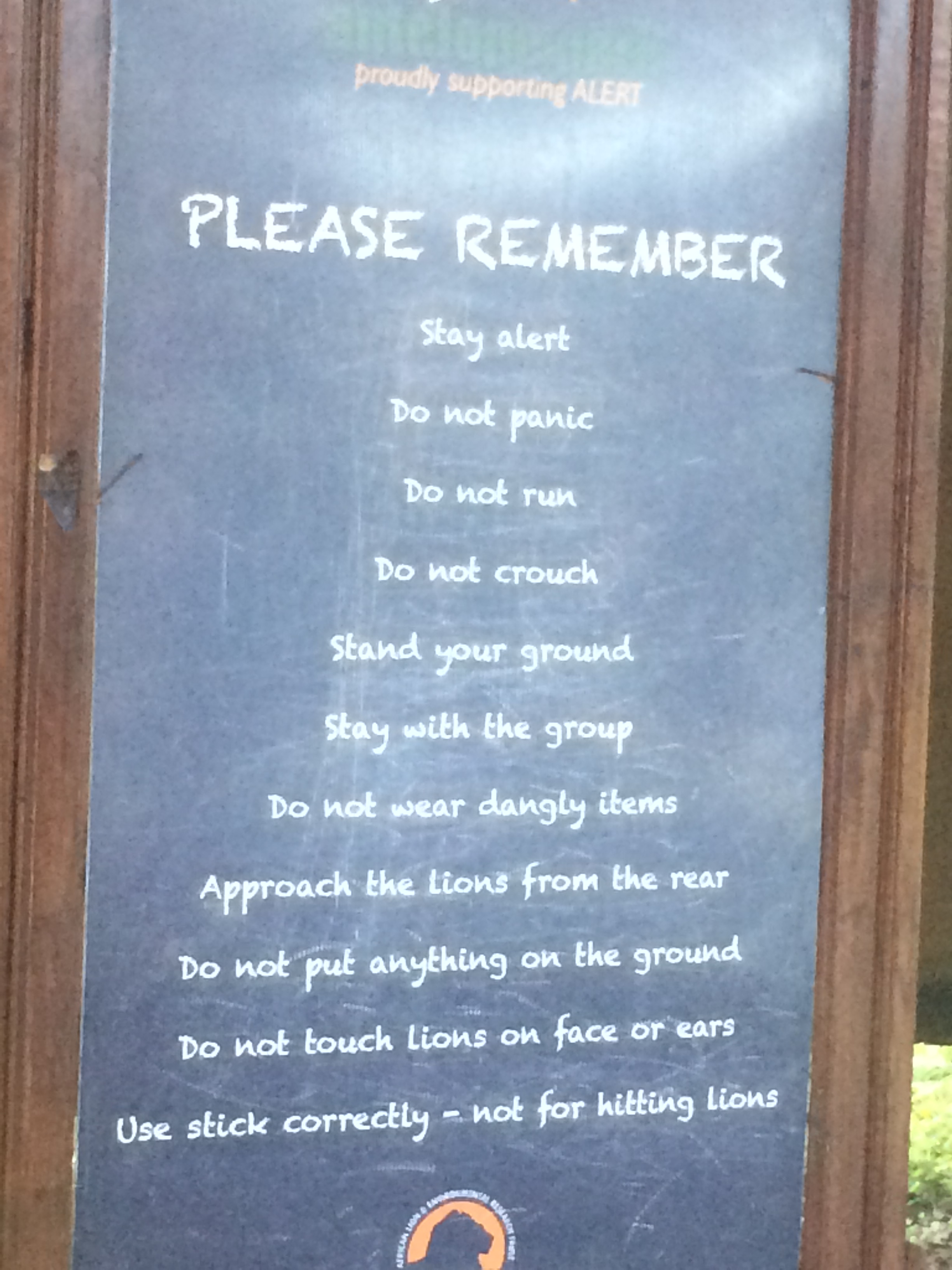
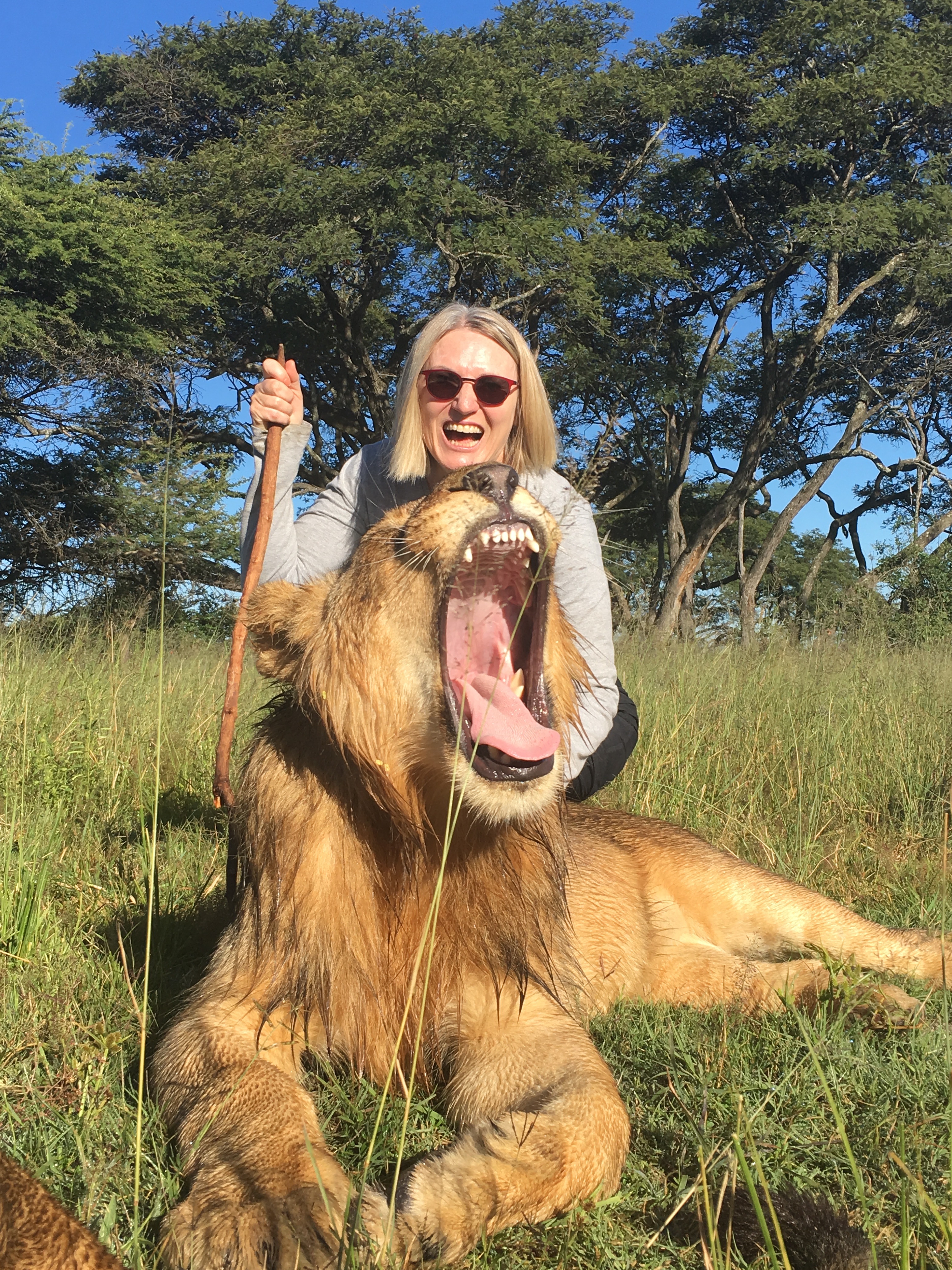
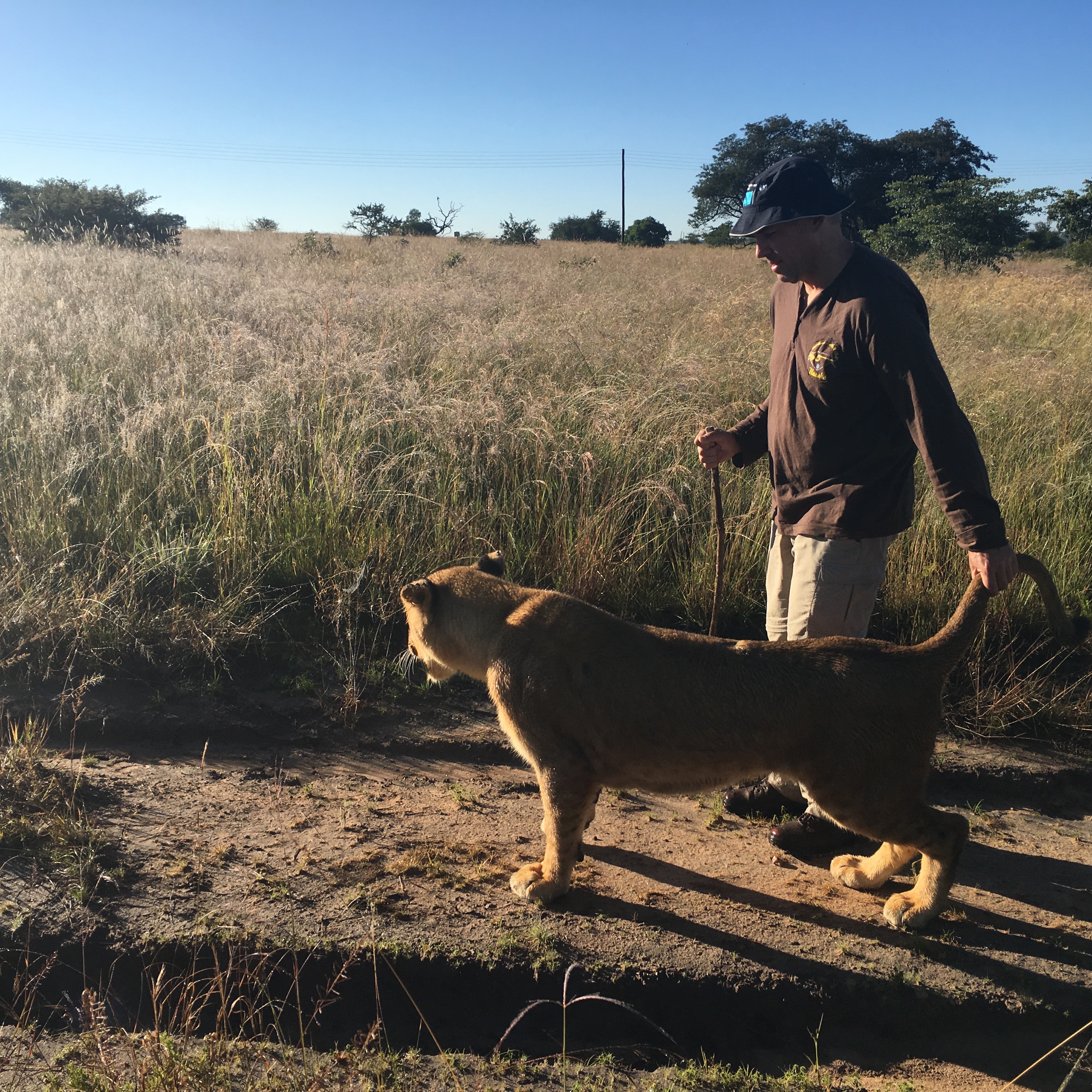
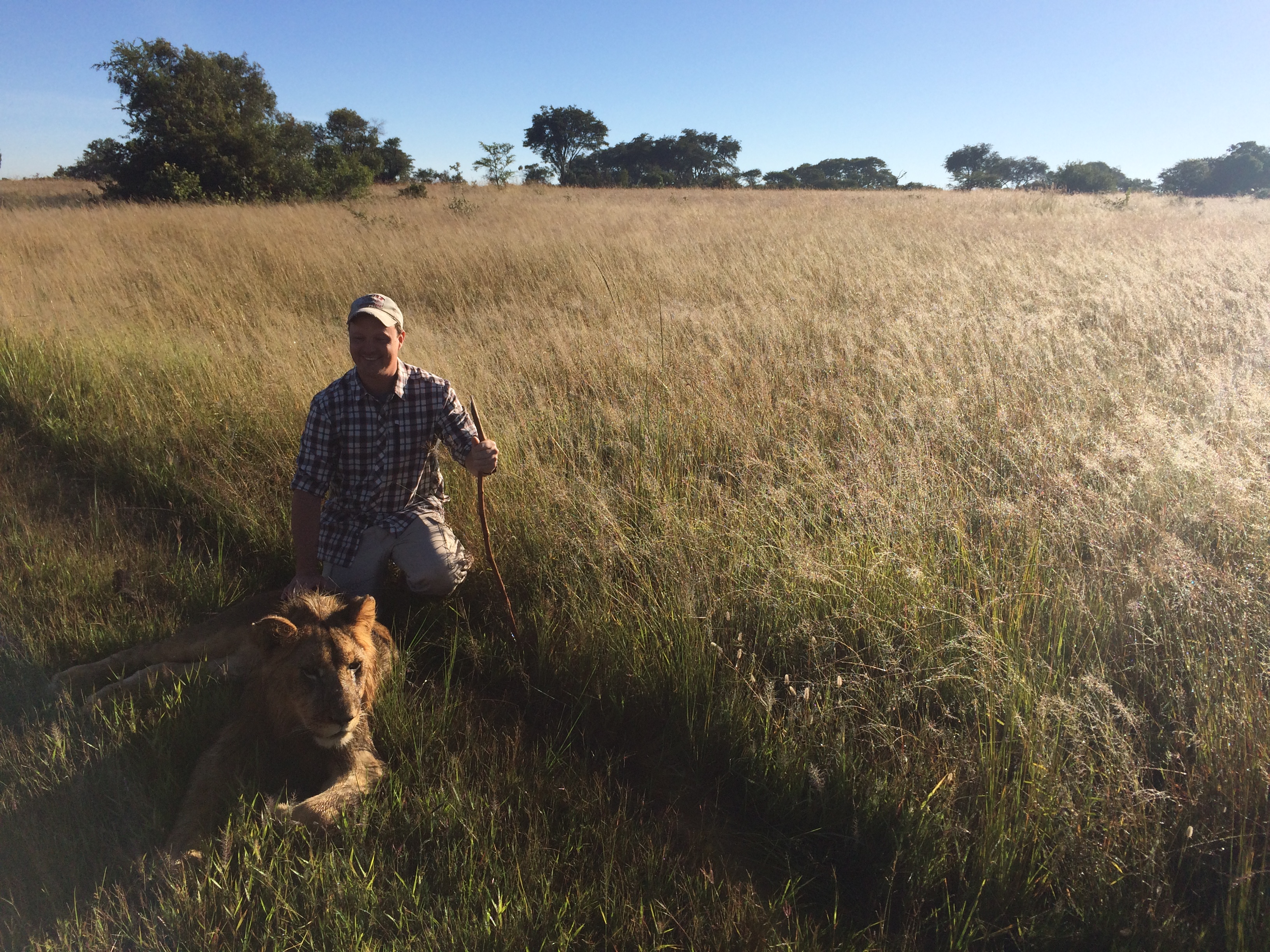
Armed with our little sticks, which are in lieu of something useful like a .303, we headed off on our 3km walk. Standing there while three large lions bound out of their enclosure toward you required a bit of personal focus on lower torso clenching, but it turned out to be much more controlled than the feverish imagination allowed. The reason the walks are done in the early morning is that lions are very slack especially in the heat, and will lie down and do nothing all day like a late teen if given half a chance. Loads of photo opportunities were available as the quickly exhausted lions collapsed from the exertion of their 100m strolls.

After the walk, it was back for breakfast, then a few of us went to see the adult lion feeding. Due to rain the enclosure was a muddy mess, with a couple of dead donkeys thrown into a puddle near a very unsubstantial fence, all that separated a tonne of charging lions from some tourists who were considered a threat where food was involved. Adrian took some amazing video, hopefully this link to YouTube will work for you to appreciate his directorship skills and his sacrifice in getting Hera covered in a mixture of mud, lion poo, and donkey shrapnel for his art:
Feeding of the lions at Antelope Park
The rest of the day was a bit tame after that, Stan, Craig, Kathy and I went on a horse ride where we saw a wildebeest which was suffering from at least seven of the top ten types of nervous anxiety living near 119 lions.
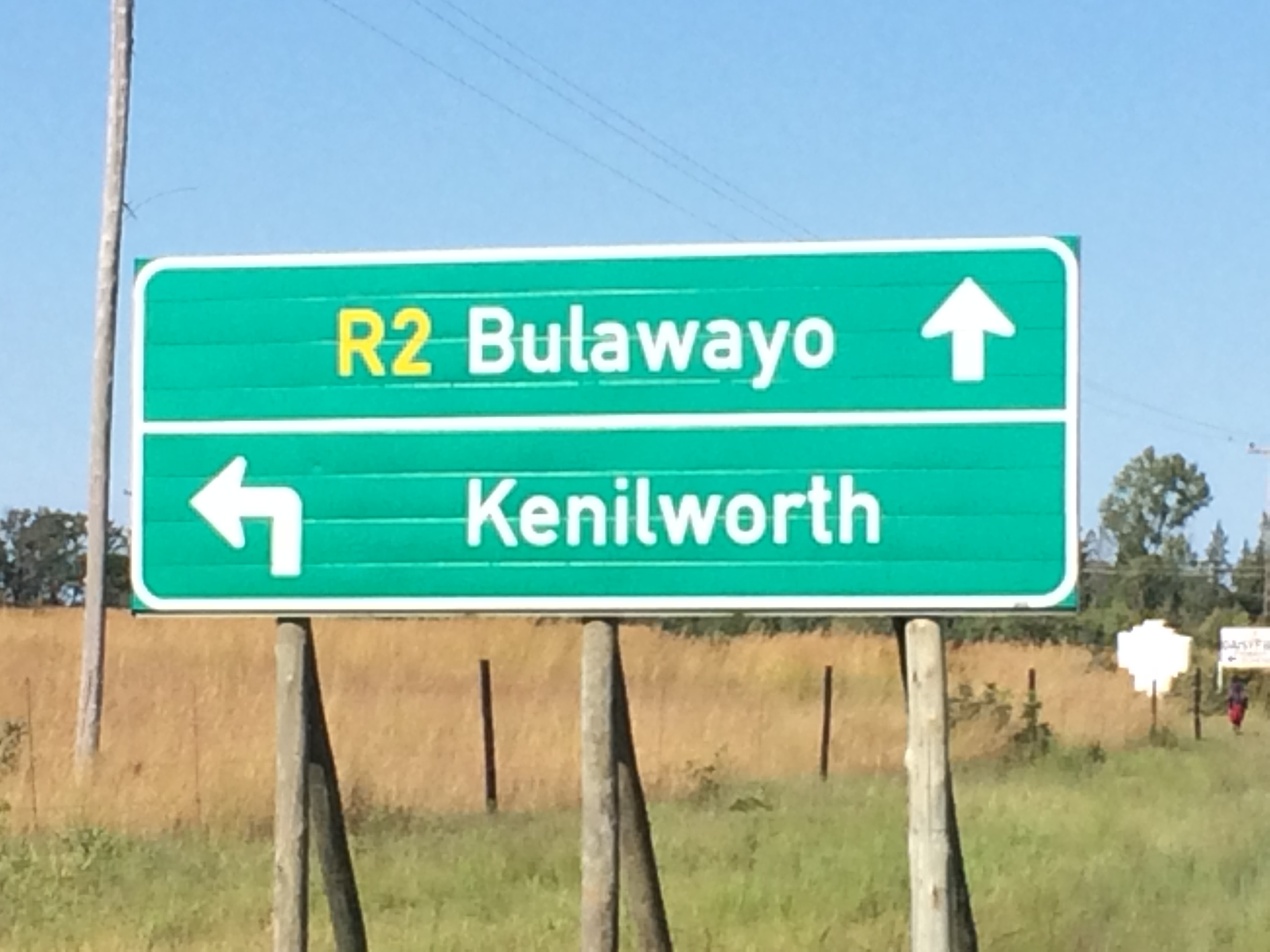
Day 57 was officially the longest of the C2C, 600km to Victoria Falls. It started with the ugly 6km back to the main road, traversed without incident, then the 150km to Bulawayo. We were only pulled up by the police once on this leg, so very easy. After fuel and grabbing a pie, a proper meat pie, from the servo in Bulawayo, we then started the 450km north to the Zambezi. This was a good road, but police road blocks have grown like pustules along it. We were very lucky to have only been pulled over 6 times; once for a full paperwork check, once for a bike roadworthy check, once for a general lecture on the poor state of Zimbabwe roads and the need to stay below the speed limit, and three times for just a chat about where we were going and where we’d been.
Nicolas copped it 12 times, and Craig and Kathy were seen shouting at a policeman in the middle of the road just out of Bulawayo, it turned out he had apparently signalled them to come around a truck that was being inspected, then fined them US$60 for going on the wrong side of the road at a police roadblock. Bayne in the support vehicle was stopped an impressive 16 times for the day. The locals are highly embarrassed about it as it has a major impact on tourist perceptions of the country.

After collectively missing the really nice lunch spot that Andrew had ridden all the way back into Gweru to collect food for, the tail-end charlies met at an abandoned BP service station for a bite and to get out of the hot sun.

Finally we reached the Victoria Falls airport, beyond which the police would not dare set up a road block as 99% of the tourists fly straight in to see the falls. Pulling into the Kingdom Hotel for three nights was a blessed relief, no more police, and an opportunity to see one of the world’s great natural sights – nine continent crossing motorcycles lined up in a hotel car park. And a waterfall.

Day 58 and 59 was all about activity planning and execution. Bookings were made, tours were undertaken, zip lines were zipped, horses and rafts were ridden, sunset cruises were cruised, and photos were taken of everything. Victoria Falls shares a common feature with the other two of the world’s greats Niagara and Iguazu Falls – besides a reasonable volume of water dropping off a cliff – painfully they all sit on the border between two countries so seeing the entire falls means yet another bloody border crossing. Getting into Zambia only took 10 minutes, required a US$20 fee, and getting back only took about 15 minutes, but it is still a nuisance.


For all the mining industry buffs reading this, the Victoria Falls border crossing is an export point for Zambian (and DRC) copper product on its journey to South African ports. Trucks carrying anode, cathode, and blister copper were happily observed slowly rolling across the Victoria Falls Bridge, completed in 1905 as part of Cecil Rhodes “Cape to Cairo” rail plan, unfortunately never realised otherwise we would have been able to catch a first class bullet train service over 5 days, rather than take stupid risks riding motorcycles down the continent for 80 days.

Day 60 out of Victoria Falls was officially the shortest day of the C2C, naturally following on from the longest day into Victoria Falls. For the first time in C2C history, there was a place to stay just over the border in Botswana that didn’t involve randomly self-deflating air mattresses.
So after leaving Victoria Falls at the crack of dawn, which had been adjusted by the group to 10:00am in recent days, we headed the meagre 70km west to the border with Botswana. Only one police checkpoint was crashed through about 500m from the border, this one mainly focused on having suitable indicator light function and number plate light bulb illumination, the latter a critical safety feature for the remaining distance in the blinding sunshine of southern Africa. Craig the 650 V-Strom serial offender, who had received a warning from police earlier about his blown number plate light, was at the back of the queue so managed to avoid detection of his horrific crime before skipping the country.
With some relief, and no more police checks in the remaining half kilometre, we reached the border. The bureaucracy went into overdrive in the modern and well fitted-out facility, and within a very short space of time we were outside, on the bikes, and riding up the hill to Botswana.

In summary, Zimbabwe hinted at its past glories with facilities and infrastructure that showed it to be more advanced than any of the previous African countries we had visited, at its peak. The presence of urbane and well-educated people, especially in Harare, also hints at huge potential should the political leadership become less self-absorbed. A telling statistic for Zimbabwe was that the GDP in 2015 was the same as 1955 when it was Rhodesia, a good measure of the damage done in recent years by Bob the Non-Builder. Besides the corrupt-by-necessity police with checks on average every 20-30km and a focus at each checkpoint on different items to maximise their chance of scoring a fine, people were invariably friendly and anxious to help. The tourism potential is enormous, with the places we stayed at fairly empty but absolutely first class. It is a reasonably expensive place, petrol is US$1.36/litre, and meals are a level above previous countries, which must make it tough for the 90% unemployed or severely under-employed. Everyone knows people who have left to try to get a better life, but would very likely return. There is always hope.
8 down (9 including our couple of hours in Zambia), three to go. 11,275km ridden. Weather fabulous.
 travellingbennetts
I LOVE the photo of Cindy with the Lion – that’s fantastic! 🙂 What an amazing trip you guys are on! It’s wonderful to get a tiny glimpse through this blog. Thanks for the stories and the photos!
-Rachel
LikeLike
Fantastic trip and a great record of your amazing ride. Where did you find time to write so much detail? I haven’t got your entire blog but it looks great? Stay safe for the remainder. Best wishes.
Peter Upton
LikeLike