
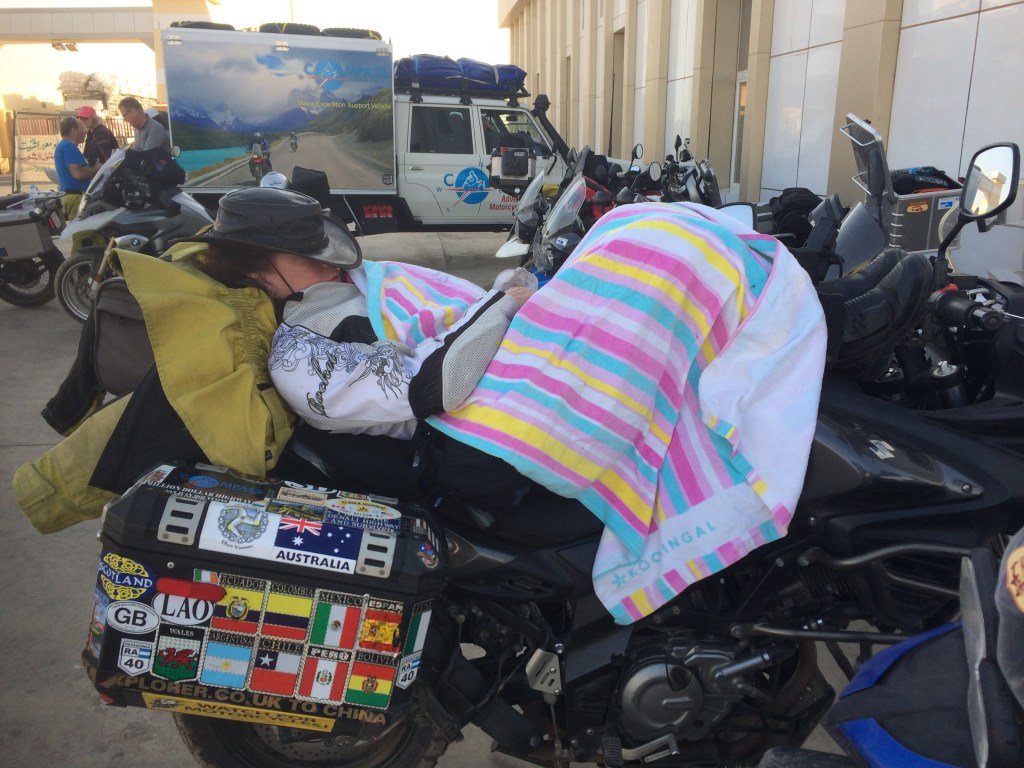
The crossing into Sudan was relatively straightforward. Apart from the official who let our documents sit quietly on his desk for an hour, just to show the world that he could. The result was a lot of waiting around, fortunately in the shade behind the immigration building where carbon paper and forms in triplicate are still the height of bureaucratic fashion.
The very strong wind soon brought up a severe dust storm, which made those outside waiting with the bikes seem a little more African hard-core.

Finally, with officials convinced that we did not add significant risk to national security, after 4 hours we were given the green light and motored into Sudan just before dusk, the irony of crossing on Australia Day into a country where alcohol was illegal certainly not lost on the southern members of group. A short ride to Wadi Halfa and we were setting ourselves up for a meal and a night of camping and kind hospitality at the home of the Compass Sudanese “fixer” Magdi.
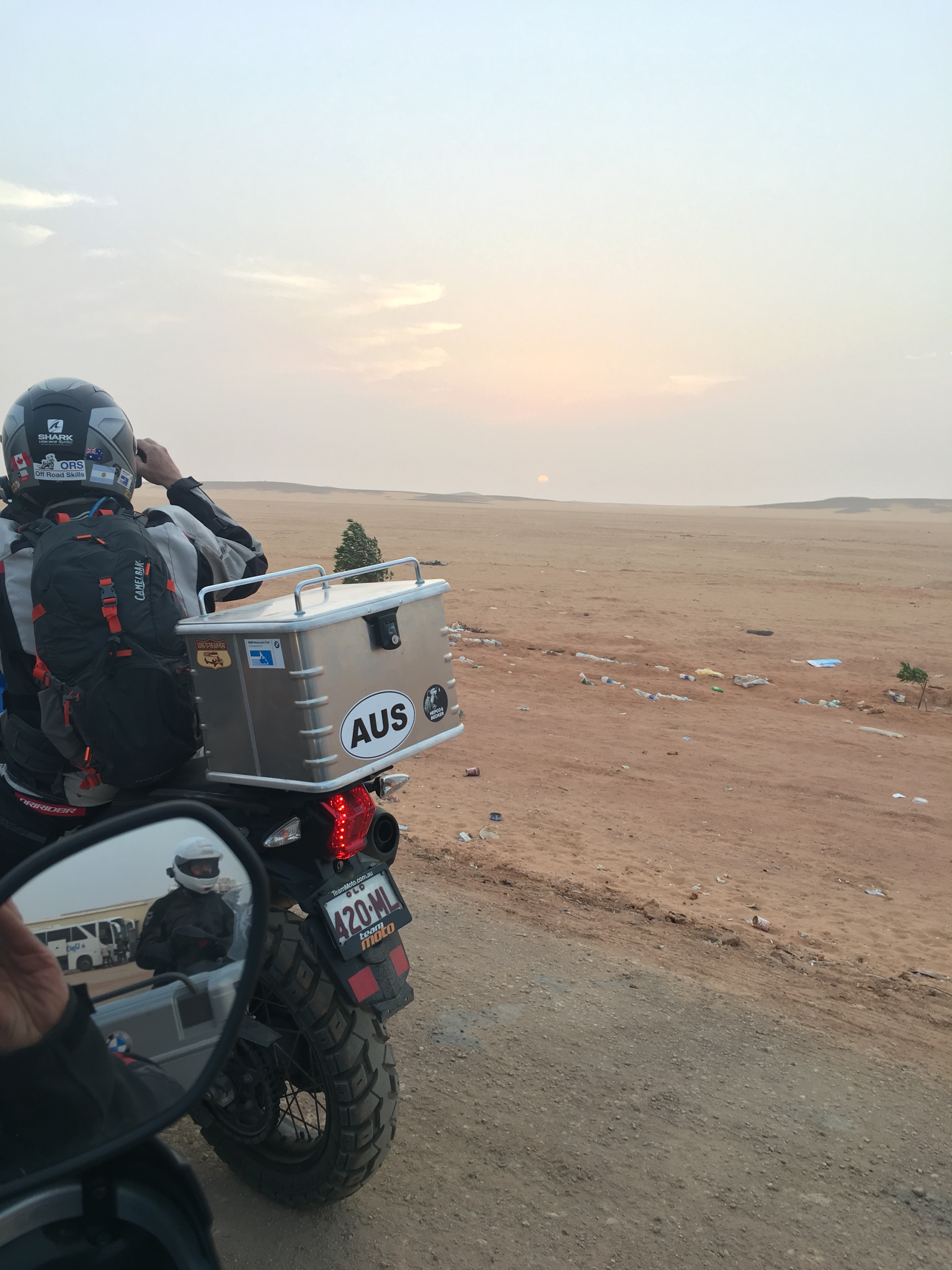
Day 9 was a large day. Sudan is like Egypt in that the population basically follows the Nile, more than 500m from the Nile is brutal lifeless desert apart from the odd oasis. This means that distances between our minimum standard of 3.5 star resorts and hotels can be vast, and on this day it was nearly 600km in officially the longest riding day of the C2C.
Confusion reigned regarding the time zone we were in, meaning some of the campers got up an hour earlier in the desert cold than required, then stood about in frozen clusters willing the sun to come up and making a few disturbing noises to get the slackers out of bed. Eventually successful, we got away just after 8am.

The roads were excellent, so average speeds of 110kmh were easily achievable, and upward for those stopping to take photos then catching up to the main group. A desert lunch under the viciously spined anti-goat acacia trees, a half hour delay at a police checkpoint when it was realised we didn’t have the proper travel permit, and with sensitised nether regions we pushed the last few kilometers into Karima and the Nubian Rest House.

Excitement occurred throughout the camp when it was noticed that beer was on the drinks menu, unfortunately this turned out to be a non-alcohol beer, but happily with a price to allow the drinker to assume it was full strength. With a nice dinner and a few cold placebos under the belt, it was off to the very well appointed rooms for a well-deserved rest.

Day 10 was a “do whatever you want” day. Given the pyramids of Jebel Barkal were only about 800m away, we were naturally drawn in that direction, some group members assuming that riding would be easier, then once severely bogged in the deep sand regretting their inadequate decision making skills. Cindy and I chose to walk, and were immediately exposed to the kindness of Sudanese people with a man driving up the road pulling over to offer a lift. The lift was refused as we only had 100m to go, but his obvious concern for our welfare was very genuine.
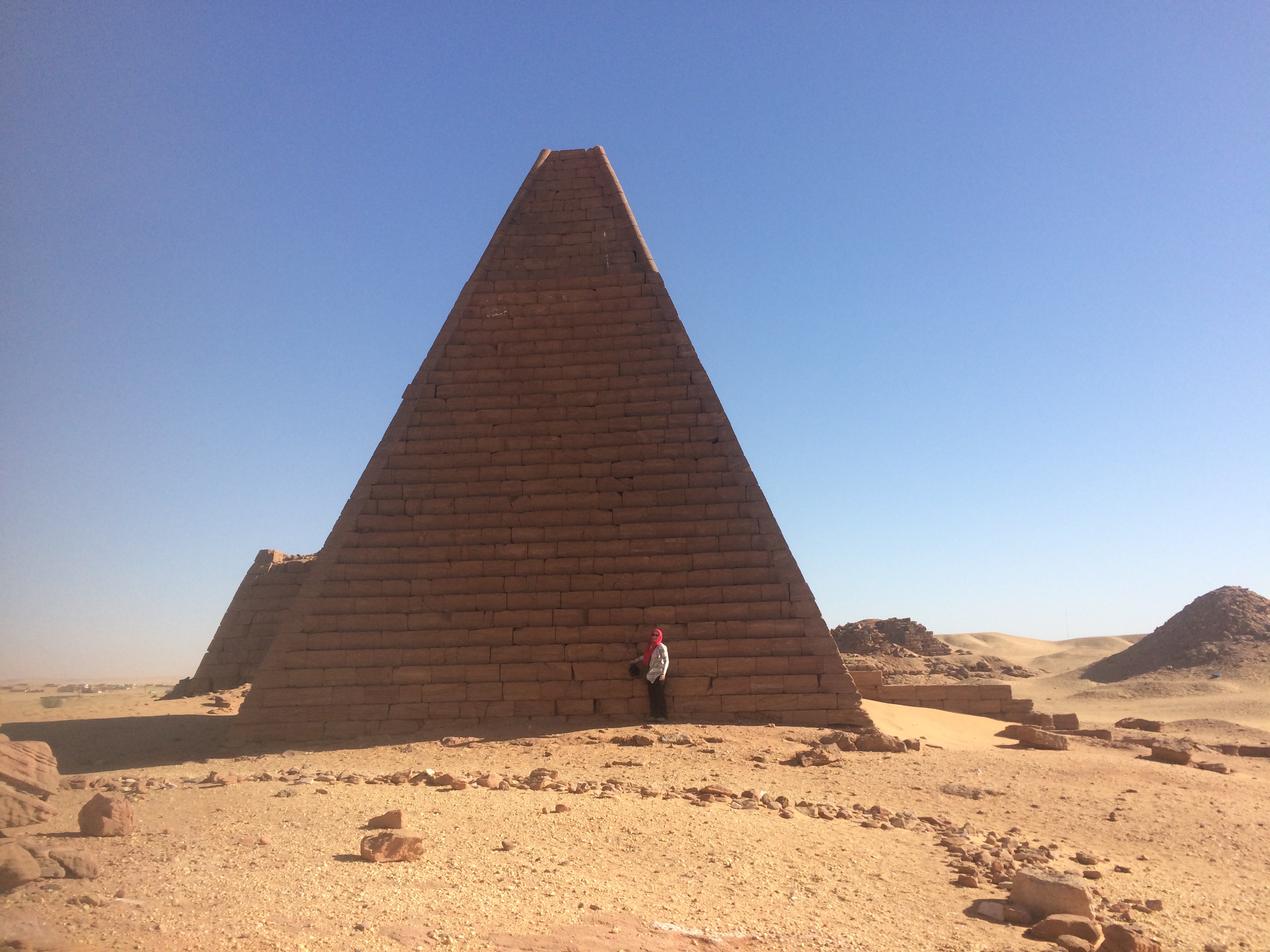
The pyramids are made from sandstone blocks, now well worn by the relentless wind, and were completely deserted. No fences, no touts, no signs, and no-one stopping those under the influence of placebo climbing to the top made it a great experience.
A visit into Karima town, with some brave souls getting lunch from the fried chicken take-away and a re-fuel at the only petrol station, rounded out the remainder of the day. Until a casual review of the GPS points of interest at 5pm revealed a Petrified Forest only 20km away. Petrified forests are rare indeed, I don’t actually think any exist in Australia, none that I’ve heard of at least. The rarity did not inspire any other group members, it was placebo o’clock and sunset photos and more opportunities to get bogged at the pyramids couldn’t be missed. So off I went with the GPS programmed, which was fortunate as there was absolutely no sign at the turn-off from the highway and barely a road.
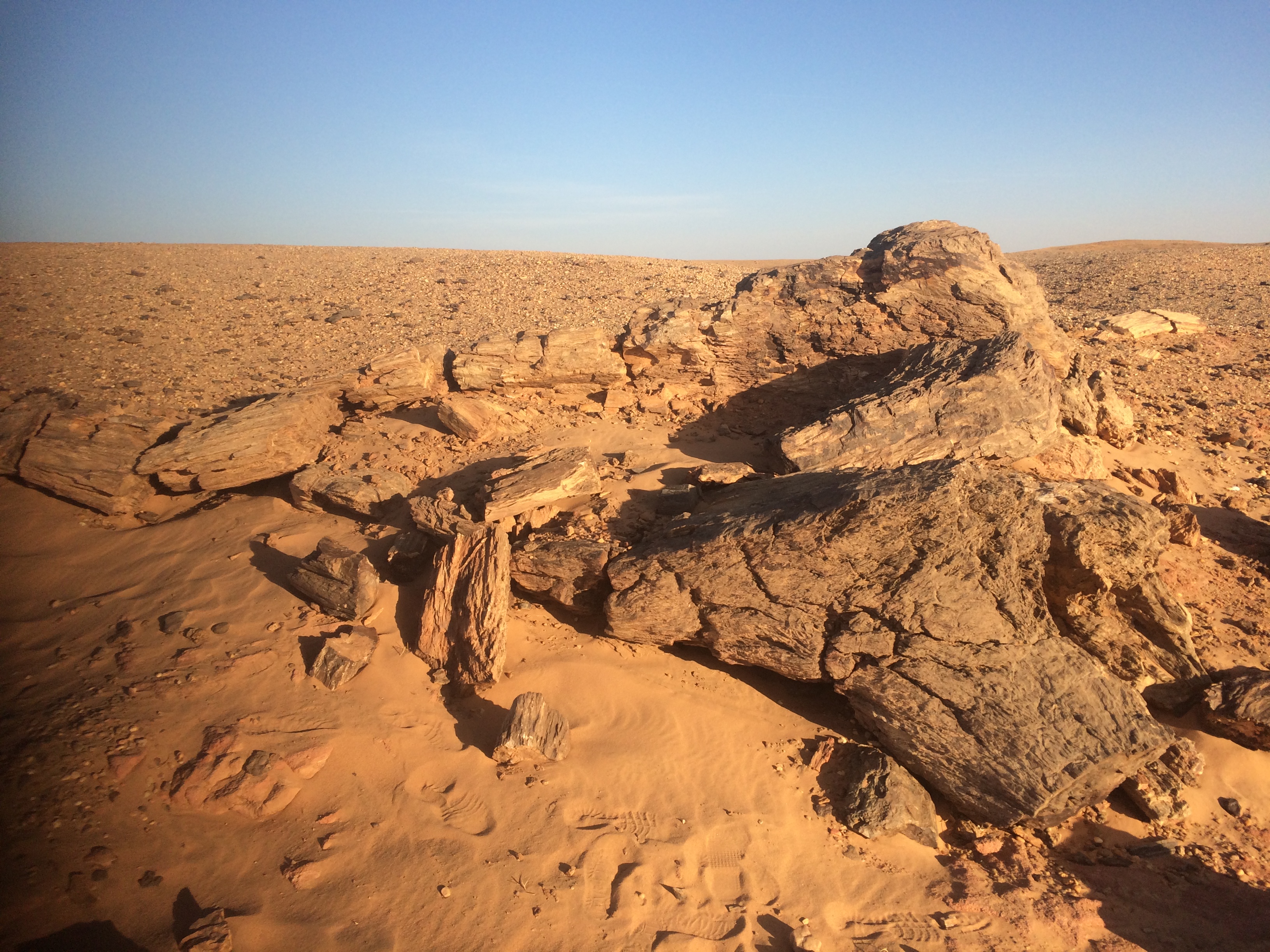
After about 4km of mildly technical off-road riding, the Petrified Forest car park (i.e. a flat spot to stop) was reached. Across the blasted and utterly deserted landscape of shallow gullies, acres of petrified logs and trees created an amazing scene in the very late afternoon. Most trees looked as though someone had come through that morning with a chainsaw and cut the logs into neat lengths for firewood. Growth rings were visible, and colours of the original wood had been retained. With some concern about riding back in the dark, I could only spend about 20 minutes at the incredible place before getting back on the bike. Half way back along the track, the wonderful feeling of lightness at having seen such a place became suspicious, and it suddenly became obvious that I’d left my backpack behind. So another 5 minutes was added to the petrified viewing before the return to the Nubian Rest House and a big cold placebo to quench the hard earned thirst.
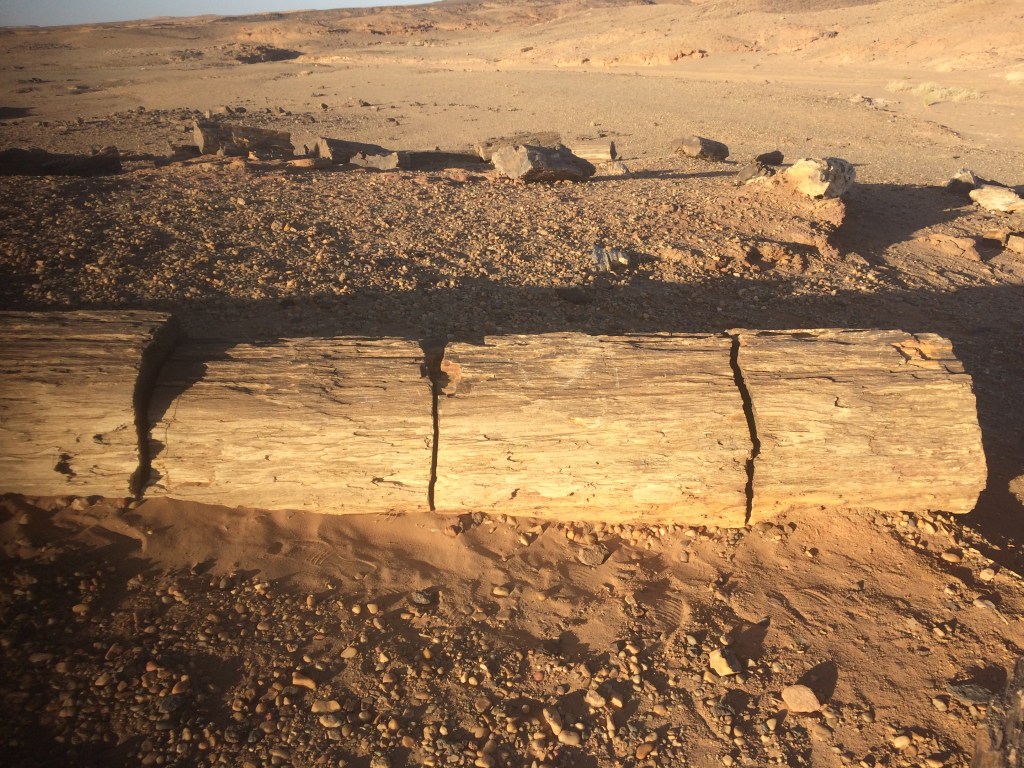
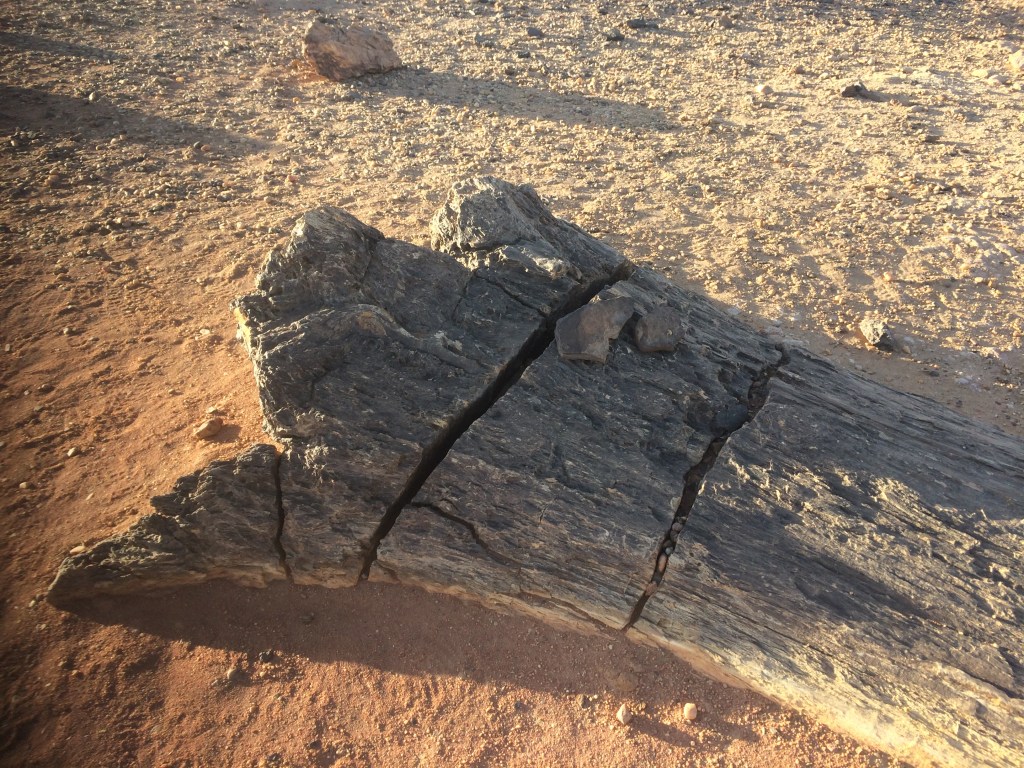
Day 11 was about 390km to the Italian Camp at the Meroe Pyramids which are the tombs of Kushite rulers who were wealthy producers of iron, with the ride cutting across a big bend of the Nile to reach Atbara via 300km of waterless and petrol-less wilderness. Petrol in Sudan is hard to find, and although there are loads of servos, most are abandoned or have an attendant whose sole duty is to tell hopeful customers that there is no fuel. Diesel is relatively easy to find due to the high usage in public transport and trucks. The Compass support vehicle became the equivalent of Burke and Will’s dig tree for fuel, with a couple of bikes not making it the 300km to Atbara in the very strong head winds.
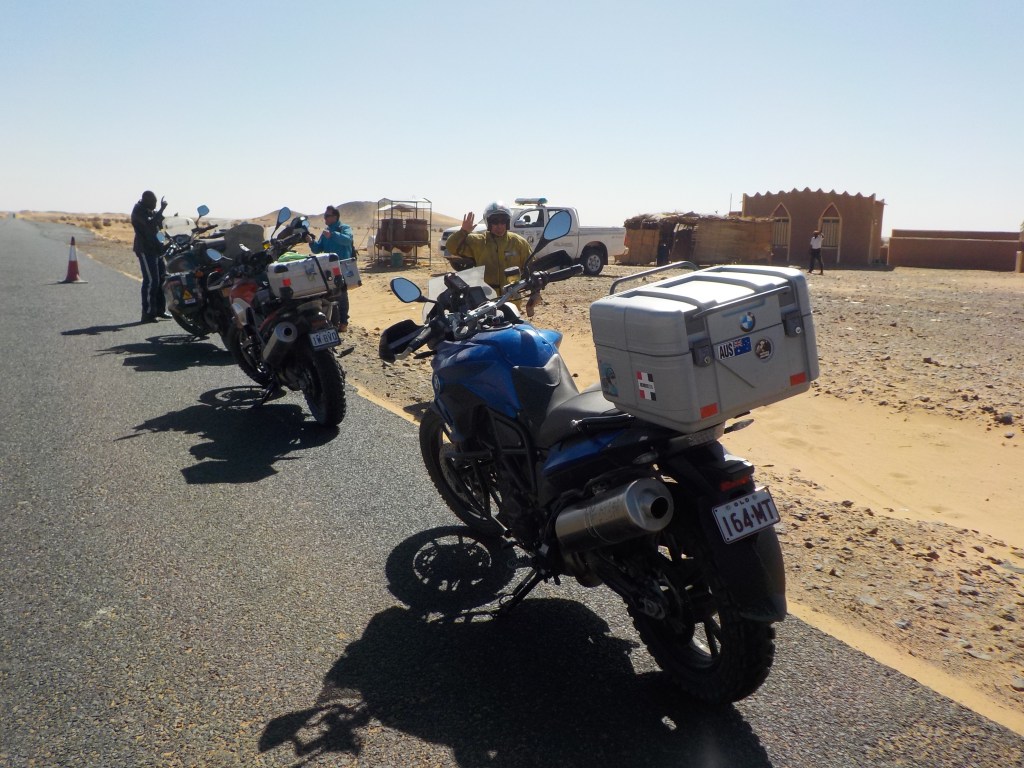

Another official check point on the road in Sudan
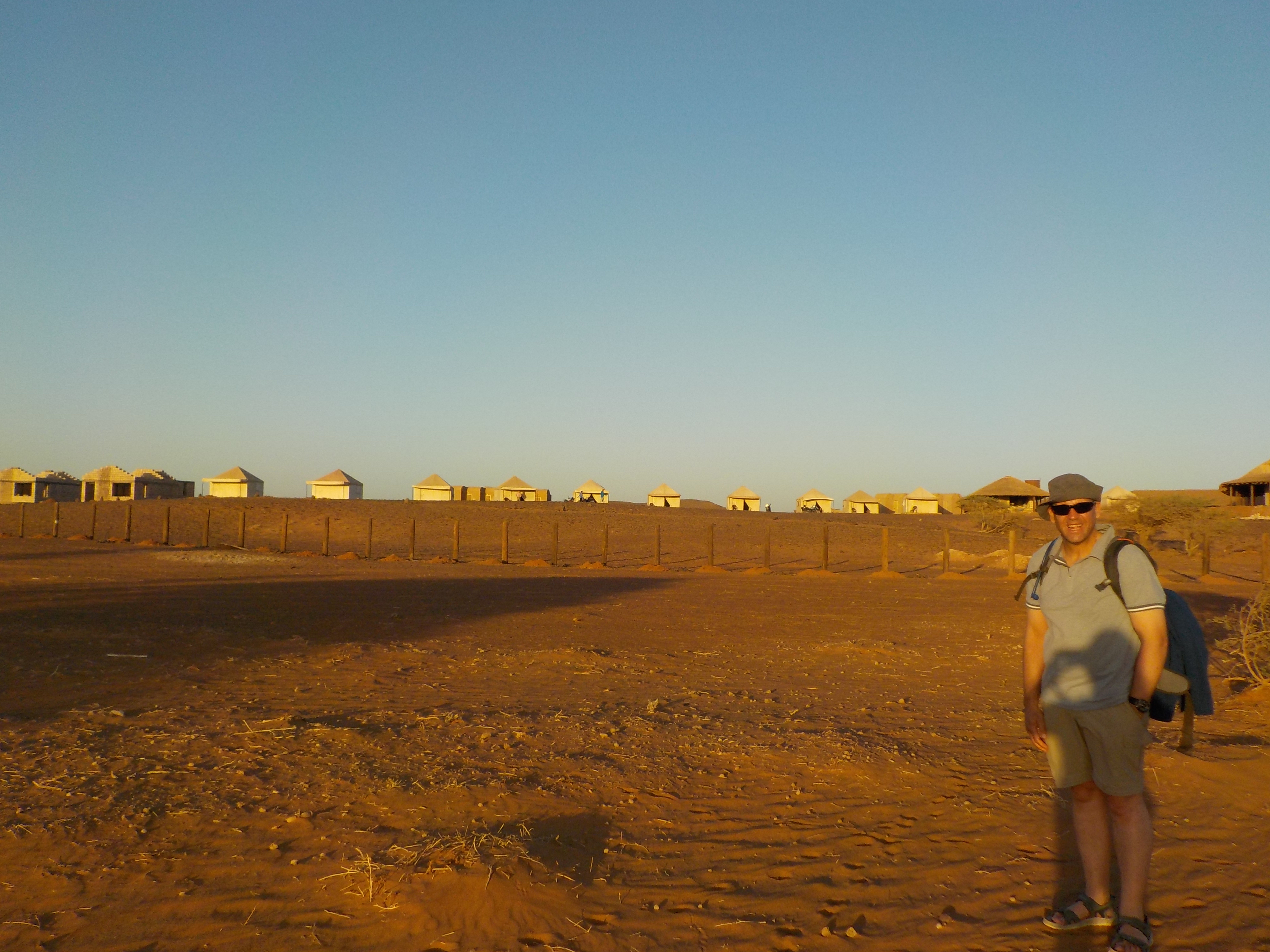
The Italian camp was our first ever Glamping experience after a ride in via a technically medium road with sandy patches, but nothing that caused major drama to the group. Welcome drinks were quaffed in the heat, before introduction to the fixed tents with personal shower and toilet facilities. The Meroe pyramids were about 1.5km away, some chose riding to visit while Cindy and I decided to walk.
The Meroe pyramids are similar size to the Jebel Barkal pyramids, but are World Heritage listed, surrounded by a security fence and attract a US$25 fee for entry, and have little kids selling souvenirs and men trying to get innocent people to take camel rides.
After an hour of repulsing kids and camels we were back at the camp for a nice dinner with some magnificent imaginary wines, and a good night’s sleep in the permanent tent complete with bed and concrete floor.

Day 12 was the 240km run up the remaining section of the single Nile into Khartoum. The ride had a bit of excitement early with transversing the sandy track to return to the main road, with only the support vehicle needing some support in the sand. The ride to Khartoum wasn’t terribly inspiring, but the thought of a couple of nights there made it more enjoyable. The traffic as we entered the urban area was far more controlled than Cairo, so it was reasonably easy to keep together as a group. The Acropole Hotel in Khartoum has been run by the same original Greek family for 35 years, and offers good accommodation to travellers including many archeology groups if the photos on the walls are an indication.

Laundry was a key focus as the first effort at personal hygiene since Cairo. Easily organised for blokes, with Sudanese laundries more than anxious to detox a pile of reeking Y-fronts and riding socks, but not so easily arranged for the ladies as their delicate smalls are visually off-limits to all except top level security clearance personnel. As a result the Acropole Hotel room was fully decorated with small lady flags signaling smooth sailing for the week ahead.
A major achievement in cross-cultural communication was achieved with purchase of such an exotic item as baking soda at a local shop to get rid of the foul water taste in the Camelbak, only diminished by the Sudanese shop owner speaking perfect English, as many do, and his knowing of the chemical name of sodium bicarbonate.
Day 13 was a Khartoum tour day starting at the Museum, which had stone statues and typical Egyptian/Nubian/Kush paraphernalia from the major settlements along the upper Nile. A section of the museum had early Coptic Christian friezes from their churches, some dating to when Christianity first started to get traction in the 4th century.
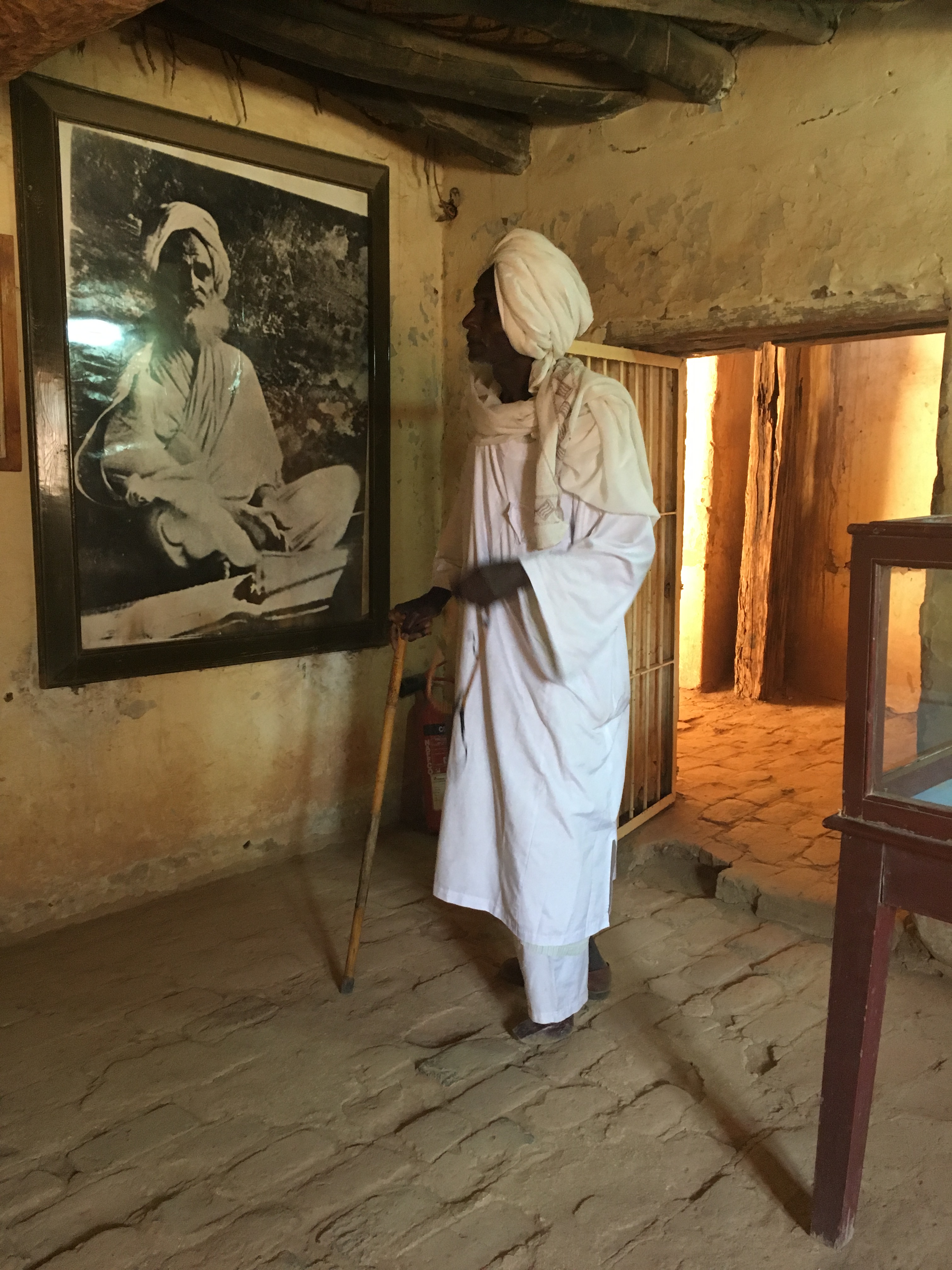
After the museum we went to the Khalifa’s house which is a rabbit warren museum next to the Mahdi’s tomb. The Khalifa led the Mahdi inspired Dervishes against the British in 1898, which didn’t end well against the world’s top industrial power seeking revenge for the murder of Gordon who with his troops was besieged in Khartoum for months in the early 1890’s.
After museuming ourselves out it was off to do some shopping in the Omdurman markets, which had all sorts of stuff, some of which was even locally produced, particularly the food. Then a lunch in an impressive but empty establishment which specialised in Sudanese cuisine, and strangely Mongolian.
The afternoon was spent with a trip to the meeting point of the eastern Blue Nile and the western White Nile. Someone obviously didn’t want to stick their neck out and make a call on which river was the actual Nile, so somehow the smaller eastern Blue tributary got elevated. Finally we visited the Blue Nile Sailing Club which has a British gunboat parked in the front, now used to store fridge boxes and a lawnmower.

Back into the Acropole Hotel to reclaim the now pristine smalls, we were only capable of getting the bikes fueled and checking chains and tyres before heading off to a great dinner at Fish Wok in south Khartoum to farewell Compass Boss and support vehicle driver Mick McDonald who was returning to Australia. After too many pretend wines and beers and some excellent food, we were back to the hotel for bed.
Day 14 was the second or third longest day of the trip behind Day 9 at about 530km. Between Khartoum and the Sudan border town of Gallebat, there are precious few accommodation options, so in order to get ourselves set for the border crossing the following day we had a bush camp planned. It was a long day, with Andrew now both ride leader and support vehicle driver, with the red GS1200 loaded onto the support vehicle but still leading from the front. We also had a mobile catering service following us, which made for some wild excitement keeping the group together getting out of Khartoum, especially as the catering crew needed to stop at just about every shop and market on the way out to find bread and fruit and other ingredients.

After a fair slog of a day on a road that started off okay but became a potholed nightmare threatening to destroy rims and wheel bearings on the bikes of riders picking the wrong line, we pulled into the bush camp just before dusk. The catering crew got to work preparing dinner, while tents were unpacked, unraveled, put up, taken down, put up again more in line with the tent designer’s vision, and filled with mattresses and sleeping bags, luggage and pillows. Emotionally and physically destroyed, we gathered for a spectacular dinner to replace the 18,000 calories we had hopefully burned off during the day. A lot of practice drinks were had, this was the last chance for getting fit for the real thing on the morrow.
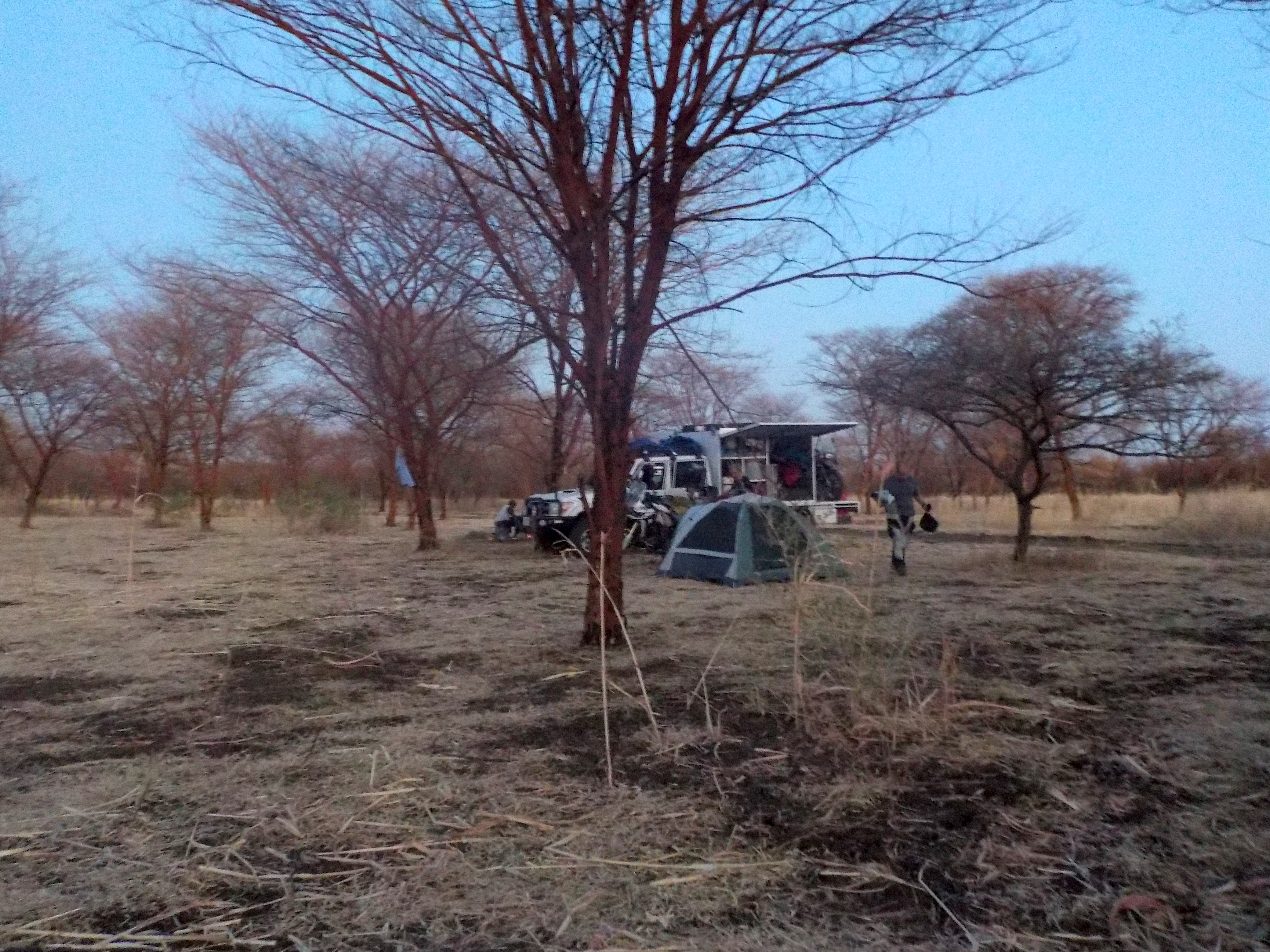
Day 15 was crossing day, with the camp expertly packed in a record time of two hours, luckily the catering crew did breakfast or we wouldn’t have left until after lunch. A quick 50km ride to Gallebat, where we managed to get through customs, have the paperwork completed, and negotiate the usual fight over exchange rates into Ethiopian Birr before 11:30am. The border was an odd affair, we seemed to be the only people who couldn’t just stroll through, around, or under the string barrier into Ethiopia, or back into Sudan. Eventually, an official or some random passer-by lowered the string, and we were two countries down, nine to go.
To summarise Sudan; the people are very helpful, friendly and no significant instance of dishonesty or security issues was experienced. Although apparently conservative (comment from a bloke to Cindy at fuel station – “BMW good, lady riders no good”) women’s clothing wasn’t uniformly oppressive, woman seemed more communicative than Egypt, and there was only one request for Cindy to put on a scarf from an anxious woman.
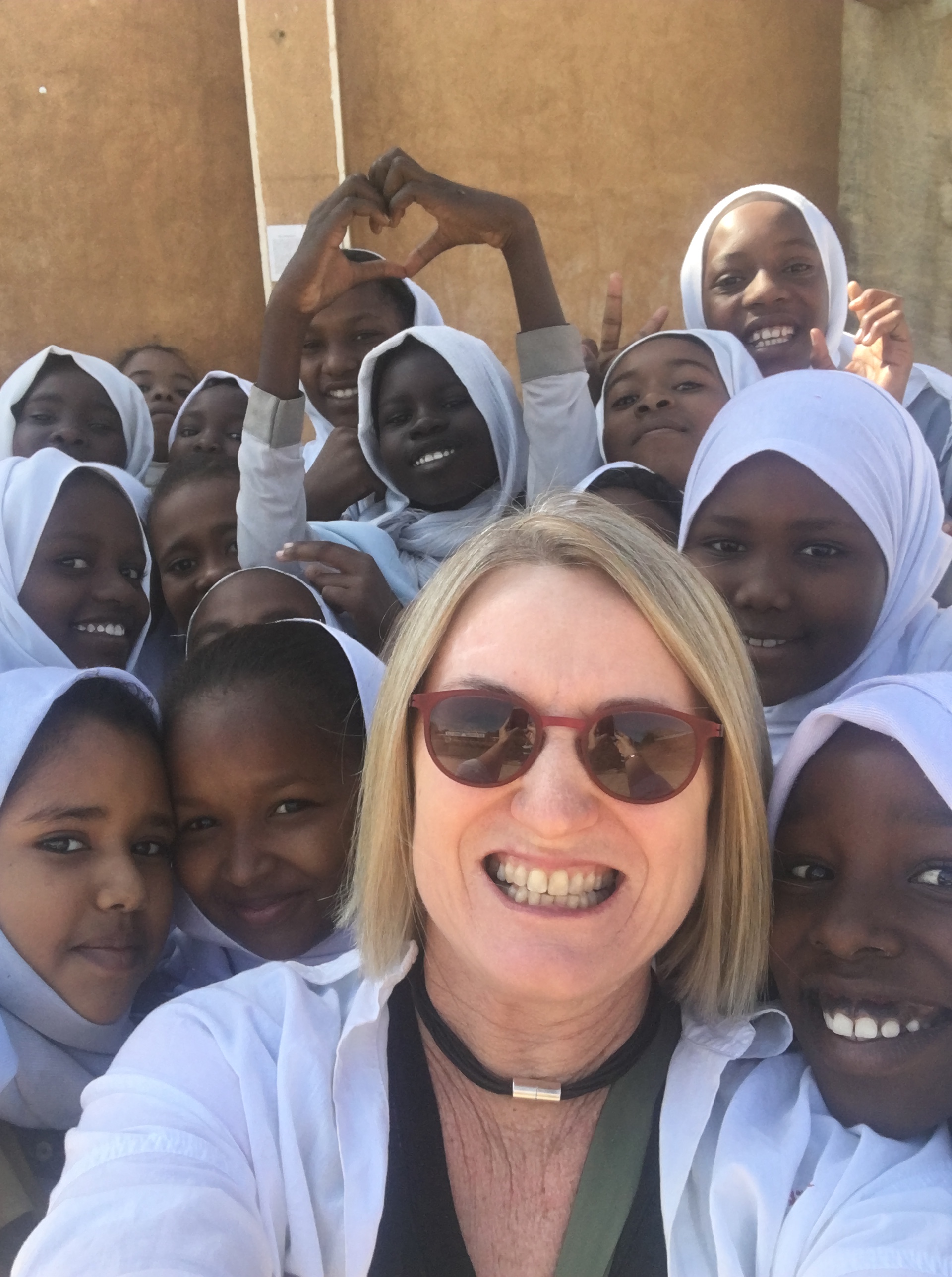
There are hardly any tourists except hardy Europeans at the resorts and major historical sites; no doubt the ban on alcohol isn’t a big selling point for western tourists. Fuel is hard to get, and is slightly more expensive then Egypt at ~$0.80/litre, but general expenses are very low for food and accommodation. There are good schools in Khartoum, and English is a key subject, but the rural areas along the Nile are very third world, and the rubbish blowing across the landscape has to be seen to be believed.
 travellingbennetts
Great photos! Very interesting, informative blog! Many thanks for your efforts! Hi to Adrian & Alma!
LikeLike
Very interesting reading. Thank you so much for sharing.
LikeLike
Fantastic Dunc – loving it. Keep it coming….xo
LikeLike
Thoroughly enjoying your travelogue and humour. Keep safe. Di and Rick
LikeLike
Love the stories guys. Glad to hear you are doing well. You will be pleased to know that riding in SEQ heatwise has been as bad – but we do have alcohol at days end.
LikeLike
Love reading this. It just looks amazing
LikeLike