Official Day 2 of C2C in Egypt was a catch up of true tourist activity for the whole team, now with motorcycles in the hotel car park as solid proof of coolness while striding amongst the non-riding mostly Chinese tourists.
The pyramids are a bit like the Eiffel Tower and Empire State building; you have seen pictures and heard of them so many times that you must have an impression of what they are like regardless of whether you have been there. The pyramids are best considered statistically – the biggest is 2.3 million blocks of sandstone with each layer perfectly horizontal, and at the time of completion faced with marble cut to make a smooth surface. The really impressive work was on the pink granite, which is very tough and looks like it was polished a few days ago. The incredible abundance generated by the Nile allowed huge workforces enough food and exclusive time to build these enormous tombs for the early kings, no subsistence farming with everyone struggling just to produce food here. The reality was a lot better than the expectation and certainly no way of hyping the pyramids up enough.
Touts and souvenir sellers are doing it very tough in major tourist attractions, literally millions of people relied on the tourist trade so many now live more hand to mouth. According to those with Egyptian experience the place looks a lot more third world, and many of the locals we spoke to have 2011 revolt regret. Touts at the pyramids can be quite aggressive, in earlier times with thousands coming through each day it was easy work, now with hundreds it is a much more difficult. Most Egyptians retain a very welcoming nature and hold out hope for a tourist resurgence, which should be inevitable given their treasures and the relative safety.

The Cairo Museum was visited, very impressive with Tutankhamen’s tomb contents laid out including his 110kg gold coffin, even a good mining operation struggles to make that in a week so must have taken the workforce a long time back in the early mining days. Mummified kings were a highlight, and the mummified pets even more interesting with some techniques for imortalising the cat noted for experiments when we get home.
Day 3 was the first official tour riding day, with our bikes sporting both QLD and Egyptian number plates. We happily abandoned three party members who had foolishly sent their bikes by air so didn’t have them yet, so the group was Compass lead rider Andrew on a 2006 BMW 1200GS, Adrian and daughter Alma (Indonesian/Australian) on their brand new BMW 1200GS, Kathy (USA New York) on a Compass hire BMW 700GS, Stan (Australian) on his Triumph Tiger 800XC, Cindy on her BMW 700GS, and me on the Triumph Tiger 800XCx Precious Edition. Mick McDonald (Compass founder) was bringing up the rear in the support vehicle.
An 8:30 start was planned and mainly achieved, with our police escorts in formation only a little late. The route was east through the Cairo ‘burbs with traffic slowly becoming more manageable and no loss of riders. Typical of Egypt, once out of the Nile region it becomes stark desert and the riding was fairly quick along the good quality roads, besides slowing for the numerous police checkpoints. We hit the Red Sea just before a kofta burger lunch and petrol, which put us into traffic and condominiums and shopping areas, although these looked a lot more in service than those along the north coast. As we sped southeast, the habitation reduced and there were long sections of open desert drifting down into the beautiful blue water of the Red Sea, apart from occasional developments such as the isolated Soma Bay condominiums.

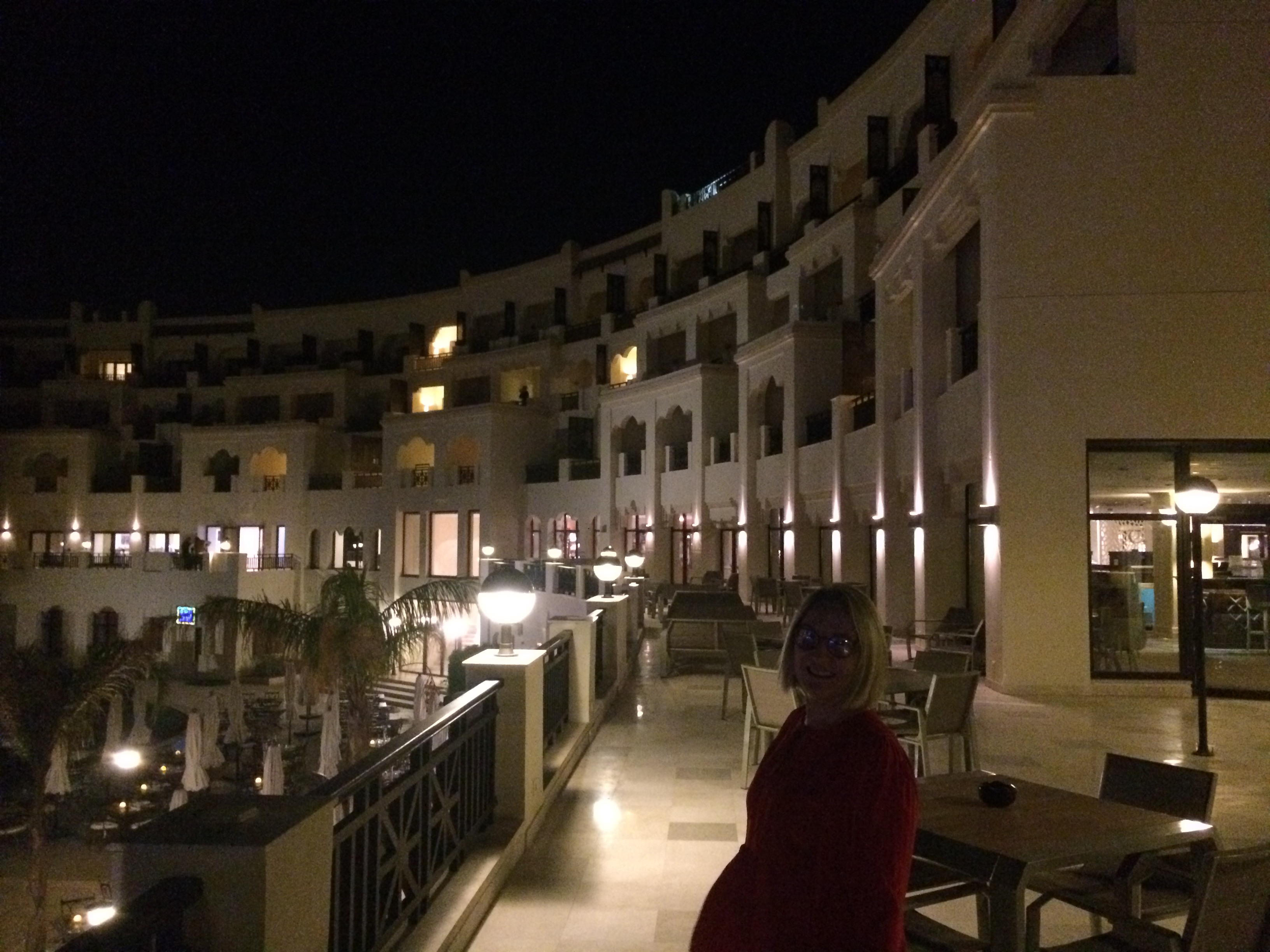
It was heading on for 6pm when we reached Hurghada and the hotel which was unfortunately only 5 star – enormous everythings had to be tolerated from the bedrooms to the multiple bars and dining facilities, the buffet covered 3 acres alone and was lacking only bacon. Like everything relating to Egypt these days it was not full of tourists, although there were a reasonable number of Europeans wandering about. Exhausted after our first official riding day and lots of drinks which we mistakenly assumed to be included with the accommodation, we were in bed reasonably early with the anticipated short-ish ride out west to Luxor the next day.
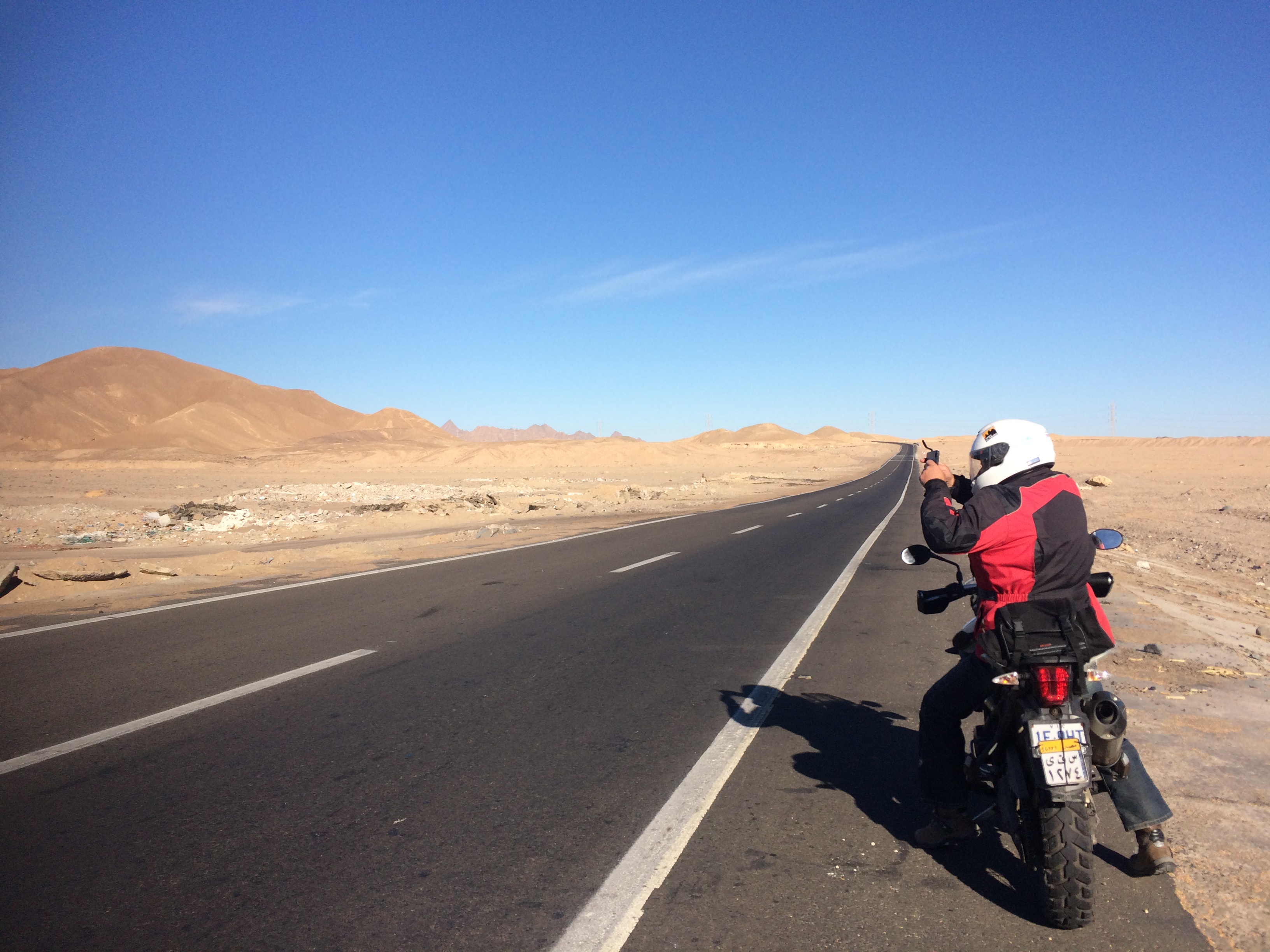
The ride through the Sahara desert on day 4 was one vista of utterly barren sand and burned brown rock after another. The emptiness made riding along listening to Mylie Cyrus’ Party in the USA seem oddly out of place, so luckily that only lasted 2½ minutes before something more ethereal came up on the playlist.
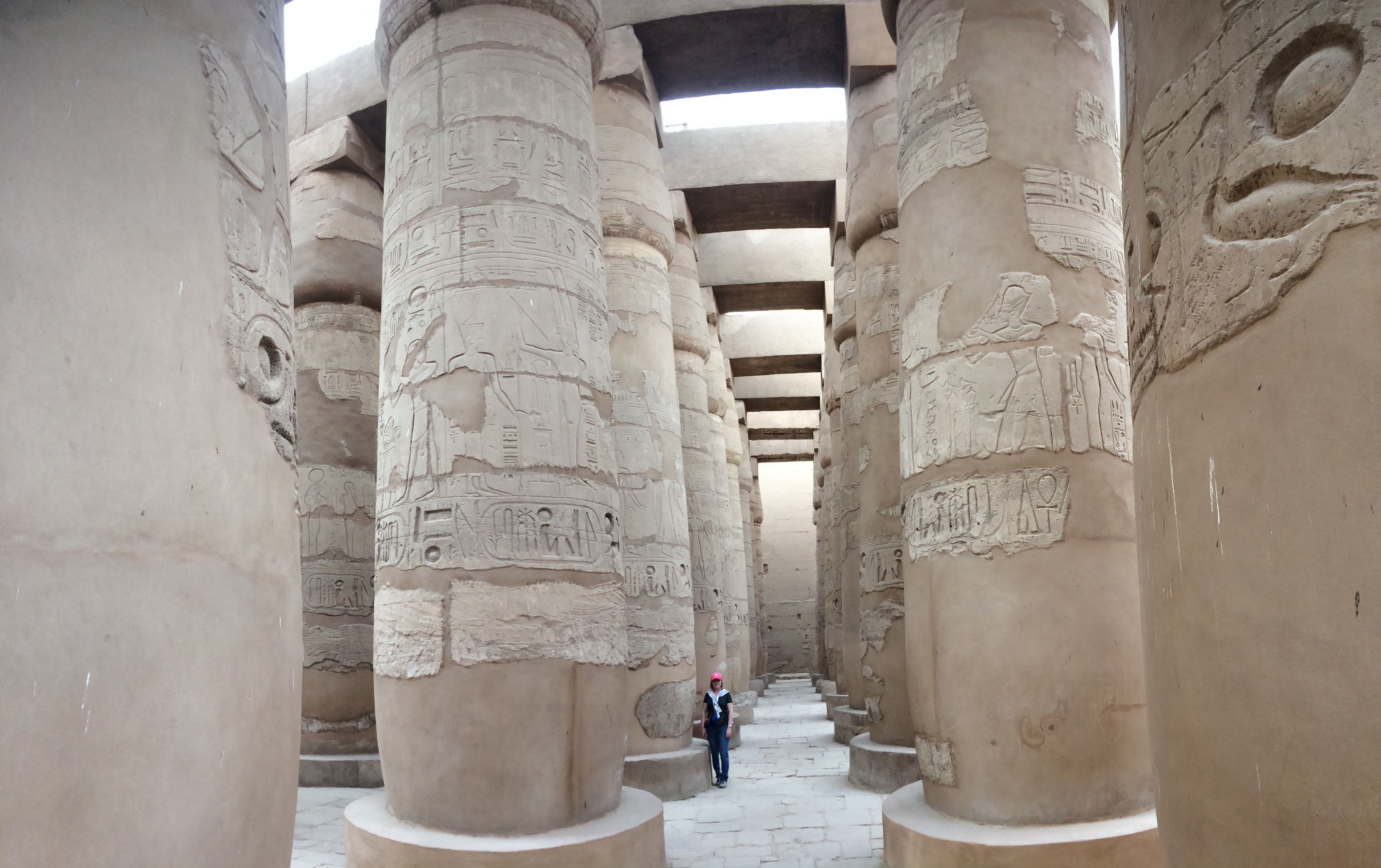
This was a relatively short riding day, just before lunch we pulled into Luxor at the Iberotel Hotel. After a quick kofta burger and chips which partly made up for the now expected hour to check in, we headed off to Karnak temple under the supervision of a tour guide. The main temple at Karnak has some amazing columns, featured in movies such as James Bond Live and Let Die. The carvings in the sandstone are the work of true artisans. Another interesting feature of these temples is the graffiti left behind by the first Europeans, dating back to the early 1800’s.
From the Karnak Temple, we moved up the few kilometers along the west bank to the Luxor temple, with the wide avenue between them still being excavated. The houses along the avenue have been purchased and knocked down, and those sections completed are lined with Sphinxes, which must have made a journey along it after it was built truly magnificent. The Luxor temple was a home for hiding Christians in the fourth century, with Coptic crosses in evidence, and a church that is now a Mosque. The statues are the major feature of the Luxor temple, Rameses II had a fair presence which would only increase as we moved up the Nile. After a great dinner at Luxor’s famous Winter Palace with its Victorian décor and a magnificent bar unfortunately discovered later, we finished the big day back in the hotel. The next C2C tour will probably stay in the Winter Palace; I hate them all already.

Day 5 kicked off with a visit to the east bank to see the great 1450’s BC female pharaoh Hatsepsut’s (memorably pronounced Cat Shit Soup but with an H) Deir el-Bahri mortuary temple. The magnificent temple was completely rebuilt from the ruins by the Polish, and sits under a geotechnically questionable limestone cliff that I am sure will one day turn it into a ruin again. We then were railroaded into a visit to an alabaster carvers shop which was yet another lesson into the ruin of the Egyptian tourist industry; hundreds of shops and only a few of us trying to deny the swarming hordes of kids and touts trying to sell things often made in China.

After a trip to the Valley of Kings to check out the amazing tombs and try to figure out how they had got all the stuff into them, it was off to a huge buffet back at the hotel, joined by two of our missing group members Canadian Terry (BMW 1200GS) and French Nicolas (Honda Africa Twin) who had ridden through from Hurghada that morning, we checked out and got on the bikes for the ride to Aswan. The road from Luxor to Aswan follows the Nile for 285km and is known as The Road of One Million Speed Humps, at least by us. In theory it should have taken us about 4 hours, in reality it took 7 hours and involved exhausting traffic dodging in the rising heat. Several pitched battles were conducted against tuk tuk drivers attempting to pass us then slowing down to check us out, not realising that their fare was now dead or mortally injured in the back having gone over a speed hump at 40kmh.

Finally, we pulled into the Basma hotel in Aswan after 8pm, ignored requests for passports and following of the usual complex and strict Egyptian hotel check-in processes, and went straight to the lobby bar for quenching ales/wines. The bartender thought about asking for a room number, but after looking at us already sculling any cool liquids to hand decided discretion was the better part of bar valour.
Day 6 was a purely tourist day, commencing with a tour of the dams including the lower dam built by the British in 1911, and the 111m high upper dam built by the Egyptians in the 1960’s. The modern attitude toward the dams was an undercurrent at the packed viewing area on the dam wall; concerns about environmental impact showed how little people understood about the devastation caused by the annual flooding of the Nile, a major inconvenience that had prompted Egyptian leaders such as Mohammad Ali to try to resolve since the early 1800’s. Back into Aswan, we wandered into the tourist-less town for a lunch prior to a relaxed felucca cruise up to Elephantine Island and Nubian Village dinner. That night, the final member of our party arrived on a truck with his bike at 3am after 18 hours driving from the Cairo airport, although there was no fanfare as sleep was considered the ultimate accolade for Craig (New York Suzuki V-Strom 650) because he didn’t get any.
Day 7 was another relatively short day back out into the desert down to Abu Simbel and the Applicator Hotel to prepare for the departure from Egypt. Abu Simbel holds the Rameses II temple that was lifted above the high dam water line in the 1960’s, a huge undertaking and expensive at the time at $35 million. The temple complex is a display of absolute “look at me, I’m Rameses II” with four huge statues of Rameses in the main temple at different life stages, which suggest that he considered that he had barely aged. In the smaller temple to his Nubian favourite wife Nefertari, it was important that he showed his love for her by limiting himself to only three statues while giving her two.
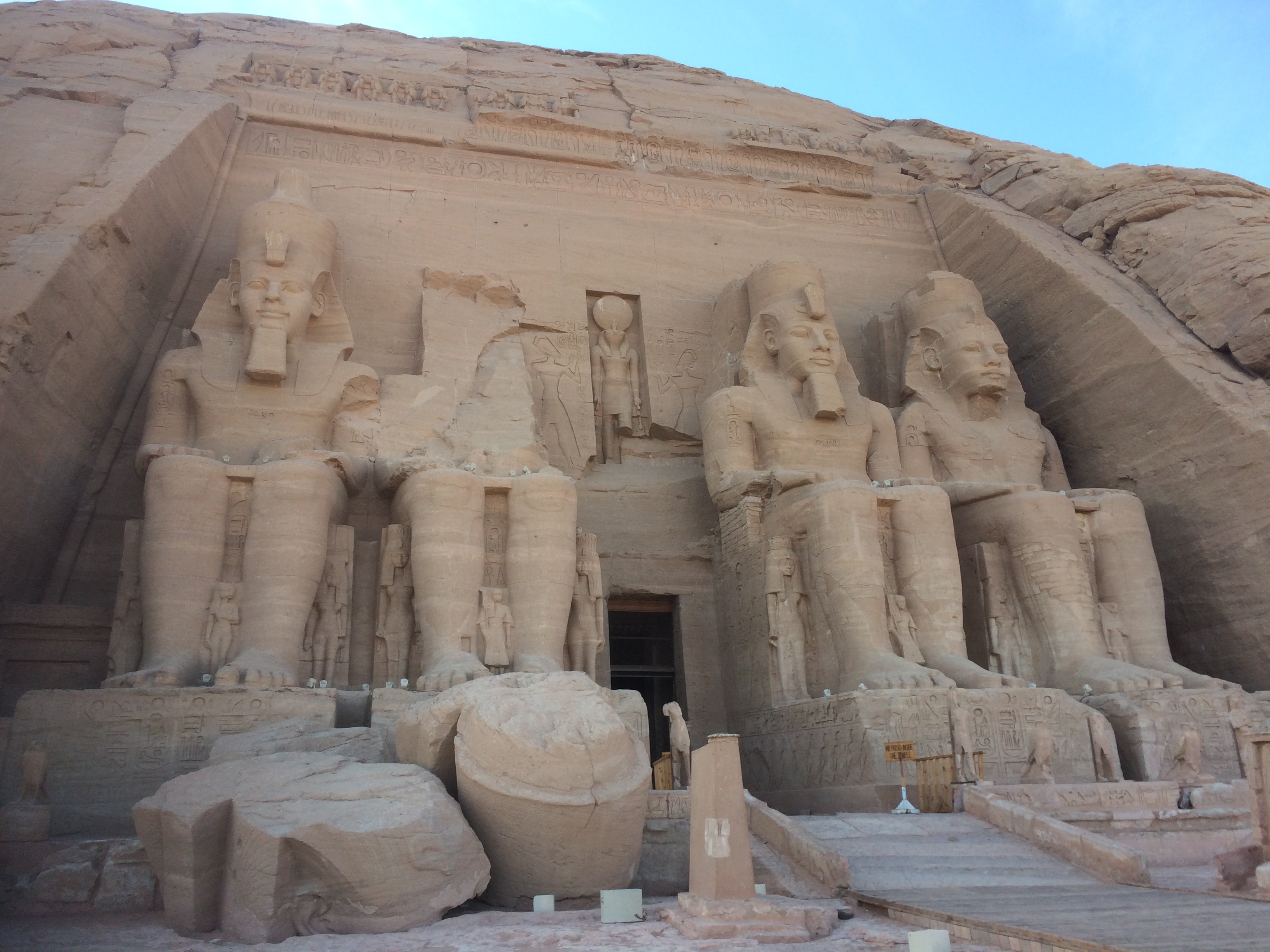
Once back to the Applicator, we applied ourselves with a couple of cartons of beer we had brought with us to celebrate Australia Day Eve, signs of liberation from alcohol were becoming apparent. Egypt had been a great experience. The dramas getting the bikes was all part of it – frustrating, annoying, officious, grotty, but very friendly and safe, and incredibly cheap (less than $6 to fill up both bikes), with great food and beer, and desperate to attract more people back to their country of a thin strip of mass humanity down a river ribbon, containing some of the most incredible achievements of the human race.
Day 8 was our end of Egypt day. We were up and on the bikes at 7am – missing the ferry across to the eastern side of the lake was not worth thinking about as we had a big day of border crossing ahead of us. We had seen the first C2C tour footage of the bikes getting off the ferry into a morass of deep sand, luckily this had been fixed and so one of the biggest technical fears of the trip was a non-event.

After a brief ride, we arrived at the Egyptian border to commence waiting, with occasional spells of requests for documents, more waiting, and lunch and coffees. Luckily we found a shady spot and the breeze was cool so it was quite pleasant. Just after lunch, the anticipated liberation from the lower kingdom was announced. We were quickly onto the bikes and riding the wrong way nearly back into bureaucratic oblivion, before getting our bearings, showing our passports to 80 people, farewelling our Police escorts and being let through the gate into no-man’s land, a strip about 400m wide with Sudan. Expectations that entering Sudan may be more straightforward were soon quashed….

One country down, ten to go.
 travellingbennetts
Looks like kofta burgers are the GO!!!!! 🙂
LikeLike