Refreshed and ready for action after 18 flying hours and less than 3 hours sleep, we arrived into Cairo in the early afternoon of Sunday 15th January to commence the adventure. Cindy was the only western lady in the airport arrivals hall, an accurate indicator of the destruction of the tourist industry since the revolution in 2011. As always with pioneering into a new country, the optical and auditory senses went into overdrive as we tried to become expert Egyptologists during the airport pickup journey to the Le Meridian Pyramid hotel.
Observed items of note during the journey were the huge number of unfinished buildings around the fringes of the city, some general grottiness, and of more interest to fledging Egyptian motorcycle riders the insane speeds in congestion and random movements of the traffic. With confidence duly shattered, we arrived at the hotel which provides glorious views of the “big three” pyramids from the sixth floor rooms. Shame that we were on the fifth floor, which had a view of a minor road.

The majority of the 9 member riding team (5 Australian, 2 USA, 1 Canadian, 1 French) were either already in attendance or imminent, so introductions and a couple of drinks followed by a good dinner at a restaurant down the road were the main achievements for the arrival day. With the lack of sleep on the plane now a considerable advantage in quickly aligning to local time, we got up early on Monday morning to get to Alexandria to commence wading through the bureaucratic swamp to recover the bikes from the port.
Motorcycle collection on the 2015 C2C was a disaster according to the traumatised victims, taking 8 days and constant attendance to observe Alexandria port workers doing nothing to get the bikes cleared through customs. This time, an agent had been appointed with the power of attorney to watch port workers doing nothing on behalf of the bike owners. The problems start with Egypt’s requirement to fill in all the standard international paperwork, plus their own version of the standard international paperwork. Foreign vehicles must have their own registration and number plate and carnet, plus Egyptian registration and number plate. The rider/driver must also have a home country license, an International driver’s license, and an Egyptian license, fortunately no L or P plate tests are required to get this.
So although the advertised start to the C2C is Cairo, day 1 was a 200km trip up to Alexandria to meet the shipping agent, then attend the public notary to sign over power of attorney, then hand over all the documents including our passports to some random officials whose purpose in life remains unclear. Even to them. The public notary neatly summarises the process; the lady behind the counter decided that she could only do two powers of attorney, was argued into a third, but needed a lie down when a fourth was requested. Very fortunately a colleague stepped into the breach, otherwise the fourth would simply have had to return the next day and repeat the process. At the end of the exhausting day doing nothing but wait, but with our paperwork successfully launched into the river of stern bureaucracy, we were back in the van for the return trip to Cairo.
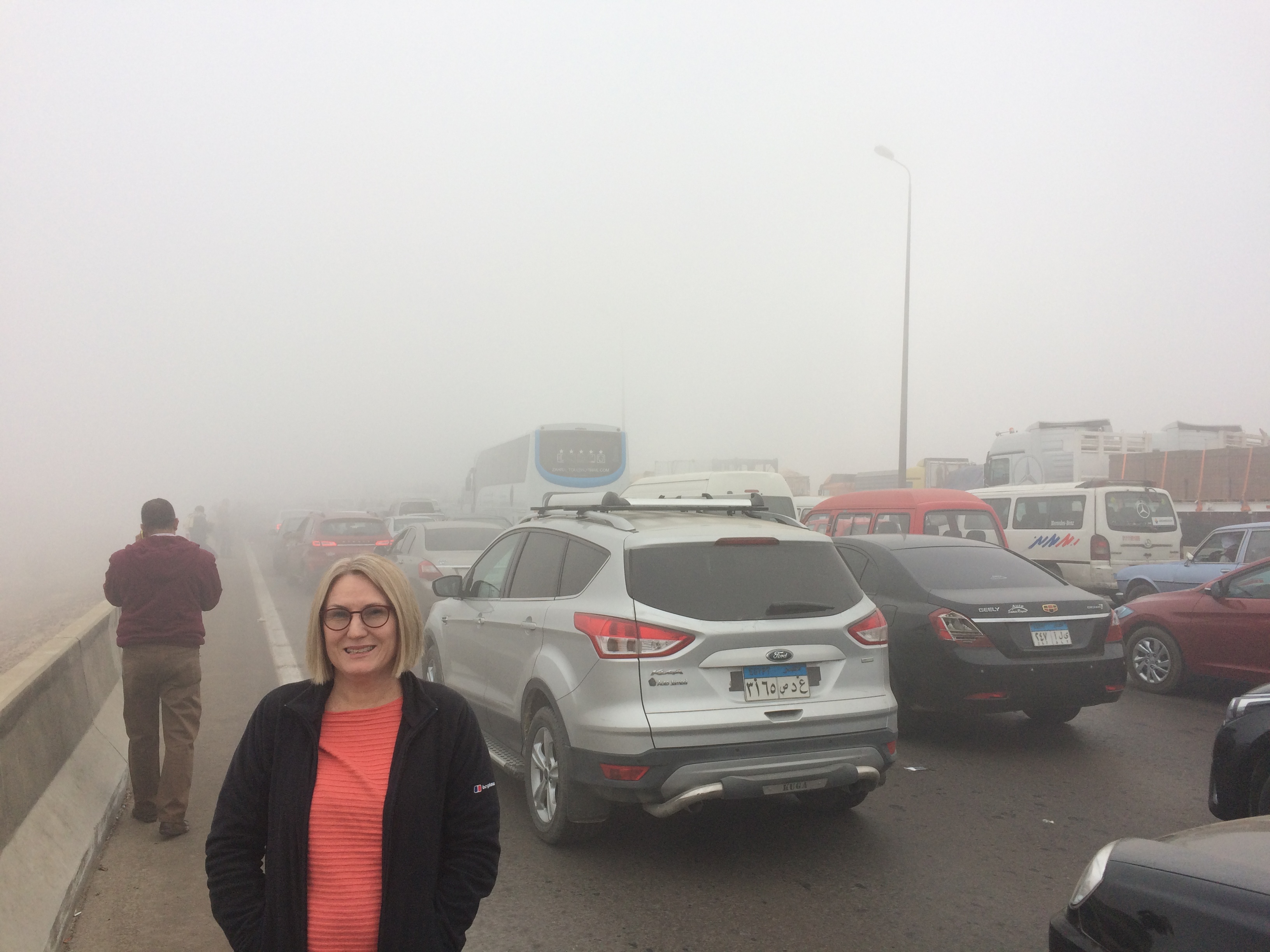
Day 2 was a tour to El Alamein about 150km east of Alexandria, one of the big turning point battles of WW2. As Winston Churchill said; before El Alamein not a battle was won, after El Alamein not a battle was lost. Our day started early from Cairo, however fog is a major issue in the Nile delta in winter, resulting in a 3 hour road closure heading north.
Once underway, we made up for lost time on a four lane highway with no traffic – a common sight in Egypt. A visit to the El Alamein museum was notable, like many Egyptian attractions we were the only people in attendance. The Allied cemetery is run by the Commonwealth War Graves Commission and is beautifully kept, once again a very emotional place to visit. There are also German and Italian cemeteries nearby, in keeping with the reputation of the desert theatre as a “war without hate” due to the lack of civilians in such a remote place.

The road to Alexandria was under repair for most of the way, and the coast is heavily developed with condominiums and estates, mostly with the appearance of abandonment and closed shopping strips. Alexandria is a city of around 4 million people, and our second visit in two days gave slightly more exposure to the madness of the streets and the narrow tracks through endless suburbia. With thoughts of riding through the mélange, basic understanding of how it worked started to crystallise.
Firstly, Egyptians seem to know the width of their vehicles within about 5mm so will fill every available space. There are no lanes, and the traffic flow can best be described as sand through an hourglass. Secondly, tooting the horn seems to be mainly used to alert others that you are coming through, but also as a display of mild annoyance when the traffic stops. Thirdly, hesitation spells disaster, with assertive driving rewarded by a clear path through the admiring throng.
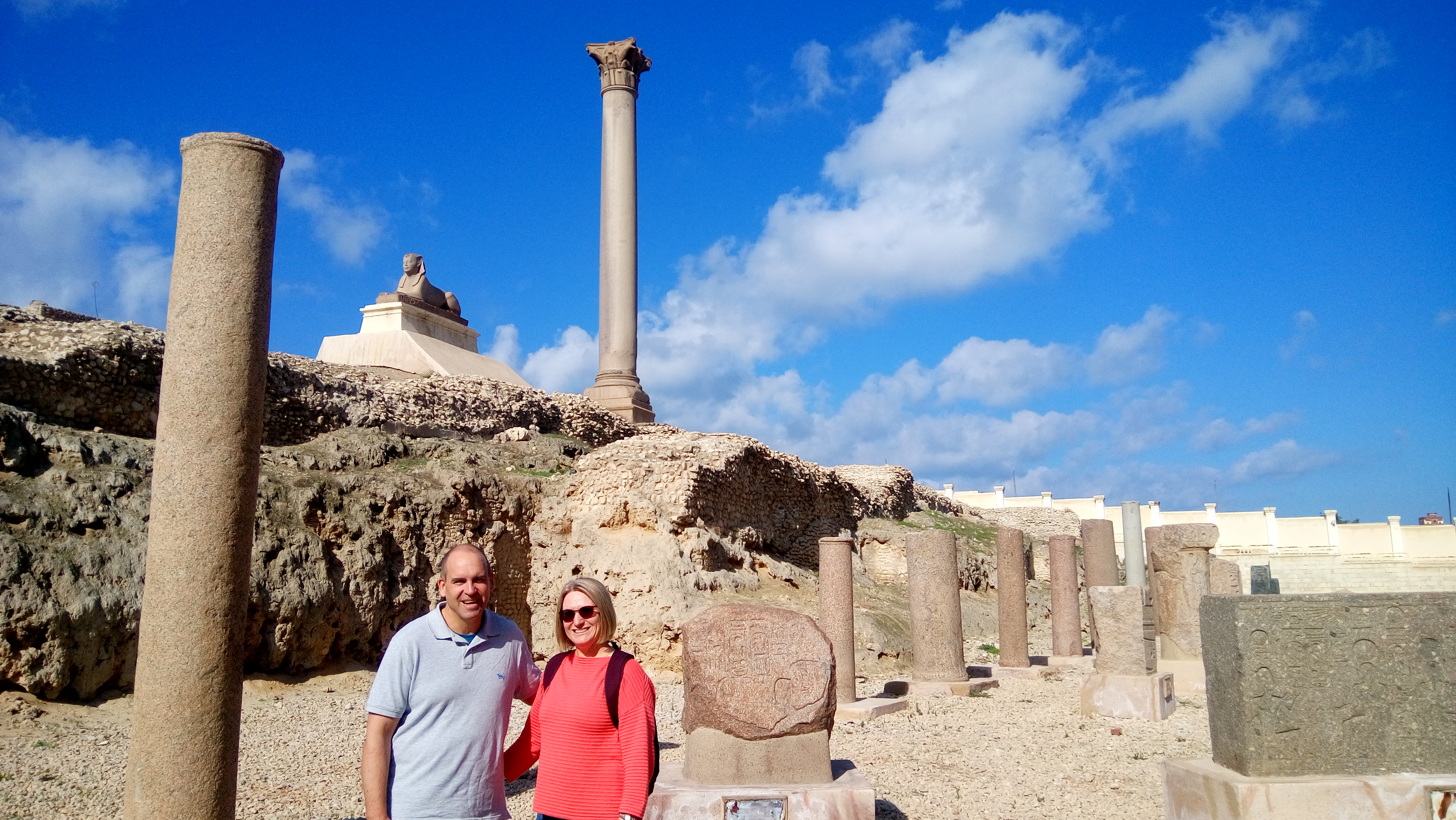
A pleasant evening with a very late lunch/dinner (linner) due to the fog delay and arrival at the Windsor Hotel saw completion of the day in Alexandria. The city was founded by Alexander the Great, who obviously had sufficient tickets to name the place after himself. As a portal into empire building by the French and English, the city has late 19th century hotels in abundance, now mainly looking their age but still with vestiges of grandeur. Day 3 was a tour of the catacombs and Pompey’s Pillar, with Cindy and I once again the only people on site, followed by the impressive library that is one of the oldest in the world. The afternoon was the now familiar trip back down the highway into the insanity of the Cairo traffic and with relief arriving at the hotel.
Day 4 was the big day. Lots of organising by the Compass Expeditions leaders had developed a sensible itinerary of early departure from the hotel, straight to the railway station to catch the 8am express to Alexandria to avoid any fog related road closure issues, and wait at the agent office until the bikes were ready to pick up early afternoon. The plan didn’t survive contact with Egypt, the 8am express train was missed due to gridlocked traffic, so the 9am slightly less express was the result. Then a 3 hour wait near the agent’s office on standby for the awaited call from the port, luckily the Alexandria Museum was across the road. An innocent photo of the museum highlighted another issue with the security situation in Egypt; taking photographs of things such as infrastructure, police, or defence buildings and personnel is forbidden. Why a museum was considered a high level security facility was a mystery to everyone except the excited guard.

Finally the call came, and like a mobilised SAS squad we were into the bus in 30 seconds and down to the port to loiter around for a little bit longer with all the riding gear laid out. At last, a small truck bearing the bikes exited the port gate and was thronged by the madding crowd anxious to catch a glimpse of the precious cargo. A seedy back alley full of rubbish was chosen as the unloading venue, and each bike was greeted with laying on of hands and successful maneuvering down a plank onto the road. The batteries were connected, and to universal surprise all were successfully started after 3 months journey by sea. Lots of photos with agents and port workers were required, then the blessed mounting and departure to find a petrol station and start the 200km trip back to Cairo.

It was now 6pm so nearly dark, and after a quick refuel we headed off with the support vehicle leading us all through the now familiar hectic traffic. Except Cindy who missed the first corner and with Mick the Ride Leader dived off alone into the urban abyss. Some wild panic ensued amongst the rest of us trying to find them, however I managed to call Cindy who expressed surprise that there had been a cornering requirement. A U-turn was ruled out, and a plan was made for Cindy and Mick to get a taxi to lead them to the highway and we would continue on the official route and we would meet at the toll station. For the first time in C2C17 history, the plan almost worked and we did eventually meet up for the ride into the increasingly cold night.
To be re-united and back on The Precious was a joy irrespective of the circumstances, but to get back to the Cairo hotel at 10:30pm was accompanied by a sense of achievement. We had arrived, had the bikes, and the C2C was about to begin.
 travellingbennetts