Before taking the tour in Chile, we had told people that we were riding motorcycles in a foreign country on the wrong side of the road, so couldn’t see what could possibly go wrong. In fact, the Chilean roads in the district were normally very good quality, and many of the drivers on the Bruce Highway could certainly take lessons from the Chileans. Standard Chilean practice is to apply the hazard lights and indicators liberally in situations when the traffic is slowing, and not try to weave wildly in and out of lanes. However they do drive very fast!
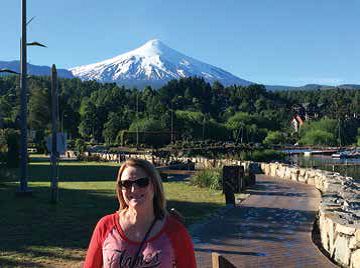
We met the rest of our Compass Expeditions nine member tour group in Santiago on New Year’s Eve. The countries of origin were fairly straightforward; three Australians, one Canadian, and five from the USA. Early the next morning we flew 800km south to Temuco, and transferred by bus to our accommodation in the beautiful town of Pucon in the Chilean lakes district. The weather was very nice and probably the equivalent of summer on the south coast of NSW, and fortunately continued for the majority of the trip.
After settling in at the hotel, we went to meet the bikes and have an afternoon familiarity ride around the lakes. The bikes were all BMW F700GS with the exception of one F800GS, and the guide’s bike was actually a F650GS. Having ridden F700GS bikes on the Simon Pavey training weekend it really didn’t take any time to feel comfortable. The Compass tour was well organised, with the tour group led by Eduardo the experienced Brazilian guide, while Alain the Australian added the certainty of keeping us together and well supplied with spares and our luggage in the support vehicle.
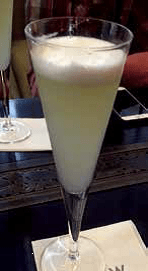
A nice dinner out in Pucon with a few of the great Chilean wines was the order of the evening, while not neglecting our trip theme of at least one Pisco Sour per day as an aperitif. Pisco is a local grape spirit along the same lines as grappa, and the Peruvians and Chileans have nearly gone to war over the competing claims of invention. The sour part comes from lime juice, it has egg white, and it is usually tamed with a touch of sugar. There is no strict or standard recipe, every place makes it slightly differently, so Cindy maintained a detailed log of the Pisco Sour quality at each venue along the trip.
The day two destination was Valdivia on the coast, via some picturesque touring through the lakes district. The tour days were typically not early starting, with departure to get on the road normally around 8:30 or 9:00am. As we were early into our Valdivia motel, a self-guided tour up the coast was the order of the afternoon, with some nice gravel roads and even some mildly challenging uphill sections.
Valdivia is the home of the (needing careful pronunciation) Kunstmann brewery, makers of most of the beer produced in Chile. The heritage in the southern lakes districts of Chile has a strong German character, and as we know one thing the Germans do well is make beer. Okay, I hear you saying what about BMWs, and I must admit that the GS bikes were doing very well.
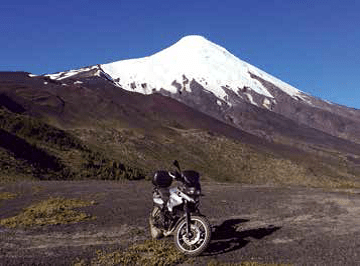
Day three was the scenic highlight day of the trip. We headed back inland from Valdivia, taking advantage of the fact that Chile inland is at most about 100km before hitting serious mountains and another country. The target for the day was a small village called Petrohue on a lake at the foot of the extinct Volcano Orsorno which even looks like a proper volcano, and has a seriously twisty peg and boot scraping road ascending to a ski resort which operates in winter, and has spectacular views over the mountains and lakes.
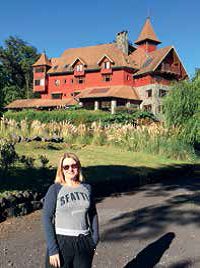
After riding back down the volcano to the main road, and clocking some crazy bicyclists doing 85kmh in front of us on the descent, we headed to Petrohue village via the Petrohue river and waterfalls, arriving just on dark to the hotel which was like a Swiss chalet. After a Pisco Sour and a few beers and a nice dinner it was off to bed. Petrohue has to be one of the most picture postcard places we’ve ever seen, and if it wasn’t for the giant March flies it would have been perfect.
Day four target was the most southerly point of the trip at the town of Ancud on the island of Chiloe, which we reached via a ferry trip across the Chacao channel which was swarming with seals, and yet again had some nice views of volcanos which have since blown up. A café in Puerto Varas on Lago Llanguihue for morning tea took the tour award for the best cup of coffee. Coffee in Chile is a developing product, with the product at service stations apparently developing from something other than roasted coffee beans. Ancud was a fairly poor town and showed it, however the coastline and scenery are very attractive. The afternoon was spent wandering about the town and visiting some of the old forts which are common in Chile and were mainly designed to keep the English marauders like Drake from availing themselves of Spanish hospitality.
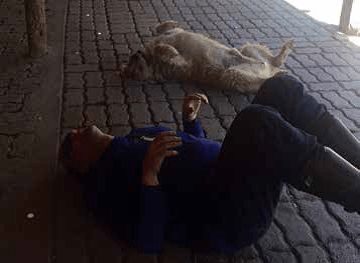
Day five was a backtrack from Ancud to the destination of Entre Lagos village via the tourist town of Frutillar and lunch out in the countryside at one of the greatest buffet experiences on the planet which we happened upon by chance. There was no meat or vegetable species that wasn’t being roasted, no sauces were unavailable, and the dessert options were biblical in scale. What was meant to be a brief lunch turned into a major feast with bleary-eyed motorcyclists seen staggering about the grounds or lying unable to move on the lawns looking across at the inevitable views of Volcano Orsorno. The venue was declared an instant must-do for all future Compass tours. Entre Lagos was a small town and the facilities were lacking, but we did eventually find somewhere that sold a Pisco Sour, with dinner completely unnecessary for anyone following the buffet lunch.
Day six was the border crossing into Argentina day, with the aim of getting to the city of San Carlo de Bariloche on the southern side of Nahuel Huapi lake. The border between Chile and Argentina follows the spine of the Andes mountain range, with the road to the crossing point at Paso Puyehue following the valleys between active volcanos. The actual border sits in a “no man’s land” about 30km wide, with the border posts well outside the immediate danger zone. The whole area was blanketed with pumice from recent eruptions, with some fun had throwing the floating rocks into a creek on a brief stopover to survey the damage. Although the elevation in the southern Andes is low compared to central and northern Chile, it was still very cold at the border.
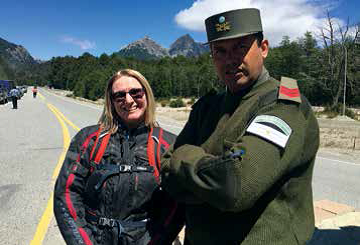
The lunch break was in Villa La Angostura, before heading around the lake in a high speed traffic dodging run. We had been warned by the guides about the differences in Chilean and Argentinian driving, with the Argentinians more aggressive and likely to cut you off. The last section down into Bariloche had all the features of the region; good roads, magnificent scenery, and the bonus of an opportunity to see what the bikes could do in top gear. The hotel was right in the middle of town and very suitable, perfect for our rest day.
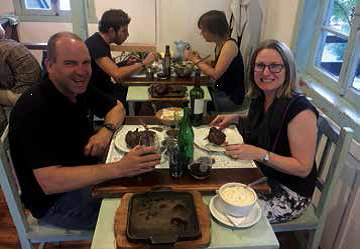
Argentina is the home of beef and Malbec red wine. The definition of a vegetarian meal is anything less than 50% meat, so we felt right at home. Good old Google provided a list of the best steak restaurants in the area, and I think we chose wisely with tender steaks that seemed the size of motorbike batteries, a huge bowl of mash, and a nice red to help the meal on its way.
Bariloche was the location of the official rest day, so thankfully a nice sleep in was had before cruising the shops and sampling the huge range of Swiss chocolates for which the town is famous. The Compass guides had provided some ideas for self-motivated touring, which we decided to take advantage of. On the lakes just to the west of Bariloche is one of the world’s top ten hotels, the Llao Llao. It had been suggested as a great place to relax and have coffee, however they had obviously tightened the rules for walk or ride-up hopefuls which resulted in us being turned around at security as we couldn’t prove we had an appointment. Needing an appointment for coffee seems to miss the point of coffee so we weren’t too disappointed, and decided to continue on with a loop around the Chico circuit. The scenery was impressive, the vivid colours of the lakes and the mountains was nothing like we seem to get in Australia.
Day eight was the last riding day with the return to Pucon, and was nearly double the distance of the other days at around 400km. Lunch was just past Junin de Los Andes, we were still in the Andes apparently. The lunch was at a popular empanada take-away on the highway, and no-one was going to dispute that they were the best empanadas in Argentina. They are basically a small pastie, and come in a variety of fillings each seemingly more tasty than the last. We ate a lot of them.
The ride back into Chile went via some very impressive roads which again tempted those with flexible wrists to go hard. Then suddenly we were back into no man’s land where no-one seems to take much responsibility for the condition of the roads, and across some very basic bridges.
And finally the ride back into Pucon, with a late arrival compared to our normal days. Inevitably the sense of achievement and camaraderie that comes with spending time with people who share an experience comes to the fore and the last night in Pucon at the finale dinner and trip back to Santiago were accompanied by a lot of stories and laughs and we remain in touch with a few. As always with our motorcycling trips, even on weekend rides the riders we are with seem to exclude the precious, pretentious, and preposterous, but there are always the interesting and quirky characters.
We would certainly recommend Compass Expeditions for the professionalism of the Southern Lakes Explorer tour.
 travellingbennetts